
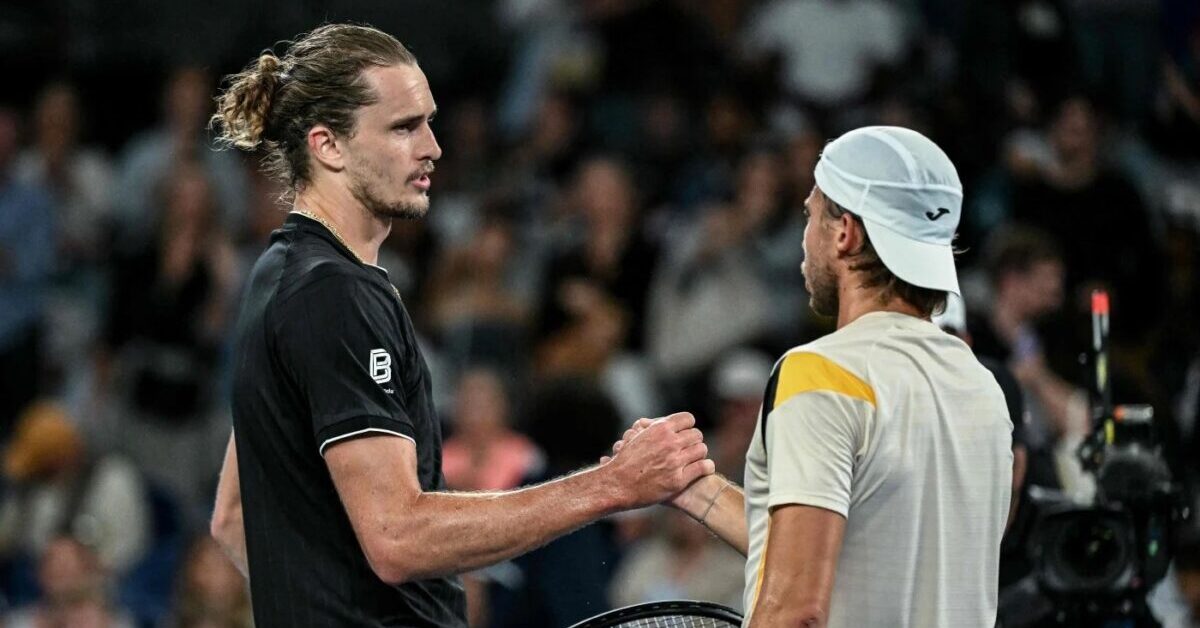
Key Takeaways:
- Alexander Zverev beat Alexandre Muller 6-3, 4-6, 6-3, 6-4 to reach the Australian Open 2026 third round.
- Heavy rain forced a mid-match pause and roof closure in the third set before Zverev reset and closed in four.
- The match lasted 3 hours 3 minutes; the third seed rebounded after dropping the second set.
- World No. 3 Zverev is chasing his first Grand Slam and owns 20 ATP titles.
- Zverev kept his perfect record vs Muller and now stands at 30-9 at the Australian Open; he is 53-24 over the last 52 weeks.
- Next up: Cameron Norrie, a rival Zverev has beaten in all six prior meetings, including AO 2024 R4.
The third seed did not panic. In a late-night match jolted by heavy rain, Alexander Zverev found the steadier gears he needed, defeating France’s Alexandre Muller 6-3, 4-6, 6-3, 6-4 to reach the Australian Open 2026 third round. It took 3 hours and 3 minutes, a mid-match roof closure in the third set, and a firm reset after the second set slipped away—but Zverev’s calm returned just in time.
This is the version of Zverev that believes, more than ever, that a first major is within reach. Ranked World No. 3 and already a 20-time ATP tour-level champion, he handled a tricky, wet Melbourne night with poise and control. The result keeps his strong start to the season alive and nudges him one step closer to the second week.
Rain, roof and a reset: Zverev solves the problem
The match swung when the clouds opened. With the third set in progress, a burst of rain forced the tournament to close the retractable roof. That kind of stop-start can rattle players. Routines break. Momentum disappears. The court even plays a little different under a roof—quicker rhythms, cleaner bounces.
Zverev managed it like a veteran. He had let Muller even things up after a brisk first set, but the third seed re-entered with clarity. His weight of shot returned. He kept patterns simple. He denied Muller easy looks, and when the scoreboard asked for a push, Zverev answered.
“That rain delay felt like a trap—Zverev turned it into a reset.”
Scoreline that tells the story
The 6-3 opening set showed a clear plan: take control early, establish the baseline pattern, and keep Muller on the stretch. But Muller did not fade. He snagged the second 6-4, forcing Zverev to rethink. From there, Zverev’s response—6-3, 6-4—looked like classic problem-solving. He tightened his margins, controlled length, and chose his moments to press.
It was not a breeze, but it was assured. He didn’t need flash; he needed order. He found it.
“This is grown-up tennis: less noise, more answers when it matters.”
Form check: the numbers behind the push
There is a sturdier base to Zverev’s campaign this year. According to the Infosys ATP Win/Loss Index, he owns a 30-9 record at the Australian Open—strong evidence that Melbourne suits him. Over the last 52 weeks, he is 53-24 (a 68.8% win rate), a volume and consistency that helps carry him through nights like this.
His status as World No. 3 underlines the point. He has the ranking, the track record, and the runway. And against Muller, the historical edge was already there; Zverev had won all six of their previous meetings. He kept that record perfect, a useful reminder that he knows how to solve this matchup.
What the rain delay really changed
Weather can flip a match. The pause breaks rhythm, the air cools, the ball travels differently, and players must adjust or wobble. Zverev adjusted. The shift under the roof favored his clean baseline tempo. He kept the rallies on his terms, protected his serve phases, and made Muller hit one more ball.
That’s what big seeds are expected to do: absorb the chaos, then dictate. On a night when external noise could have swamped the moment, Zverev turned a messy situation into a controlled finish.
Next up: Cameron Norrie, a familiar puzzle
The third round brings Cameron Norrie, a savvy left-hander with a tireless engine and a flat backhand that can rush opponents. Zverev has enjoyed a perfect head-to-head against Norrie so far, winning all six of their prior meetings, including a fourth-round clash at the 2024 Australian Open.
That history matters, but it won’t win the next point. Norrie’s game can frustrate; his patterns are disciplined, and his legs rarely give. Zverev’s task will be to keep first-strike control, use his depth down the middle to blunt Norrie’s angles, and stay patient when the rallies stretch.
“If Zverev serves with focus, Norrie’s margin gets real thin real fast.”
Big picture: the Melbourne mission
Zverev is still chasing that first Grand Slam title. Nights like this—won without peak rhythm, under weather pressure—are the bricks that build a champion’s run. He didn’t need perfection to beat Muller. He needed control, discipline, and a clear plan after the delay. He delivered all three.
There will be sterner tests later in the draw. But the Australian Open has often been where Zverev shows his best early-season balance between patience and punch. A 30-9 record here is no accident. He understands these courts, the bounce, the air, and the demands of back-to-back best-of-five matches in the heat and, as it happened, the rain.
Why this win travels
At this level, it’s not just about winning; it’s about learning while you do. Zverev learned he can reset quickly under a roof and protect his base game when conditions change. He learned that his Plan B—more control, less flash—is good enough to move him through danger. Those are lessons that carry into the second week of majors.
For now, the scoreboard is all that counts: a four-set win, 3 hours and 3 minutes in the bank, and the third round ahead. The mission continues, one solved problem at a time.
Sources: ATP Tour official website coverage from January 21, 2026.