
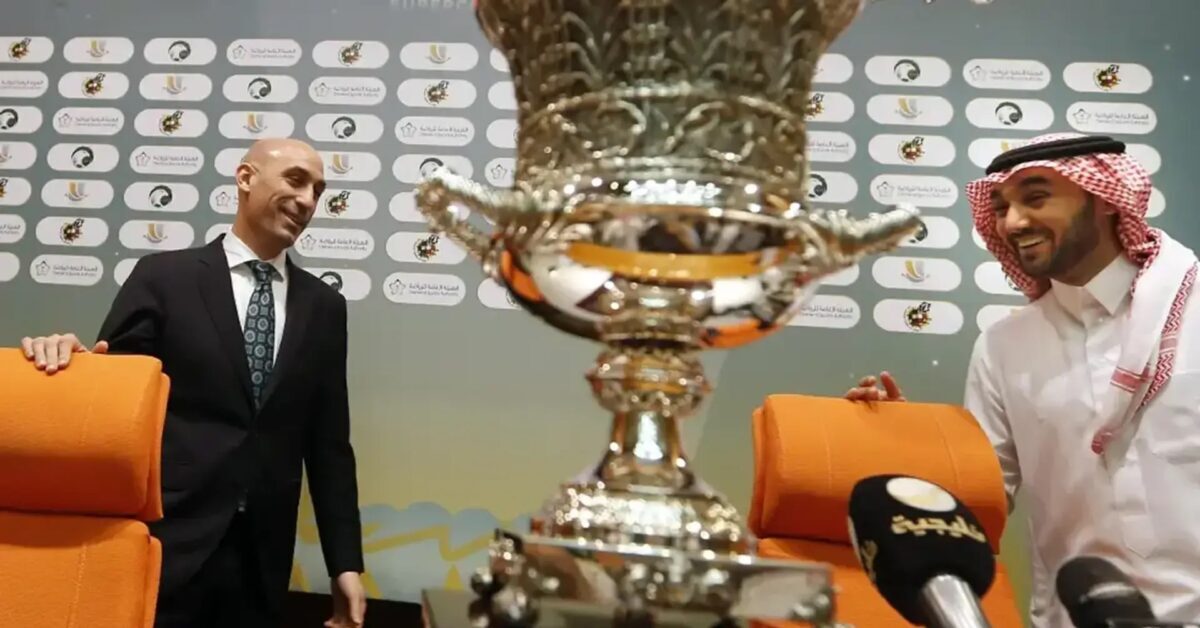
The Spanish Supercopa de España has changed from a traditional curtain-raiser in Spain to a global showcase in the Middle East. The shift is rooted in a major hosting agreement that moved the competition to Saudi Arabia and reshaped its format. Understanding how and why this happened explains the tournament’s modern identity and its role in Spanish football’s broader strategy.
What the Spanish Supercopa Is and How the Format Works
The Supercopa is a mini-tournament that features four teams from the previous season in Spain. It includes the La Liga champions and runners-up, plus the Copa del Rey winners and runners-up.
The competition uses semi-finals and a final. This update began in 2019, replacing the old two-legged tie between only the league and cup winners. It has become a set piece for some of Spain’s biggest clubs, including FC Barcelona, Real Madrid, Atlético Madrid, and Athletic Bilbao.
Why Saudi Arabia Hosts the Spanish Super Cup
The Royal Spanish Football Federation (RFEF) announced in 2019 that the Supercopa would be staged in Saudi Arabia as part of a long-term hosting deal. The Saudi Arabian government agreed to pay €30 million per edition through 2029, bringing significant financial benefits to Spanish football.
The RFEF has stated a clear objective to internationalize Spanish football through such agreements. By taking the Supercopa abroad, Spanish football reaches new audiences while securing predictable revenues for the competition and the wider ecosystem around it.
Venues, Cities and Capacity: Jeddah vs Riyadh
Saudi Arabia has used multiple venues to host the event. The first four-team Supercopa in 2020 took place in Jeddah at King Abdullah Sports City Stadium, a modern venue with a listed capacity of 62,345.
After a one-year return to Spain in 2021 due to COVID-19, the tournament moved to Riyadh from 2022 through 2024. It then returned to Jeddah in 2025. The 2026 edition is scheduled for King Abdullah Sports City in Jeddah, with semi-finals on January 7–8 and the final on January 11.
There has been some inconsistency in reporting around venues, with one source citing King Saud University Stadium for recent events. However, the majority of available information confirms King Abdullah Sports City as the host stadium for 2026.
Timeline of the Saudi Hosting Agreement
- 2019: RFEF announces a 10-year deal to stage future editions in Saudi Arabia.
- 2020: First four-team edition hosted in Jeddah.
- 2021: Tournament held in Spain due to COVID-19.
- 2022–2024: Hosted in Riyadh.
- 2025: Returned to Jeddah.
- 2026: Set for Jeddah’s King Abdullah Sports City (semi-finals January 7–8; final January 11).
- Until 2029: Annual hosting in Saudi Arabia under the financial agreement.
- Extended to at least 2030; the 2027 edition may shift to Qatar due to scheduling.
What the Move Means for Spanish Clubs and Fans
For clubs and the league system, the agreement provides stable, top-tier funding. The €30 million per year helps underpin the competition and, more broadly, supports Spanish football’s commercial reach.
For fans, the Supercopa is now designed to be a global event. Staging in Jeddah and Riyadh opens access to new audiences while still offering a defined, high-stakes format across three matches. Travel is different for supporters in Spain, but the tournament’s visibility has grown beyond its original borders.
Clubs such as FC Barcelona, Real Madrid, Atlético Madrid, and Athletic Bilbao are frequent contenders under the format, reflecting their regular presence at the top of La Liga and the Copa del Rey. The Supercopa’s timing and structure create another chance for silverware and international exposure before the heart of the domestic season.
The Modern Era at a Glance
The 2019 format change and the Saudi deal mark a clear break from the past. The move away from a two-team, two-legged series created a compact event focused on semi-finals and a single final, raising stakes and adding competitive variety.
The exception came in 2021 when COVID-19 restrictions brought the event back to Spain. Outside of that, Saudi Arabia has hosted most editions since 2020, with the location alternating between Riyadh and Jeddah.
The 2026 plan places the competition back in Jeddah at King Abdullah Sports City. The schedule sets the semi-finals across two days, followed by the final three days later, making for a clear and marketable format that is easy to follow.
Why This Matters for the Future of the Supercopa
The agreement underscores how football bodies use international hosting to grow their reach. The RFEF’s strategy aims to blend competition with long-term visibility and commercial strength.
With the deal running through 2029 and extended to at least 2030, the Saudi chapter of the Supercopa is now a defining feature of the competition. There may be specific scheduling considerations in certain years, including a possible shift to Qatar in 2027, but the core plan keeps the event anchored in Saudi Arabia.
For the tournament itself, the four-team bracket offers a reliable format that fits broadcasting needs and showcases top Spanish clubs. For Spanish football, it is a statement about expanding the game’s audience while securing stable revenue.
Bottom Line
The Spanish Supercopa is played in Saudi Arabia because of a long-term hosting agreement struck in 2019, built around a four-team format and a significant annual fee. Jeddah and Riyadh have alternated as hosts, with King Abdullah Sports City Stadium central to recent plans.
The arrangement aligns with the RFEF’s goal to internationalize Spanish football and provide financial benefits to the sport. As the deal runs through the decade, the Supercopa’s identity as a global showcase looks set to remain part of Spain’s football calendar.