
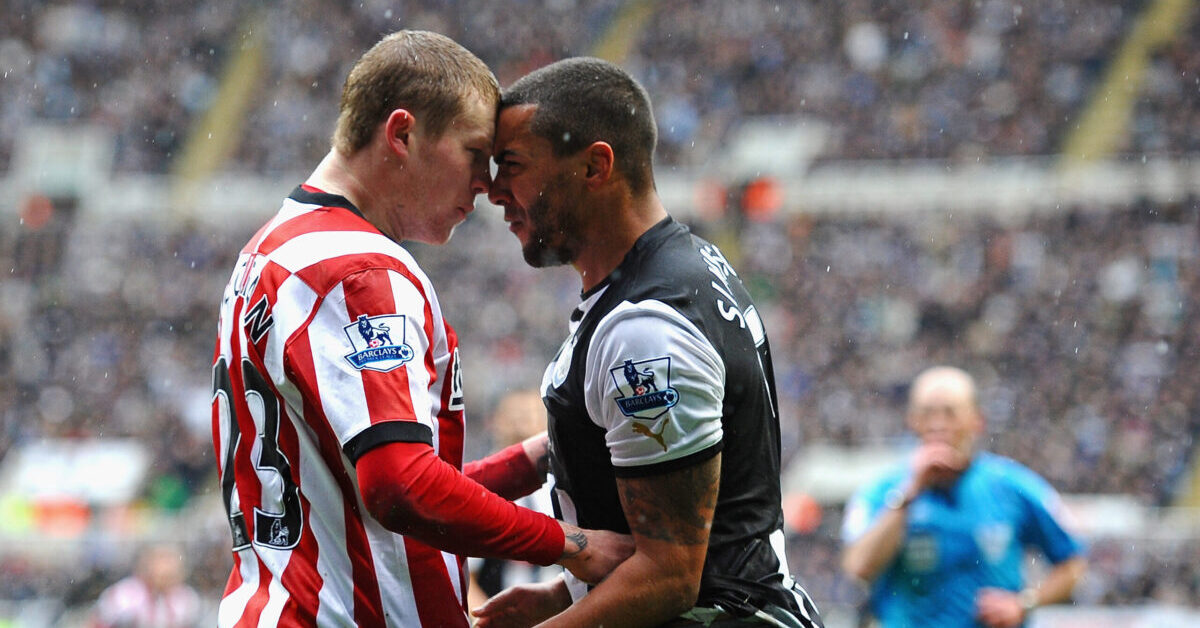
The Tyne-Wear Derby is one of English football’s most intense rivalries, bringing together Newcastle United and Sunderland AFC, two clubs based only 12–13 miles apart in northeast England. It matters because it is about far more than two teams. It is a story of history, place, and pride that long predates the sport itself.
This derby links football to the wider life of Tyneside and Wearside. It shows how local identity can shape competition on and off the pitch, and why a single result can feel like a shared victory for a whole community.
Deep Roots: Civil War Lines and Industrial Rivalry
The divide between Tyneside and Wearside stretches back to the English Civil War (1642–1651). Newcastle supported the Royalists and King Charles I, while Sunderland backed the Parliamentarians. This early split set a tone of difference that later moved into industry and everyday life.
As shipbuilding and coal mining grew along the River Tyne and River Wear, the two areas competed for jobs, investment, and status. The derby takes its name from these rivers, and the industrial era only added fuel to a rivalry already present in the region.
This rivalry predates football, and that history still shapes how fans on both sides see themselves. It explains why the derby keeps its edge even when league positions or divisions change over time.
Clubs, Founding Dates, and the First Clashes
Sunderland AFC formed in 1879 and were the senior club in the region. Newcastle United came later, in 1892, through a merger. Soon after, the two teams began meeting in matches that grew in meaning and intensity with each decade.
Across more than 130 years, there has been no single, lasting winner in the series. Both clubs have enjoyed high points. Sunderland claimed six league titles before the Second World War, while Newcastle earned three league titles and FA Cups in the first half of the 20th century. Those honours set standards and expectations that still echo around both grounds.
Early derbies built the legend. Newcastle won in 1906, but soon after came one of the most famous results in the rivalry: in 1908, Sunderland defeated Newcastle 9–1, the heaviest defeat in Newcastle’s history.
Place, Distance, and the Power of Identity
The closeness of the two cities is central to the derby. With only a short trip separating the grounds, the rivalry can feel ever-present in schools, workplaces, and streets across the region. Daily life on Tyneside and Wearside interacts, and so does the football loyalty that comes with it.
Colors underline that identity. Newcastle is known for black and white; Sunderland for red and white. These colors are part of the clubs’ culture and can influence everyday choices, with some fans even avoiding certain items linked to the rival side.
That mix of proximity and identity gives each match an added dimension. A win is not just three points; it is a statement about place and belonging.
Derby Landmarks and Lasting Balance
Even with long gaps between league meetings at times, key results and themes endure. A few markers help explain the derby’s staying power:
- 1908: Sunderland 9–1 Newcastle remains Newcastle’s heaviest defeat, a scoreline that is still referenced when the rivalry is discussed.
- 1906: A Newcastle win underscored how momentum can swing quickly in this fixture, a pattern confirmed by the heavy defeat that followed soon after.
- Across more than 130 years of matches, there is no true overall winner, which sustains the sense that any era could tip the balance.
These signposts show that form comes and goes, but the rivalry resets with each meeting. History is always present, but it never fully decides the next chapter.
What the Tyne-Wear Derby Represents
The derby is a focal point for regional pride. Wins carry a communal feeling that can last well beyond the 90 minutes. The match becomes a way for Tyneside and Wearside to express their identity, celebrate their heritage, and measure themselves against a close neighbor.
This is why the fixture holds importance regardless of league position or competition. The context surrounding the clubs—history, industry, and community—makes the game feel bigger than a typical match.
Names, Myths, and the Record
The name “Tyne-Wear Derby” reflects the rivers that shaped both areas: the River Tyne for Newcastle, and the River Wear for Sunderland. The rivers carried coal, ships, and jobs, and they still carry the meaning of this rivalry.
Some stories look even further back. The Battle of Boldon Hill (1639) is sometimes cited in connection with early disputes, but parts of that claim are not accurate. What is clear, however, is that the English Civil War divide is a reliable starting point for understanding why this derby runs so deep.
Over the decades, both clubs have had periods of success and struggle. The long record shows swings in momentum rather than permanent dominance, a pattern that keeps the fixture compelling.
Why It Endures
The Tyne-Wear Derby lasts because it is built on solid foundations: historic allegiances, industrial competition, shared geography, and strong local culture. The short distance between the cities ensures regular contact between fans, and the clubs’ identities reinforce a clear sense of us and them.
Each match is shaped by the past but not trapped by it. The next derby always offers a chance to reset, to write a new line in a long regional story. That promise keeps the rivalry relevant year after year.
The Takeaway
The Tyne-Wear Derby is more than a football game. It is a living expression of northeast England’s history and pride, where black-and-white meets red-and-white and where local identity is on full display.
From Civil War loyalties to shipyards and coal pits, and from early 20th-century scorelines to today’s shared traditions, the Newcastle–Sunderland rivalry shows how football can reflect a place and its people. That is why this fixture endures—and why it will continue to matter to Tyneside and Wearside whenever the two clubs meet.