Tag: Germany

  • Germany rout Slovakia 6-0 to seize 2026 Worldcup Qualification

    Germany rout Slovakia 6-0 to seize 2026 Worldcup Qualification

    Key Takeaways(TL;DR):

    • Germany thrashed Slovakia 6-0 in Leipzig in a pivotal UEFA World Cup 2026 Group A qualifier.
    • Both teams entered level on points at the top; Germany only needed to avoid defeat to meet the qualification condition.
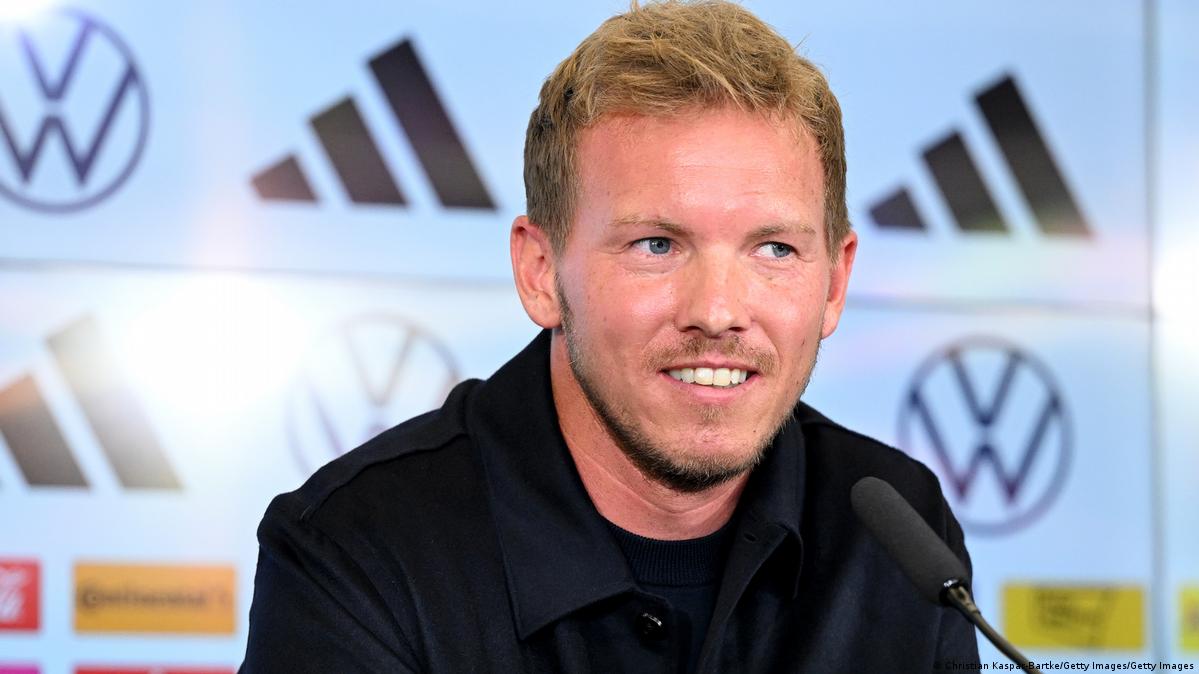
    • Julian Nagelsmann framed the showdown as a “knockout clash“, and his side played like it.
    • Pre-match form: Germany had 10 GF and 6 GA in the campaign, with their goalkeeper owning three clean sheets before this game.
    • Key contributors in qualifying: Germany’s Nick Woltemade (3 goals) and Slovakia’s Ivan Schranz (1 goal) set the stage.
    • Slovakia had beaten Germany 2-0 earlier, but odds (-461) and the rematch reality tilted heavily Germany’s way.

    On a cold Monday night in Leipzig, Germany did not just answer the pressure—they crushed it. A 6-0 dismantling of Slovakia at Red Bull Arena turned a precarious qualification equation into near-certainty, reaffirming Julian Nagelsmann’s insistence that this was a “knockout clash.” With the two sides level on points atop UEFA’s Group A and Germany needing only to avoid defeat to satisfy their path to the 2026 FIFA World Cup, the hosts delivered something far more emphatic: a statement win that rewrites the tone of their campaign.

    The stakes and the setting

    This was the sixth round of UEFA qualifying and the sharpest fork in the road both teams had faced. Germany, armed with a strong qualifying pedigree and backed by a raucous Leipzig crowd, arrived burdened by a blunt truth: Slovakia had beaten them 2-0 earlier in the campaign. That earlier result injected jeopardy into a group many expected Germany to control from start to finish.

    Recent form offered competing signals. Germany had shown structural solidity in wins such as a 2-0 away victory over Luxembourg and a 3-1 decision against Northern Ireland, accumulating 10 goals scored and six conceded before this night. Their goalkeeper had already posted three clean sheets in the campaign, a foundation that matters when margins are tight. Yet the specter of that Slovak victory lingered as a reminder of how quickly momentum can flip in qualifying.

    “That’s the response of a team that expects to be in North America.”

    Germany’s control by design

    Without minute-by-minute theatrics to dissect, the broader contours still tell the story. Germany’s 6-0 triumph was the product of compressed lines, disciplined pressing, and a willingness to stretch the pitch when it mattered. Nagelsmann spoke of a knockout feel to the match, and his players mirrored that urgency—first by settling the nerves, then by turning territorial dominance into sustained pressure and, ultimately, an unanswerable scoreline.

    Defensively, this was a continuation of a trend. The clean-sheet platform built earlier in the campaign—three in total before kickoff—reappeared at precisely the right time, aided by coherent shape in front of the back line. Offensively, the blend of vertical bursts and patient ball circulation worked Slovakia into uncomfortable areas. It was not simply about piling forward; it was about choosing the moments to accelerate. When the moments arrived, Germany were ruthless.

    The key figures and the tone they set

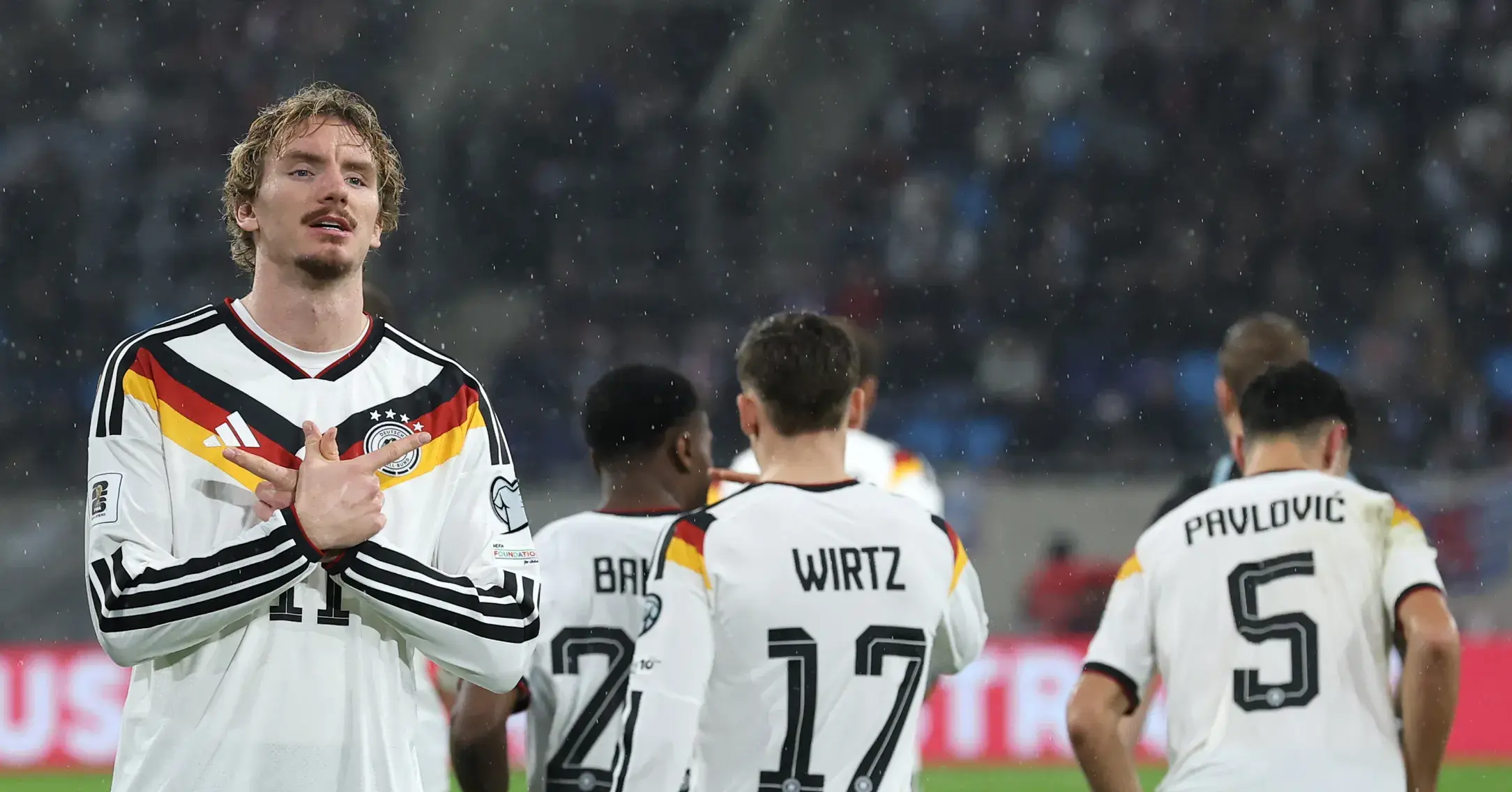
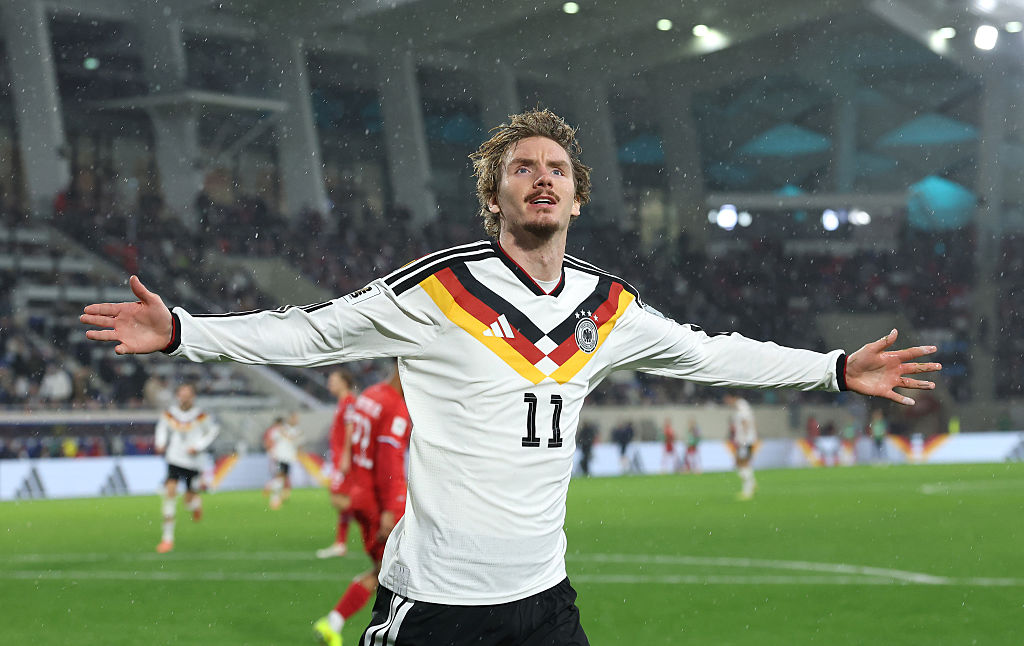
    Nick Woltemade entered the night as Germany’s notable qualifying contributor, with three goals to his name. His presence has been a useful barometer for the team’s ability to translate possession into penetration. Even without a granular breakdown of the goals in Leipzig, the broader implication is clear: Germany’s attack regained its cutting edge in a game that demanded conviction as much as precision.

    On the other side, Slovakia’s Ivan Schranz—who had one goal in qualifying before this match—symbolized his team’s competitive bite across the campaign. Yet Germany’s balance blunted Slovakia’s channels and turned the visitors into reactive participants for long stretches. The energy that fueled Slovakia’s famous win earlier in the cycle never materialized once Germany established control.

    “Nagelsmann leaned into the pressure, and the squad leaned right back—with interest.”

    A game that matched the odds

    The betting markets were unambiguous. Germany were hefty favorites at -461, a number that underscored both their ceiling and home-field advantage. Even in a group tightened by that earlier Slovak victory, the models and money rarely drifted from Germany’s side; this was expected to be their moment of assertion. The 4-0 outcome did more than validate those lines—it broadcast that, in the most pressurized fixture of their campaign, Germany did not play to the minimum requirement of “avoid defeat.” They set a highest-possible standard instead.

    That matters in a qualifying context where optics double as psychology. Future opponents do not just study the score; they ingest the manner of it. A four-goal gulf in the group’s marquee head-to-head sends a blunt message about power, form, and the gap Germany can open when their structure and confidence align.

    Rewriting the narrative after a stutter

    Germany’s 4-0 in Leipzig is the counterweight to their earlier 0-2 stumble against the same opponent. It reframes that defeat as a jolt rather than a trend and recasts the squad’s arc in the light Nagelsmann prefers: iterative growth, tactical maturity, and a timely spike in execution. The earlier wins over Luxembourg (2-0) and Northern Ireland (3-1) looked like steady steps. This performance, by contrast, felt like a leap.

    For Slovakia, it is a harsh course correction. Their hopes of snatching top spot—or of forcing Germany into a late wobble—were effectively dissolved by the scale of the loss. They have been competitive across the campaign, but in this defining checkpoint, they were overpowered.

    “From must-not-lose to must-win standards—Germany just raised the bar for the whole group.”

    Implications for Group A and beyond

    Strictly by the summary’s frame, Germany needed only a point to satisfy the qualification requirement. A 6-0 win does more than that; it effectively seals their ticket to North America, matching the condition and building a clear points cushion at the summit. The result leaves Slovakia staring at a more difficult path—likely dependent on the permutations beneath first place and any playoff routes available.

    On the performance spectrum, Germany leave Leipzig with two crucial assets: scoreboard authority and a restored aura. The first is mathematical; the second is intangible but no less real. In a campaign defined by fine margins, those intangibles influence how opponents approach, how players trust their roles, and how a coach’s message resonates inside the dressing room.

    The coach’s call—and the response it inspired

    When a manager labels a qualifier a “knockout clash,” it can either burden his squad or liberate it. Nagelsmann’s phrasing did the latter. Germany played like a team willing to be judged by the biggest moments, and the outcome now reads like a turning page. The clean-sheet thread, the rediscovered attacking bite, and the composure under pressure form a blueprint that travels well into 2026.

    In Leipzig, Germany didn’t just move top—they moved on. The World Cup conversation now becomes one of preparation rather than navigation. And if this performance is a preview, the question entering the next phase won’t be whether they belong—it will be how high this ceiling climbs when the lights get even brighter.

    Bottom line: Germany demanded the last word in Group A’s defining fixture and spoke loudly. Slovakia, so spirited earlier in the cycle, found no reply to the power and precision on display. Qualification is, for Germany, all but a formality now; the performance, meanwhile, is a standard they will be challenged to meet again—on bigger stages and against sharper opposition. On this evidence, they look ready to try.

  • Germany vs Slovakia: World Cup Qualifier Group A Decider

    Germany vs Slovakia: World Cup Qualifier Group A Decider

    Key Takeaways(TL;DR):

    • Group A decider: Germany host Slovakia in Leipzig with both on 12 points; top spot secures a 2026 World Cup berth.
    • Germany need only a draw thanks to a +7 goal difference; Slovakia must win (GD +4) to leapfrog them.
    • Recent results: Slovakia 2-0 Germany (Sep 4, 2025); Germany 2-0 Luxembourg (Nov 14, 2025).
    • Key threats: Germany’s Nick Woltemade (3 goals), Serge Gnabry (2), Joshua Kimmich (2 in 4); Slovakia’s Ivan Schranz, Tomas Rigo, Denis Hancko, David Strelec (1 each).
    • Odds: Germany -461 favorites; Slovakia +1140 underdogs; under 3.5 goals favored at -170, hinting at a tight contest.
    • Kickoff 19:45 UTC at Red Bull Arena; French referee François Letexier to officiate. Germany lead the group in shots on target and clean sheets.

    There are qualifiers, and then there are nights that feel like tournament football. Monday, November 17, 2025, belongs firmly in the latter category as Germany host Slovakia at Leipzig’s Red Bull Arena in a UEFA Group A showdown that will decide who punches a direct ticket to the 2026 FIFA World Cup. Both are level on 12 points after five matches, but the math is kinder to the hosts: a draw will do for Germany; Slovakia need the win. The margins are fine, the stakes are maximal, and the mood is unmistakably knockout.

    A knockout without the bracket

    Germany coach Julian Nagelsmann described the occasion as “knockout” in all but name, and the characterization fits. This is the final exam of the group stage, where a single mistake can define an 18-month qualifying campaign. With a goal difference edge of +7 to Slovakia’s +4, Germany enter with a safety net that Slovakia simply don’t have. Expect that to subtly shape the psychology: Germany can be pragmatic without being passive; Slovakia must be brave without being reckless.

    “If Slovakia beat them in September, why not again when it matters most?”

    The recent head-to-head adds friction. Slovakia’s 2-0 win over Germany on September 4 was an upset that reverberated through the group and gave Monday’s visitors real belief. Germany’s response, a professional 2-0 against Luxembourg on November 14, restored order but not inevitability. That’s the nuance here: Germany are favorites, but this isn’t a procession.

    Form lines and numbers that matter

    Both sides bring identical records into Leipzig: four wins and one defeat. The difference is in the trendline. Germany have been the more assertive team on both sides of the ball, leading Group A in shots on target and clean sheets. That defensive reliability is especially relevant on a night where the bookmakers lean toward caution; the total is set at 3.5 with odds favoring under 3.5 goals at -170. Translation: this could hinge on patience and precision rather than chaos.

    But form is rarely linear in fixtures with this much jeopardy. Germany’s +7 goal difference offers a strategic advantage if the match tightens. Slovakia, at +4, cannot afford to settle. The in-game calculus will likely tilt toward Germany managing phases and Slovakia chasing moments. And in qualifiers, moments win groups.

    “Nagelsmann will play for control; Slovakia have to live off moments and margins.”

    Players who tilt the balance

    Germany’s forward line has spread the goals through the campaign, but the breakout production has come from Nick Woltemade, whose three goals make him the hosts’ leading scorer in the group. He’s complemented by the directness of Serge Gnabry (two goals) and the metronomic influence of Joshua Kimmich, who has chipped in with two in four matches from midfield. If Germany seize control, it’s often because Kimmich dictates the tempo while runners peel off the shoulder and arrive on time in the box.

    Slovakia’s attack is more by committee, but that does not mean it’s blunt. Ivan Schranz and David Strelec carry penalty-box instincts, Tomas Rigo provides the legs and bite in midfield, while Denis Hancko adds threat on set pieces and leadership at the back — each has contributed a goal in qualifiers. Their path to victory is unlikely to be volume; it’s efficiency. One clean chance from a well-timed counter, one dead-ball routine executed to the letter, one interception turned into a decisive break.

    How the game could be played

    With Germany heavily favored in the markets (-461) and needing only a draw, the onus is on them to be mature rather than manic. Expect long spells of controlled possession, quicker circulation after turnovers, and selectivity in committing full-backs forward. The discipline to avoid transitional traps will be as important as any line-breaking pass.

    For Slovakia, the task is to compress space without surrendering the initiative entirely. A compact mid-block that springs forward when German structure loosens is the likely blueprint. The risk-reward line is thin: push too high and Germany’s front line will exploit gaps; sit too deep and Kimmich’s orchestration will gradually squeeze the air out of the contest. The favored under on 3.5 tallies with a chess match feel — a single goal either way could dictate everything from substitutions to tempo.

    “A draw suits Germany — but can they manage 90 minutes of nerves as well as they manage the ball?”

    The stage and the stakes

    Red Bull Arena in Leipzig brings the intimacy and edge this decider deserves, with kickoff at 19:45 UTC setting the stage for a primetime verdict. French official François Letexier takes charge, and his management of tempo and advantage could loom large in a match where small decisions accumulate into big outcomes.

    Beyond the immediate result, the implications are crystal clear. The winner tops Group A and secures a place at the 2026 World Cup. For the side that falls short, the path becomes more complicated and longer, with no guarantee of a second chance going smoothly. That knowledge has a way of sharpening tackles and focusing minds.

    What Germany must do vs. what Slovakia have to do

    • Germany: Trust the structure, win the middle third, and manage the scoreboard. A clean sheet practically guarantees the objective; one goal probably does.
    • Slovakia: Engineer high-quality transitions, lean on set plays, and keep the game within one moment for as long as possible. Frustration is a tactic; timing is everything.

    It’s a binary proposition framed by asymmetric incentives. Germany can be patient; Slovakia must be purposeful. And that dynamic, when both teams are organized and confident, makes for compelling, nervy football.

    Final word

    Germany arrive with form, firepower, and the cushion of goal difference. Slovakia bring the memory of September’s upset and a clarity of purpose: win or watch the World Cup door swing shut. Strip away the permutations and you have the essence of elite sport — pressure, precision, and the knowledge that one clean chance can rewrite an entire campaign. Leipzig is set for a verdict. Now it’s about who writes it.

  • Luxembourg 0-2 Germany: Woltemade brace pushes WC berth

    Luxembourg 0-2 Germany: Woltemade brace pushes WC berth

    Key Takeaways(TL;DR):

    • Nick Woltemade scored both goals (49′, 69′) as Germany won 2-0 away to Luxembourg.
    • Germany laboured through a blunt first half while Luxembourg pressed hard and countered with purpose.
    • Oliver Baumann produced key saves from corners in the 21st and 29th minutes to preserve parity.
    • Leroy Sané assisted the opener; Ridle Baku supplied the second on a swift counter.
    • Victory nudges Germany toward automatic 2026 qualification; they advance if they avoid defeat vs Slovakia on Nov 17 (19:45 GMT).
    • Notable moments: Florian Wirtz fired over on 28′; Felix Nmecha’s stoppage-time strike was parried by Moris.

    On a crisp night in Luxembourg City, Germany found a way. It was not pretty, and it certainly wasn’t fluid for long stretches, but a second-half brace from Nick Woltemade secured a 2-0 win at the Stade de Luxembourg and nudged Die Mannschaft to the brink of automatic qualification for the 2026 FIFA World Cup. The visitors laboured through a listless opening 45 minutes before quality in the final third — delivered by Leroy Sané, Ridle Baku and finished twice by Woltemade — settled a stubborn contest.

    Kick-off at 19:45 UTC framed a match that always looked like a potential trap: a focused Luxembourg, buoyed by a partisan crowd, versus a Germany side that drifted through the gears early. By full time, the job was done — not emphatically, but efficiently — and the pathway to Monday’s home date against Slovakia now appears clear: avoid defeat and qualification is sealed.

    Luxembourg’s brave start, Germany’s blunt edge

    The first half belonged to Luxembourg’s energy and organisation. From the opening whistle, they pressed Germany high and hustled through midfield, turning loose balls into quick forward thrusts. Germany had the bulk of the ball but little incision, the tempo too flat to pry apart a compact defence that read passing lanes and won duels.

    Chances were scarce for the visitors. Florian Wirtz embodied the malaise with a wild effort over the bar in the 28th minute, and set pieces — often a release valve on nights like this — offered minimal threat. Luxembourg, meanwhile, looked sharp on the counter and forced Germany repeatedly onto the back foot.

    Baumann buys time with key interventions

    If this victory had a foundation, it was poured by Oliver Baumann. Germany’s goalkeeper was decisive when it mattered most, notably dealing with danger from Luxembourg corners in the 21st and 29th minutes. Those interventions preserved the stalemate and, crucially, prevented the hosts from turning their intensity into a lead that would have asked Germany far more awkward questions.

    Baumann’s handling under pressure steadied a jittery back line and highlighted the game’s delicate balance before the break. Without those saves, the second half would have carried a very different mood.

    Germany can’t drift through halves and expect November to forgive them.

    Woltemade the difference: two touches, two daggers

    Germany emerged from the interval with greater purpose, and it took only four minutes for that shift to tell. In the 49th minute, Sané found the angle and pace to deliver the game’s first moment of quality, sweeping a cross into the corridor where strikers earn their pay. Woltemade, the 23-year-old Newcastle United forward, was on it in a flash, prodding home with the decisive one-touch finish the first half had lacked.

    The second, on 69 minutes, came with Luxembourg stretched after another wave of German possession. Ridle Baku drove the counter and slid a crisp pass for Woltemade, who again needed just the single touch to beat Anthony Moris. Two chances, two goals — the mark of a penalty-area forward in form. For a player who also scored the winner against Northern Ireland last month, this was further evidence of an emerging international reliable in the tight margins of qualifying football.

    Woltemade looks like the penalty-box answer this squad has been missing.

    The game state shifts: control after the cushion

    With the 2-0 advantage, Germany finally imposed rhythm. Luxembourg’s press lost bite, their lines drifted a few yards deeper, and the visitors began to dominate possession with far less jeopardy in transition. The home side’s counters became sporadic and less threatening, while Germany managed the clock with assuredness.

    There were still flashes late on: Felix Nmecha stung Moris’s palms with a long-range effort in the 91st minute, a reminder that Germany’s bench carries additional punch even on conservative nights. But by then the result was no longer in doubt. The contest had been decided in that 20-minute spell either side of the hour.

    Player spotlights and decisive details

    • Nick Woltemade: Two clinical, one-touch finishes — the hallmark of a striker who reads space and timing. Back-to-back scoring internationals underscore his growing role.
    • Leroy Sané: The architect of the breakthrough at 49 minutes, his delivery unlocked a compact, disciplined back line when Germany needed it most.
    • Ridle Baku: Injected verticality on the counter for the second goal, providing the assist at 69 minutes.
    • Oliver Baumann: Germany’s safety net in a dicey first half, with critical saves off Luxembourg corners in the 21st and 29th minutes.
    • Florian Wirtz: A symbol of the first-half bluntness with a wayward 28th-minute strike, yet his positioning and movement continued to pull defenders around.
    • Anthony Moris: Luxembourg’s keeper denied Nmecha in stoppage time and kept the scoreline respectable.

    Why it matters: the qualification calculus

    This win carries weight beyond three points. In a campaign where efficiency often trumps aesthetics, Germany have moved within arm’s length of automatic World Cup qualification. The scenario is straightforward: avoid defeat at home to Slovakia on Monday, November 17 (19:45 GMT), and the ticket to 2026 is punched.

    That clarity should focus minds. Luxembourg’s resistance laid bare that Germany still oscillate between control and drift — impressive once ahead, yet too passive before it. Against superior opposition, the latter could prove costly. For now, though, the mandate was to win and move; mission accomplished.

    Qualify now, improve later — or will Slovakia test those limits?

    Match facts at a glance

    • Competition: 2026 FIFA World Cup Qualifying — UEFA Group A
    • Venue: Stade de Luxembourg, Luxembourg City
    • Date/Time: November 14, 2025, 19:45 UTC
    • Result: Luxembourg 0-2 Germany
    • Goals: Woltemade 49′, 69′

    Final word

    Germany did enough, and enough is exactly what November demands. The first-half lethargy will concern purists; the second-half precision will reassure coaches. Above all, Woltemade’s cold-blooded finishing and Baumann’s first-half handling formed a compelling, pragmatic partnership: keep it tight, take your chances, close the door.

    With Slovakia up next in a qualification decider of sorts, the mandate is simple: carry over the urgency of the second half, not the drift of the first. One more result, and the journey to 2026 officially begins.