
Key Takeaways:
- Steve Kerr publicly drew a line on Draymond Green’s recurring emotional outbursts, ejections, and turnovers, calling it a damaging “negative trend.”
- Green left the bench after a heated exchange with Kerr during a 120–97 win over the Magic, missing the final 20 minutes after the team trailed 71–66.
- Kerr highlighted ball security after Green had 13 turnovers across two recent losses, even as Green noted he had only one turnover in the Magic game.
- Marca reported Green’s 9 technical fouls, multiple early ejections, and that the Warriors were outscored in 9 of his last 10 appearances.
- Golden State hovered around 18–17 during the slide and sit in the West’s 8th seed, leaning toward Play-In territory.
- Kerr still backed Green as “a champion,” but the message is clear: control emotions, protect the ball, and stay available.
Steve Kerr has drawn a line. The Golden State Warriors head coach went public with a pointed message for Draymond Green: the emotional outbursts, the quick-trigger ejections, and the careless turnovers are a “negative trend” that can no longer be a part of the team’s identity. The missing detail behind that line? Kerr is making composure and ball security non-negotiable as the Warriors grind through a season that currently tracks toward the Play-In.
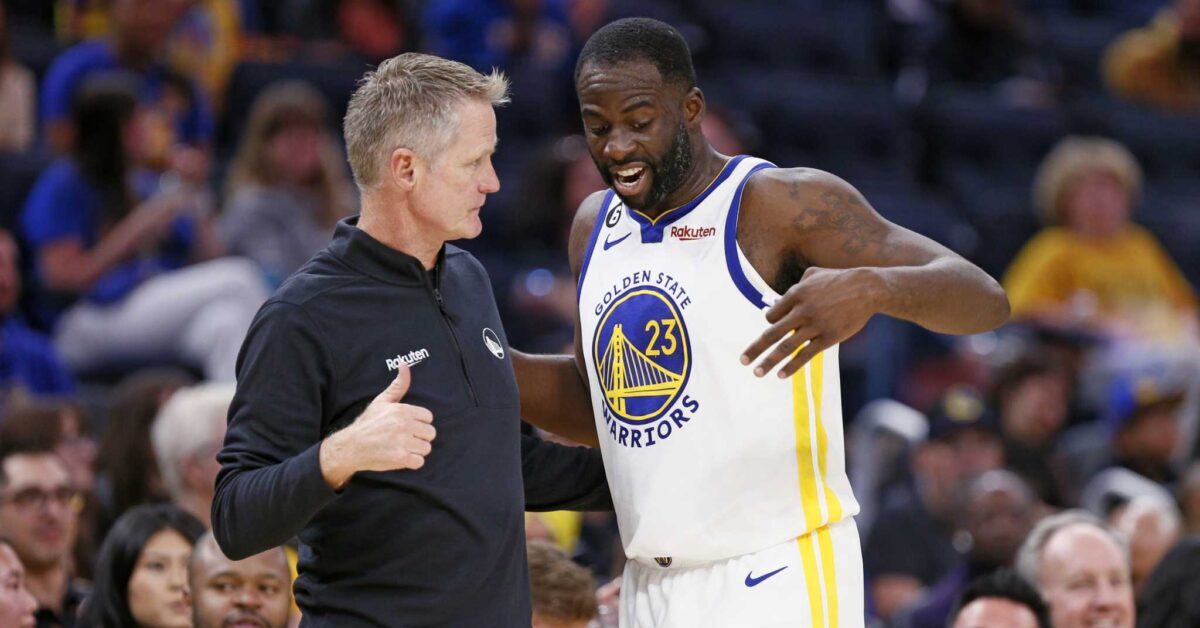
The flashpoint came in a 120–97 win over the Orlando Magic. Early in the third quarter, with the Warriors down 71–66 after a timeout, Kerr and Green had a heated exchange. Green then left the bench, spent the final 8:31 of the third quarter in the locker room, and missed the last 20 minutes entirely. He later explained, “Tempers spilled over, and I thought it was best that I get out of there… It was best to remove myself.” Kerr, while firm, also offered an olive branch: “We need Draymond. He’s a champion. We’ve been together for a long time.”
Steve Kerr’s message: composure and the basketball basics
This season’s frustration isn’t just about optics. After two recent losses, Green had 13 combined turnovers — a stat that cuts at the Warriors’ core principles. Kerr emphasized ball security following those games, a subtle but unmistakable signal that veterans must take care of the ball and themselves.
Green, for his part, pushed back on the idea that the Orlando moment reflected a larger problem that night. “I’m not frustrated at all,” he said. “I had one turnover today… I essentially ran our offense.” Even so, the bigger picture looms: the team is trying to stabilize, and each emotional spiral or needless turnover puts them back on roller skates.
“At some point, talent isn’t the issue — availability is.”
Ejections, technicals, and the growing costs
External coverage has framed this as a pattern, not a blip. As Marca put it, “Draymond Green’s inability to control his emotions resurfaced again,” noting a December 3 ejection that began with a missed three-second call. Green “left his defensive assignment to confront” an official, which led to an uncontested dunk and, moments later, a second technical and an automatic ejection — the whole sequence unfolding in about 30 seconds.
That wasn’t isolated. Marca detailed recent flashpoints: an ejection for shoving a Phoenix Suns player, walking away from the bench after a Kerr argument, and even a confrontation with a fan in New Orleans back in November. The outlet reported Green has nine technicals already, inching toward suspension territory, and that Golden State has been outscored in nine of his last ten appearances.
Availability has been another issue. Marca noted he’s missed seven games already, including three with a foot problem. Combined with early exits, the constant churn has weakened continuity for a team that once thrived on rhythm and trust.
“If Green can’t control the techs, Kerr has to protect the team.”
Impact on an aging Warriors core
The Warriors aren’t the steamroller they used to be. They’re managing minutes and choosing their spots across back-to-backs. As Blue Man Hoop observed, Kerr even made the pragmatic choice to essentially “tank” a game to keep stars fresh for a more winnable matchup the next night. This is a veteran roster now — rest, availability, and the details matter.
And the standings reflect the margin for error. Golden State sits in the West’s eighth seed and, if the season ended today, would be bound for the Play-In. They are only a few games off the sixth seed and a guaranteed playoff berth, but that cushion can disappear fast when a leader logs early showers or racks up avoidable technicals.
Meanwhile, the slide has already shown in the record — 18–17 during the stretch Marca highlighted — with Green’s statistical dip and the team being outscored in most of his recent appearances. This is the real weight behind Kerr’s message: the Warriors don’t have the luxury of self-inflicted wounds.
The Kerr–Green relationship: blunt honesty, shared history
Kerr and Green have been through it all. ESPN noted the pair have exchanged words plenty of times over their dozen seasons together. This latest flare-up, they both insist, isn’t a fracture. “We’ve been at this now for a long time,” Green said. “Sometimes you’re with people for a long time and there’s a level of comfort and s— happens. We move forward.”
That may be true — and it may be the best thing the Warriors have going. Kerr’s “We need Draymond” quote matters because it holds two truths: Green is still central to what Golden State wants to be, and that’s exactly why the coach is demanding a higher standard. The message is not exile. It’s accountability.
“This version of the Warriors only wins with discipline.”
What changes now — and what to watch
For Green, the path forward is clear and simple — even if it’s not easy:
- Control the emotions: Don’t turn small officiating moments into game-changing exits.
- Value the ball: The 13-turnover two-game stretch can’t happen again, especially in tight contests.
- Stay available: Technical fouls add up, and the Warriors can’t afford suspensions or early ejections.
There’s also a broader leadership challenge. When a veteran voice leaves the bench in the third quarter of a close game, it sends the wrong signal to younger players and the rest of the locker room. Returning to the baseline behaviors — defense, organization, ball movement, composure — is how Golden State can climb from the Play-In zone back toward the top six.
Bottom line
Kerr drew a line not to marginalize Draymond Green, but to re-center him. He reaffirmed trust (“We need Draymond”) while making the standard plain: composure and ball security are non-negotiable. The Warriors’ window is thinner now; they can’t spot opponents points, possessions, and momentum because a leader loses his cool.
Green says they’ll move forward. If that comes with fewer outbursts and more control, the Warriors can still be dangerous — and maybe skip the Play-In. If not, the season’s defining trend won’t be a hot Curry stretch or a vintage defensive stand. It will be the self-inflicted damage Golden State couldn’t stop.