
Key Takeaways:
- Elena Rybakina beat Aryna Sabalenka 6-4, 4-6, 6-4 to win the 2026 Australian Open women’s singles title.
- It is Rybakina’s first Australian Open crown and second Grand Slam overall (after 2022 Wimbledon).
- Both finalists reached the title match without dropping a set, a first in Melbourne since 2004.
- Rybakina rallied from 0-3 down in the deciding set to seal victory on Rod Laver Arena.
- Sabalenka, the No. 1 seed, was aiming for a third Australian Open title and a fifth major overall.
- The tournament ran January 11–February 1, 2026, at Melbourne Park; Madison Keys, the defending champion, exited in the fourth round.
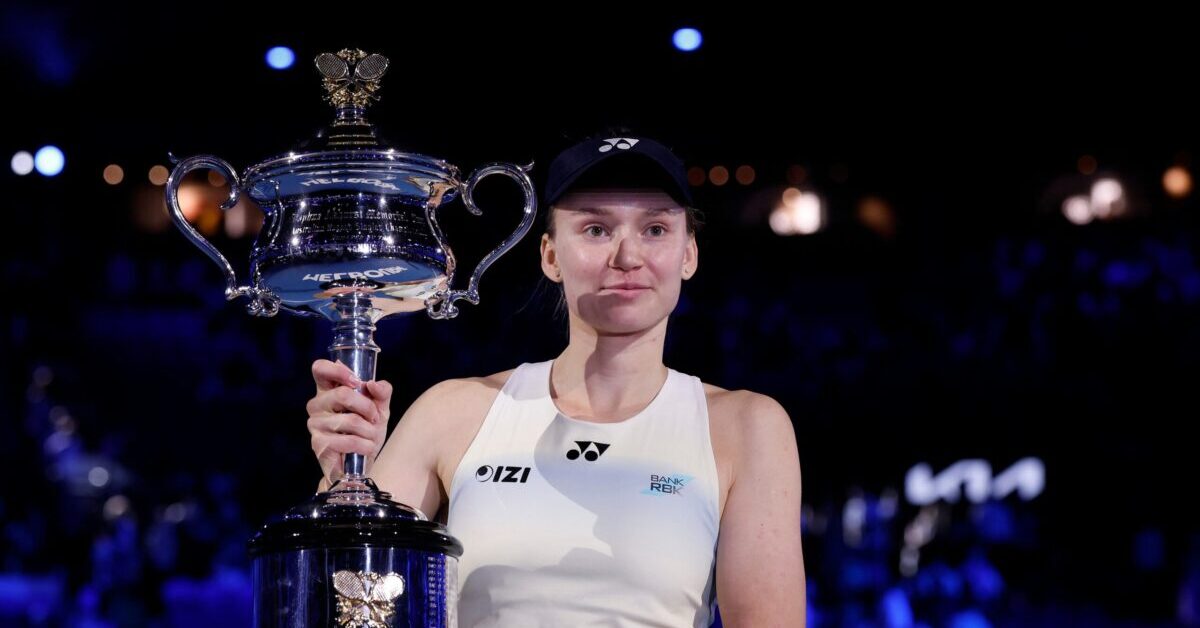
Elena Rybakina is the 2026 Australian Open champion. On a cool night at Rod Laver Arena, the No. 5 seed held her nerve to outlast top-seeded Aryna Sabalenka 6-4, 4-6, 6-4, winning her first title in Melbourne and her second Grand Slam overall. It was a gritty, mature performance in a rematch of the 2023 final, and it felt like the completion of a circle for a player who has steadily been building toward this moment.
The match lived up to its billing. Both women arrived at the final without dropping a set, a rare feat last seen at the Australian Open in 2004. Power met precision, and in the end, Rybakina found the last answers when the match tightened.
Rybakina breaks through in Melbourne
Rybakina has long had the game to win on the biggest stages, and now she has the Melbourne trophy to prove it. The Wimbledon 2022 champion handled the moment with calm strength, even when the final set seemed to tilt away from her. At 0-3 in the decider, lesser players wobble. Rybakina reset, trusted her shots, and reeled Sabalenka back in, one game at a time.
As the final ball flew long, the message from the court was simple and true: “Elena Rybakina reigns as the 2026 Australian Open champion.”
“From 0-3 down to the trophy — that’s ice in the veins.”
A final built on perfection: no sets dropped
This was not just a strong fortnight; it was near-perfect from both. Rybakina and Sabalenka marched through the draw without dropping a set, a rare shared dominance that underscored the quality of the final. When two players are that clean for two weeks, the margins in the last match get razor thin.
In that context, small runs and timely holds decide trophies. Rybakina’s serve and measured baseline play stood firm at the right moments. Sabalenka, the world No. 1, played with her trademark fire and sought a third Australian Open title. The balance of power tugged back and forth, and the first strike often settled each game. But it was Rybakina who landed the last, most important shots.
The turning point: from 0–3 to glory
Down 0-3 in the third set, Rybakina could have panicked. Instead, she tightened her patterns and kept her belief. The comeback was built on patience and courage. A few clutch holds, a timely break, and the pressure swung across the net. The commentary around the court said it best: “Self-belief, resilience.”
That confidence carried her through the final games. In the biggest rallies late, Rybakina’s decision-making was clear and brave. By the end, even neutral voices were nodding: “She deserved every bit of this with how well she played from the start to the finish.”
“Rybakina solved the pressure points — Sabalenka blinked first.”
What it means for both stars
For Rybakina, this is validation and acceleration. She is now a two-time major champion, with Wimbledon 2022 and Australian Open 2026 on the shelf. The Melbourne breakthrough proves her game translates across surfaces and situations. It also signals that the women’s game has a true, steady force who can win anywhere.
For Sabalenka, the night ends with pride and pain. Reaching a fourth straight Australian Open final puts her in rare air — the first woman to do so since Martina Hingis in 2000. She came to Melbourne as the world No. 1 and left with another deep run. The fire is still there, and so is the threat. This will fuel her for the rest of the season.
“Four straight AO finals is elite — this rivalry is the real deal.”
Wider Melbourne storylines: a fortnight of heavy hitters
The 2026 Australian Open was a showcase of peak tennis from start to finish. The women’s draw had power and poise, with the final serving as the highlight. Madison Keys, the defending champion, bowed out in the fourth round, a reminder of how hard it is to back up a Slam title in the hectic Melbourne summer.
Across the grounds, drama carried into the men’s event too, with Novak Djokovic and Carlos Alcaraz setting up a blockbuster final after epic semifinals. Melbourne Park felt like the center of the tennis universe for three weeks, from January 11 to February 1, and the energy of Rod Laver Arena on finals weekend showed why.
The match in brief: the stats that matter
- Final score: 6-4, 4-6, 6-4 to Rybakina.
- Seeds: Rybakina No. 5; Sabalenka No. 1.
- Path to final: Both finalists did not drop a set before the championship match (first time in Melbourne since 2004).
- Key moment: Rybakina recovered from 0-3 down in the third set.
- History: Rybakina’s maiden Australian Open title; second Grand Slam of her career.
- Sabalenka: Chasing a third AO crown and fifth major overall; reaches her fourth straight Melbourne final.
Legacy and the road ahead
Rybakina’s calm court presence has always been part of her strength. Now, with two majors, her resume sits alongside the elite of this era. The way she handled the pressure in this final — steady, brave, and clear-eyed — will travel with her into the rest of 2026. It also shifts the balance at the top of the women’s game by one more notch in her favor.
Sabalenka will leave with the frustration of missed chances, but also with more evidence of sustained excellence. Four straight finals at one major is a sign of dominance, even without the trophy this time. Expect her to contend again — in Melbourne and at the other Slams to come.
In many ways, this final felt like a chapter in a larger story. Rybakina and Sabalenka have the games, grit, and staying power to keep meeting when it matters most. If 2026 is anything like this night in Melbourne, the sport is in for a season of heavyweight battles.
Or, as the closing line on the broadcast put it: “With a 6-4, 4-6, 6-4 win over Aryna Sabalenka, Elena Rybakina is the Australian Open champion.” It was accurate — and earned. The trophy is hers.
Final thought: Titles like this are built on tiny swings in huge moments. Rybakina owned those swings. That is what champions do.