
Key Takeaways:
- Detroit beat Ottawa 5-3 after bold line changes, snapping back from two losses to Pittsburgh.
- Red Wings move to 1st in the Atlantic with 54 points (25-15-4); Tampa Bay 53, Montreal 52.
- Outshot 38-20, Detroit rode John Gibson’s 35 saves (.921) and a 3-0 first period to the win.
- James van Riemsdyk had 1 goal, 2 assists; Dylan Larkin scored off feeds from van Riemsdyk and Alex DeBrincat.
- New lines: Copp–DeBrincat–Kane; Larkin–Kasper–Soderblom; Raymond–Compher–van Riemsdyk; Rasmussen–Finnie–Appleton.
- Nate Danielson scratched; coach Todd McLellan says he’ll need to produce over time; John Leonard recalled from Grand Rapids.
The Detroit Red Wings needed a spark. After back-to-back losses to the Pittsburgh Penguins, head coach Todd McLellan tore up the lines in Sunday’s practice. Twenty-four hours later, the message landed. Detroit beat the Ottawa Senators 5-3 on January 5, 2026, and climbed into first place in the Atlantic Division with 54 points. It wasn’t perfect. It didn’t need to be. It was decisive, and it was timely.
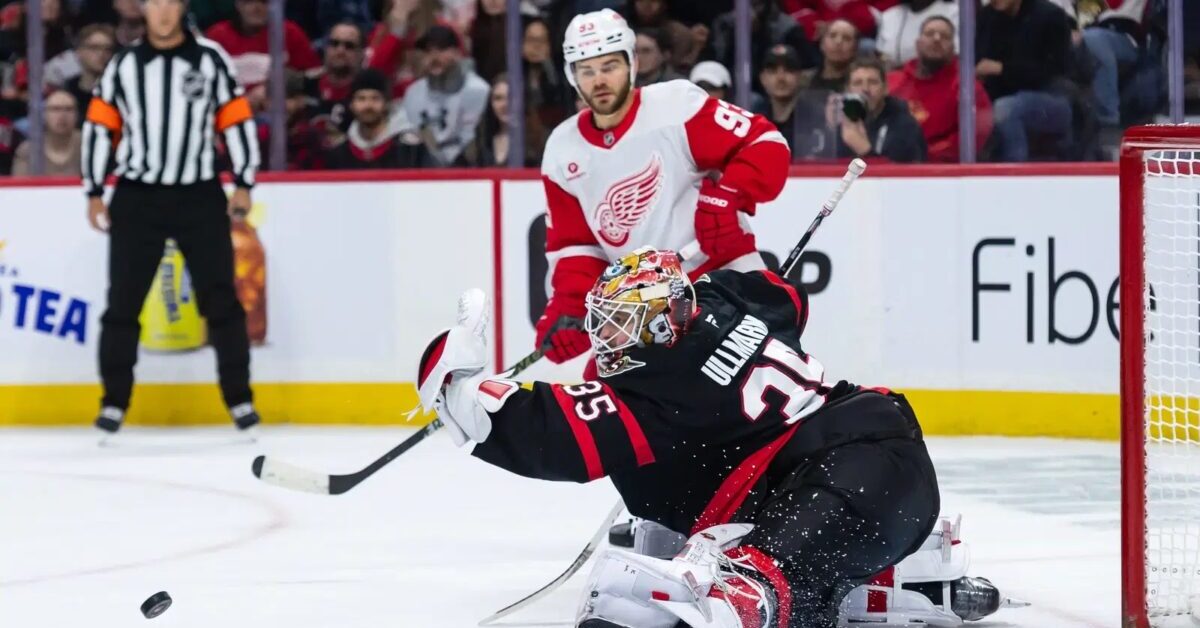
Detroit roared out to a 3-0 first period and then held on as Ottawa pressed. The Senators outshot the Red Wings 38-20 and won the faceoff battle 44-31, but Detroit got the one thing that matters most in tight NHL games: saves at the right time and scoring spread across the lineup. John Gibson made 35 stops (.921 save percentage), and the new forward groups delivered a clear jolt.
McLellan’s shakeup changes the tone
McLellan didn’t ease into these adjustments. He put Andrew Copp between Alex DeBrincat and Patrick Kane on a first line built to drive possession and spark offense. He slid captain Dylan Larkin into a second line with two young power forwards, Marco Kasper and Elmer Soderblom, who have a combined 66 NHL games and five goals. Lucas Raymond, Detroit’s points leader with 44, joined J.T. Compher and James van Riemsdyk on a third line that suddenly looked like a top-six unit. Michael Rasmussen centered Emmitt Finnie and Mason Appleton on a fourth group designed to forecheck and defend.
Asked about the new pecking order, McLellan was direct and honest. “I think Copper’s our first line right now, but I couldn’t tell you who our second, third, and fourth lines are right now,” he said. A beat later, he added, “I don’t know who our third line is. I have a pretty good idea.” The point landed: labels don’t matter. Roles and results do.
“If Kane–Copp–DeBrincat is ‘Line 1,’ who cares what we call the rest? Keep rolling.”
How the game was won: a fast start and a hot goalie
Detroit’s 3-0 burst in the first period set the stage. From there, the Red Wings managed the clock. Ottawa clawed back with a 2-1 second period and the teams split goals 1-1 in the third, but the cushion held. Special teams were even with both clubs scoring once on the power play, and whistles were frequent — Detroit took six penalties to Ottawa’s five.
Gibson’s calm was the separator. The Senators fired 38 shots, pushing hard on the cycle and pounding pucks from the points. But Gibson’s rebound control and traffic management kept the middle of the ice clear enough for Detroit to survive the surges. It’s the kind of composed road-map win that good teams stack in January.
Depth scoring arrives, and van Riemsdyk leads the way
James van Riemsdyk put a stamp on the night with three points (one goal, two assists). His net-front timing and soft hands helped Detroit tilt key shifts. Dylan Larkin also scored, finished by feeds from van Riemsdyk and Alex DeBrincat. This is exactly the sort of balanced production McLellan was aiming for with the changes.
There was more under the hood, too. Raymond, despite a third-line label, remains this team’s engine at five-on-five and leads the Red Wings with 44 points. His presence on that unit with JVR and Compher made the “third” line look awfully dangerous. It hinted at a matchup problem for opponents who now can’t key on just one Detroit line.
“JVR on L3 is a cheat code. If it works, don’t touch it.”
Standings context: Atlantic lead, and why it matters
With the win, Detroit moved to 25-15-4 (54 points) and to the top of the Atlantic Division. The margin is thin: Tampa Bay sits at 25-13-3 (53 points) and Montreal at 23-13-6 (52 points). Florida (22-16-3, 47) and Buffalo (21-15-4, 46) are in the chase pack. But being in first in early January matters. It’s proof of concept after an uneven run.
Some trends underline the moment. Detroit is 6-3-2 against the Atlantic this season and 11-6-1 when it scores a power-play goal. Also notable: the Red Wings now have two wins in their last eight tries against the Senators, a small but real sign of growth against a familiar nemesis. And while their 129 goals rank 14th in the league, the new look suggests more scoring depth may be coming.
Lineup notes: Danielson sits, Leonard recalled
McLellan scratched rookie center Nate Danielson, who has yet to record a point in 11 NHL games as he adjusts to the pace. The coach’s view was encouraging but firm: “Nate is going to have to produce some offense over time. He’s still figuring out the game here, and I think he’s got a tremendous toolbox.” In other words, the door isn’t closing; the timeline is just honest.
To bolster depth, Detroit recalled John Leonard from Grand Rapids. He has four points in seven AHL games and gives McLellan another option if the lineup needs a fresh look or a quick injection of speed on the wing.
“Play the kids with purpose, not just minutes. Tonight felt like that.”
What McLellan’s approach tells us
Beyond the two points, the most important takeaway is strategic. McLellan’s words and actions align: names on paper matter less than pressure and chemistry on the ice. Putting Copp between Kane and DeBrincat created a savvy, puck-control trio. Sliding Larkin with Kasper and Soderblom gave two big young wingers a reliable, fast center who can drive play and teach in real time. Parking Raymond on a “third” line doesn’t reduce his role; it spreads the threat and makes line matching harder for opponents.
Detroit did not win because it dominated every category — it didn’t. It won because the lineup choices matched the game state, and because the goalie was there when it mattered most. The Red Wings were outshot, outdrawn on the dot (44-31), and took more penalties (6-5). But they started strong (3-0 in the first), traded blows the rest of the way (1-2 in the second, 1-1 in the third), and cashed the high-leverage moments.
The road ahead
Holding first place will demand consistency and more of the balanced scoring seen here. The Atlantic is tight, and one poor week can flip the board. Still, this win gives Detroit a template: a flexible top nine, a sturdy fourth line, and a power play capable of tipping games. If Gibson keeps providing steady goaltending and if the new combinations stick, Detroit has the tools to keep pace at the top.
For now, the message is simple. After two rough nights against Pittsburgh, the Red Wings didn’t sulk. They changed, they responded, and they claimed the division lead. That’s what good teams do in January.