
Key Takeaways:
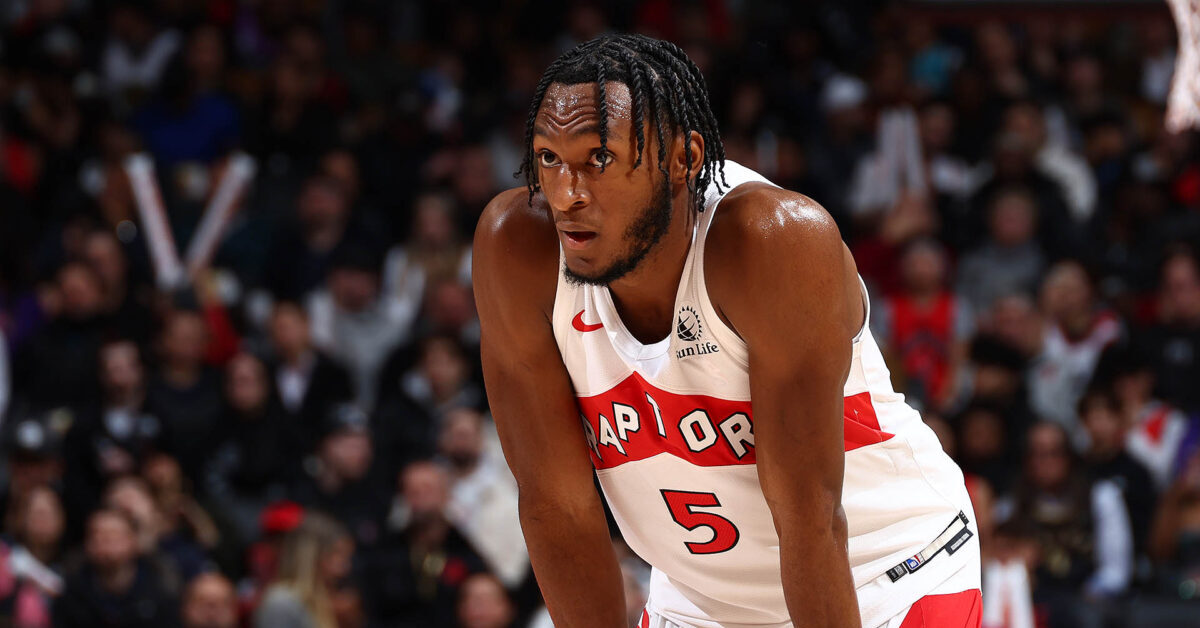
- Raptors are exploring a win-now package centered on Immanuel Quickley ahead of the trade deadline.
- Mock frameworks include deals for Nikola Vucevic/Coby White, De’Aaron Fox, Domantas Sabonis, and Ja Morant.
- Toronto sits 24-17 (4th in East) and reportedly trails the Detroit Pistons by 5.0 games in the standings.
- Quickley’s contract: 5 years, $162.5M; his $32.5M 2025-26 salary is a key matching piece.
- Bobby Marks says Quickley’s deal “screwed up” restricted free agency benchmarks across the league.
- Proposed Bulls package would cost Toronto Gradey Dick plus 2029 and 2031 first-round picks.
The Toronto Raptors are signaling urgency. Multiple outlets report the franchise is weighing a bold, win-now package with Immanuel Quickley as the centerpiece, a move that would put their chips on the table in a crowded Eastern Conference race. The targets being floated? Veterans and stars like Nikola Vucevic, Domantas Sabonis, Ja Morant, and even De’Aaron Fox in various mock trade constructions.
Toronto enters the week at 24-17, sitting fourth in the East and, as noted in reports, trailing the Detroit Pistons by 5.0 games. With head coach Darko Rajakovic leaning into a tighter guard rotation and rookie Jamal Shead emerging as a trusted option, Quickley’s fit, his role, and notably his contract are drawing attention across the league.
Why Quickley Is Suddenly on the Table
Quickley is a good player on a big number. He signed a five-year, $162.5 million extension last summer, and his $32.5 million salary for 2025-26 has become a crucial matching chip in any star-level deal. This season he’s posting 16.5 points, 4.2 rebounds, and 6.3 assists per game, solid production that helps stabilize Toronto’s backcourt.
But the Raptors have bigger ambitions. Toronto believes it can push toward the top of the East with the right upgrade, and Quickley’s cap figure may be the cleanest way to get there. As ClutchPoints’ Brett Siegel framed it, “Jamal Shead has emerged as a key guard in head coach Darko Rajakovic’s rotations, and Quickley’s cap figure would be the key to this franchise making a key upgrade at the trade deadline.”
“If Shead is rising and Barnes keeps leveling up, flipping Quickley for a star might be the only path to jump a tier.”
The Mock Deals Making the Rounds
These proposals are speculative frameworks circulating among outlets such as FadeAwayWorld, Heavy.com, BasketNews, ClutchPoints, CBSSports, Athlon Sports, and Raptors Aggr. They offer a window into the kind of swing Toronto appears willing to consider:
- Scenario 1 – Bulls: Raptors receive Coby White and Nikola Vucevic; Bulls receive Immanuel Quickley, Gradey Dick, and first-round picks in 2029 and 2031.
- Scenario 2 – Spurs: Raptors receive De’Aaron Fox; Spurs receive Immanuel Quickley, Ochai Agbaji, a 2026 first, a 2028 first, and a 2029 second.
- Scenario 3 – Kings: Raptors receive Domantas Sabonis; Kings receive Immanuel Quickley and Jakob Poeltl.
- Scenario 4 – Grizzlies: Raptors receive Ja Morant and Jock Landale; Grizzlies receive Immanuel Quickley, Ochai Agbaji, and Gradey Dick.
Each structure tells a story. Toronto is looking at frontcourt anchors (Vucevic, Sabonis) and dynamic lead guards (Fox, Morant) who could transform their ceiling alongside Scottie Barnes and offseason addition Brandon Ingram. The willingness to include young wings like Dick and Agbaji, plus future firsts, underscores a clear posture: the Raptors see a window right now.
“White and Vooch raise the floor; Fox or Ja raises the ceiling. Which bet do you make in the East?”
The Money, The Market, and Why It Matters
Quickley’s deal has been a league-wide talking point. ESPN cap analyst Bobby Marks summed it up bluntly: “The Immanuel Quickley contract…has totally screwed up restricted free agency. That’s where agents are looking at, like the benchmark… That number has screwed up a lot of things.”
What that means for Toronto is twofold. First, Quickley’s salary acts as a dependable ballast to match money for a star trade without gutting the entire rotation. Second, moving off that number could help rebalance the Raptors’ cap sheet around their stars, especially if they consolidate multiple assets into one high-impact player.
It’s also about opportunity cost. Barnes is rising, Ingram adds scoring and shot creation, and the East remains fluid below the very top. If the Raptors believe a single major piece can unlock a second-round or conference finals path, this is the type of move front offices are hired to find.
Fit Check: How Each Target Changes Toronto
Nikola Vucevic/Coby White (Bulls): Vucevic gives Toronto a skilled, rebounding center who can space, pass, and anchor pick-and-pop actions. White adds scoring punch and secondary playmaking. The cost—Quickley, Gradey Dick, and two future firsts (2029, 2031)—is steep, but it creates balance and immediate reliability.
De’Aaron Fox (Spurs framework): Fox is a turbo-charged lead guard who collapses defenses, perfect for lifting pace and generating easy buckets. The price tag here includes multiple picks (2026, 2028 firsts; 2029 second) and depth, but the upside alongside Barnes and Ingram is undeniable.
Domantas Sabonis (Kings): Sabonis would reshape Toronto’s offense with elite handoff and dribble-handoff playmaking. Pairing him with Barnes could yield one of the slickest frontcourt playmaking duos in the conference.
Ja Morant (Grizzlies): Morant is a franchise-level creator whose rim pressure and star gravity bend defenses. The risk profile is different, but the talent is undeniable. If Toronto wants a face-of-the-franchise guard, this is it.
“If you’re serious about Barnes as your hub, Sabonis or a downhill guard like Fox/Ja is the cleanest bet.”
Where the Raptors Stand Right Now
At 24-17 and fourth in the East, Toronto is in the thick of the race. The organization is acting like a buyer, not a seller, and these proposals back that up. Reports also note the Raptors trail the Detroit Pistons by 5.0 games in the standings, a quirky detail that underscores the odd shape of the conference table but doesn’t change the core takeaway: the Raptors believe they can move up if they add the right piece.
Quickley’s own season has been steady. He’s producing across the board while adapting to a changing role, and his career marks (13.7 points, 3.4 rebounds, 3.7 assists across 291 games and 65 starts before the extension) suggest a proven, starter-capable guard. None of this is a knock on Quickley; it’s a reflection of asset math and timing. With Shead pushing for minutes and Toronto eyeing star-level help, the calculus tilts toward consolidation.
What Happens Next
Mock trades don’t always become real, but they signal directions. The names attached here—Vucevic, Fox, Sabonis, Morant—are exactly the types of players Toronto would need to justify parting with picks and prospects. The draft capital involved (2026, 2028, 2029, 2031) is a big commitment, so the Raptors will have to decide which timeline and which skill set best amplify Barnes and Ingram.
Keep an eye on how Rajakovic uses Shead over the next stretch and whether Toronto’s offense stalls against top-tier defenses. If the Raptors stall, expect the front office to lean even harder into star hunting. If they surge, they may still swing—but with more leverage and clarity on which piece fits best.
Either way, the message is clear. The Raptors are not waiting around. They’re exploring the market with purpose, and Immanuel Quickley’s contract may be the key that unlocks one of the deadline’s biggest moves.
Bottom line: Toronto is prepared to pay for certainty—and they’re ready to find out which star makes that price worth it.