
Key Takeaways:
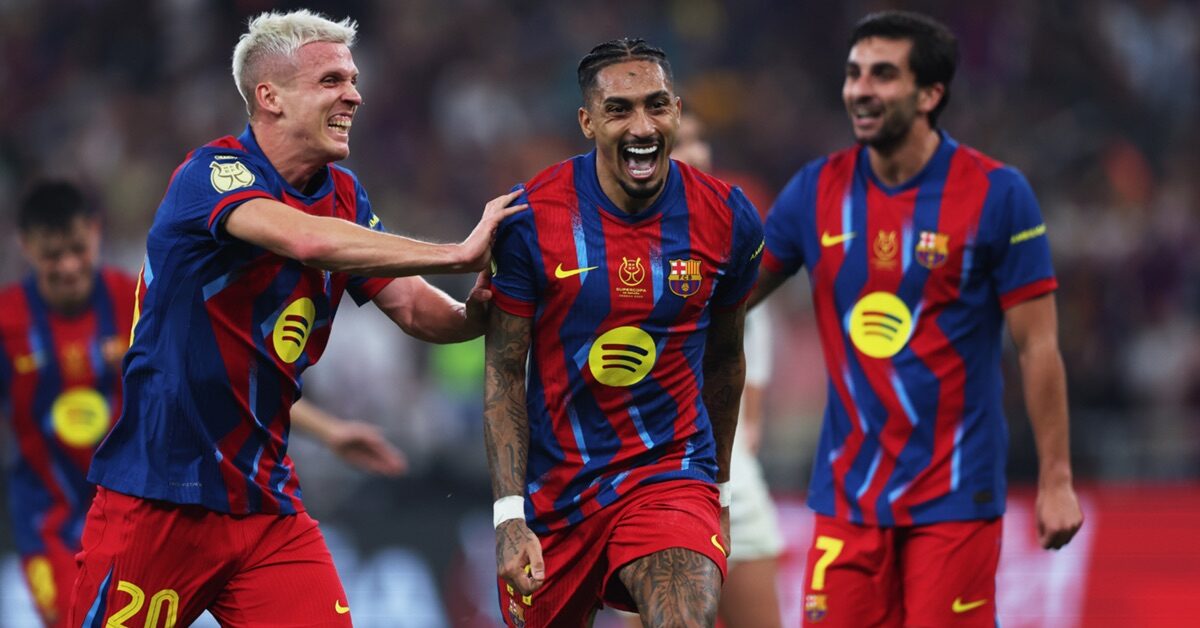
- Raphinha scored twice, including a 73′ winner deflected off Raúl Asencio, as Barcelona beat Real Madrid 3-2.
- Chaotic first-half stoppage time produced three goals, turning 1-0 into 2-2 at the break in Jeddah.
- Barcelona retained the Spanish Super Cup and lifted a record 16th title; Hansi Flick’s third straight final win over Madrid.
- Barça dominated the ball (76% first half, 81% overall), yet shots on target were level at 8 each; xG 2.6 vs 1.38.
- Frenkie de Jong was sent off in second-half stoppage time for a foul on Kylian Mbappé; keeper Joan García made a late double-save.
- Real Madrid, missing Éder Militão and Antonio Rüdiger, took a cautious approach; Mbappé returned from a knee injury to play the final 14 minutes.
Raphinha lit up Jeddah and the Spanish Super Cup final. With a sharp opener and a deflected winner, the Brazilian winger powered Barcelona past Real Madrid 3-2 at King Abdullah Sports City Stadium. It was a wild, gripping Clásico that saw three stoppage-time goals in the first half, a red card in the last moments, and a trophy lifted by a team that kept its nerve.
This was more than a showpiece. It was Barcelona’s third straight final victory over Real Madrid under coach Hansi Flick, following last year’s Supercopa and the Copa del Rey. It also restored pride after Madrid’s 2-1 LaLiga win in October. And it delivered a record-extending 16th Super Cup title to the Catalans.
Raphinha’s big-night brace in the Spanish Super Cup final
Barcelona’s plan was clear: control the ball, move Madrid side to side, and pick the moments to strike. Raphinha struck first in the 36th minute, finishing a flowing move that rewarded Barcelona’s long spells of possession.
His second was the match-winner in the 73rd minute, a shot that took a crucial touch off Raúl Asencio on its way in. It was the kind of break that big games often turn on. But it also came from the pressure Barcelona built over the entire night.
“Raphinha’s timing was elite — big player, big final.”
A stoppage-time storm: three goals before the break
The first half was calm, until it wasn’t. After Raphinha’s opener, stoppage time exploded. Vinícius Júnior pulled Madrid level. Robert Lewandowski then buried a chance to restore the lead for 2-1. Seconds later, Gonzalo García tied it again. In the space of minutes, 1-0 became 2-2.
Those wild moments defined the tone. Madrid were happy to sit deep and counter. Barcelona, meanwhile, were patient on the ball. By halftime, Barça had 76% possession and finished the night with 81%. Still, both teams hit eight shots on target. Barcelona edged expected goals (xG) 2.6 to 1.38, which reflects the clearer chances they created across the 90 minutes.
Why Barcelona’s control mattered
Real Madrid came into the final without center-backs Éder Militão and Antonio Rüdiger. That helped explain a cautious, compact setup. Madrid tried to keep the game in front of them and break fast through Vinícius and support runners like García.
Barcelona, by contrast, leaned into structure. Pedri and Frenkie de Jong kept the passing routes tidy. The first yellow card did not arrive until the 58th minute, a sign of how calculated much of the match was. The control allowed Barcelona to push Madrid back for long stretches and take the sting out of counters.
“Madrid had moments, but Barça had the plan — and stuck to it.”
Even with that control, the margins stayed thin. Madrid’s chances were fewer but sharp. That is why the final minutes mattered so much, and why individual plays became decisive.
Turning points: Lewandowski’s punch, Mbappé’s return, and the red card
Lewandowski’s first-half stoppage-time strike was a veteran forward’s finish and a swing of momentum that, even with García’s quick reply, showed Barcelona’s cutting edge. Later, the match tilted again with the arrival of Kylian Mbappé.
Mbappé, back from a knee injury, entered on 76 minutes as Madrid chased the game. His presence stretched the back line and brought urgency to the final push. Barcelona’s discipline held, even after a late twist: Frenkie de Jong saw red in second-half stoppage time for a foul on Mbappé. Pedri also went into the book on 86 minutes as tensions rose.
In the dying moments, Madrid forced a series of corners. Barcelona goalkeeper Joan García produced a heroic double-save to protect the lead. It summed up Barça’s night: control when possible, resilience when needed.
“Joan García’s late saves were the hidden trophy lift.”
Flick’s final touch: three in a row vs Real Madrid
This win gives Hansi Flick three straight final triumphs over Real Madrid: the 2025 Supercopa, the Copa del Rey, and now the 2026 Super Cup. That is not just a stat; it is a pattern. In one-off games, his Barcelona have been composed, organized, and opportunistic.
It also extends Barcelona’s grip on this competition. Sixteen Super Cup titles is a remarkable landmark. Doing it in a Clásico, and in a game played far from home in Jeddah, adds to the sense of steel building under Flick. The win also answers October’s league loss, showing that Barcelona can shift gears and match Madrid in different types of contests.
Madrid’s takeaways: grit, but gaps to close
For Madrid, there is no shame in falling 3-2 in a final where they created enough to scare their rivals. Vinícius and García scored at key moments. The bench delivered energy, and Mbappé’s return is a clear positive moving forward. But the plan to sit deep and concede 81% possession always carried risk.
Missing Militão and Rüdiger limited Carlo Ancelotti’s options. A deeper line was understandable. Still, when Raphinha found space and luck for the winner, Madrid had to chase, and that opened gaps. It took smart defending, and García’s late saves on the other end, to make sure Barcelona could close the game.
What comes next
Barcelona leave Saudi Arabia with another trophy and a confidence jolt before the next run of league and cup games. Raphinha’s form, Lewandowski’s timing, and Flick’s calm touch in finals look like pillars for the months ahead.
Real Madrid will expect their back line to heal and their attack to sharpen with Mbappé’s minutes climbing. In many ways, this final felt like a chapter in a larger story. The season is long, and the next Clásico already feels like must-watch TV.
Bottom line: in a tense, tactical game sprinkled with chaos, Barcelona did a little more of everything right. They kept the ball, found the goals, and survived the storm. That is how cups are won.