
Key Takeaways:
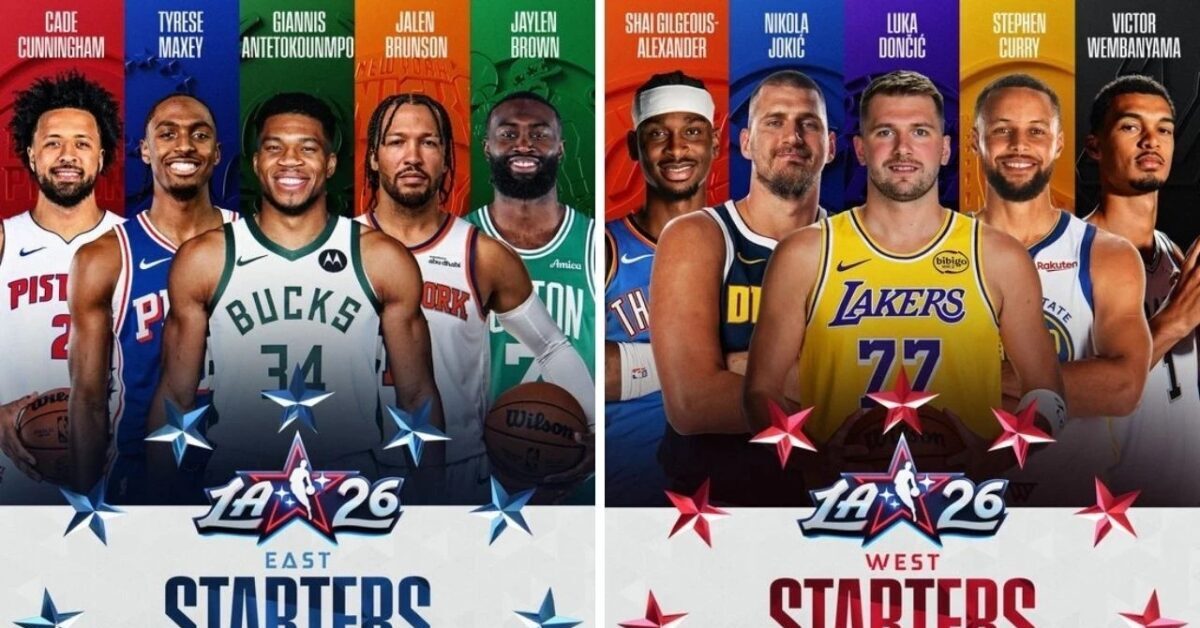
- NBA unveiled the 10 starters for the 2026 All-Star Game, set for Feb. 15 at the Intuit Dome in Los Angeles.
- The game debuts a new USA vs. The World format, and the starter selection dropped backcourt/frontcourt labels.
- Luka Dončić led all fans in voting; Giannis Antetokounmpo led the East. Full starting fives named for both sides.
- LeBron James, 41, was not voted a starter; Commissioner Adam Silver may invite him as a commissioner’s pick if he isn’t a reserve.
- Each conference will have 12 All-Stars (5 starters, 7 reserves). The league set minimum roster thresholds of 16 American players or 8 international players per conference.
- Starters include Curry, Jokić, Wembanyama, SGA, Maxey, Brunson, Cunningham, Jaylen Brown, and Giannis alongside Luka.
The NBA pulled back the curtain on Monday, January 19, unveiling the ten starters for the 2026 NBA All-Star Game. The showcase tips February 15 at the new Intuit Dome in Los Angeles and, for the first time, goes USA vs. The World. It’s a clear reset for a midseason classic that keeps trying to find the right spark.
The headline names are huge. Luka Dončić, now a Laker, led all fan voting in his sixth All-Star nod. Giannis Antetokounmpo, a 10-time All-Star, paced the East. But one surprise stuck out: LeBron James, 41, did not make the starting lineup this year despite averaging 26.6 points across nine games this month and missing 17 games this season. Commissioner Adam Silver has already hinted he would “almost certainly invite James to participate as some sort of commissioner’s pick” if he isn’t chosen as a reserve.
With a star-packed field and a fresh format, the league is clearly hoping for a faster, cleaner, more competitive game in Los Angeles. And the new rules around picking starters may help with that too.
The new USA vs. World era, and a simpler way to pick starters
This All-Star cycle comes with two major tweaks. First, the game itself is USA vs. The World, which should give fans a natural rooting interest and add national pride to the mix. Second, the league removed the old backcourt and frontcourt designations in the starter selection process. That means the five best players, period, could rise to the top for each conference’s vote without being boxed in by positions.
The NBA also confirmed the team structure remains at 12 All-Stars per conference—five starters and seven reserves. And there is a minimum roster requirement in place: at least 16 American players or eight international players per conference. It’s the league’s way of making sure the new format has the depth to deliver.
“No backcourt vs. frontcourt labels finally let the five best rise.”
Western Conference starters: star guards, giant problems
The West’s starting five reads like an All-NBA ballot and a nightmare for defenses:
- Luka Dončić, Los Angeles Lakers (sixth All-Star selection; top overall in fan votes)
- Stephen Curry, Golden State Warriors (12th selection)
- Shai Gilgeous-Alexander, Oklahoma City Thunder (fourth selection)
- Nikola Jokić, Denver Nuggets (eighth selection)
- Victor Wembanyama, San Antonio Spurs (second selection)
This group blends shotmaking, size, and savvy. Curry’s 12th nod underscores his staying power as the league’s most feared off-ball mover. Jokić, the two-time MVP and game’s best hub, anchors the middle. Wembanyama, already in his second All-Star at 22, gives the lineup absurd reach and shot-blocking. And in the backcourt, Luka and SGA bring pace control and pressure scoring. It’s a group built to keep the ball hopping and the scoreboard ticking.
Eastern Conference starters: balance and two-way bite
The East counters with a mix of downhill guards and strong wings:
- Tyrese Maxey, Philadelphia 76ers (second All-Star selection)
- Jalen Brunson, New York Knicks (third selection)
- Cade Cunningham, Detroit Pistons (second selection)
- Jaylen Brown, Boston Celtics (fifth selection)
- Giannis Antetokounmpo, Milwaukee Bucks (10th selection; led East in fan voting)
This five balances speed and strength. Maxey and Brunson can both run an offense and close a game. Cunningham’s size and vision provide a secondary playmaking track. Brown adds slashing and on-ball defense. And Giannis is Giannis—end-to-end pressure, rim force, and transition chaos all in one.
“USA vs. World with Luka in purple and gold? Ratings rocket ship.”
Luka’s first All-Star as a Laker is the Hollywood storyline
Luka Dončić being introduced as a Laker in his next All-Star moment is a made-for-LA story. Traded from Dallas last year, he moves into All-Star Weekend carrying the weight of Los Angeles expectations—and now the glow of leading all fans in voting. The Lakers’ brand plus Luka’s playmaking is a perfect All-Star match: showtime angles, deep threes, and the sense that any pass could be a highlight.
It also adds a wrinkle to the USA vs. World angle. Dončić will headline The World contingent as a Laker star on American soil. That’s a big-stage contrast the league surely wanted.
The LeBron question: a snub, and possibly a send-off
LeBron James missing out on the starting five is news on its own. At 41, still posting strong numbers, he is living proof of rare longevity. The missed 17 games matter, though, and the fan vote leaned elsewhere. If he isn’t named a reserve, Silver’s suggestion of a commissioner’s pick feels like both a nod to his status and a way to give fans a proper look at a legend in LA.
Would that be a farewell touch? There’s no official word. But the idea of LeBron taking a bow at the Intuit Dome during All-Star Weekend fits the moment.
“LeBron not starting at 41 is fair—give him the commissioner’s call.”
What the format shift could change on the floor
Positionless selection should make both teams feel more like true best-five groups. Without backcourt/frontcourt slots, coaches and fans got the most impactful names, not just the best positional fits. That could speed up the game and cut down on awkward lineups.
The USA vs. World twist also adds edge. The World side will lean into size and skill—Jokić as a passer, Giannis in transition, Wembanyama as a help defender, Luka as a pick-and-roll mastermind. The USA side, shaped by guard play and shot creation, will try to stretch the floor and push pace. That tug-of-war—skill size vs. quick-strike shotmaking—should define the night.
Reserves will sharpen the matchup
Seven reserves will round out each conference’s 12-man group. Those picks will matter. Bench units decide a lot of All-Star runs, especially when coaches stagger stars to find rhythm. Expect defensive-minded wings, extra shooting, and a few first-time nods to fill the remaining slots.
Also watch the minimum roster thresholds—at least 16 American players or eight international players per conference—because they hint at how deep each talent pool runs this season. It’s a sign the league expects both sides to be stacked, even beyond the names on the jerseys.
The bottom line
All-Star Weekend needed a jolt, and the NBA seems determined to give it one. A USA vs. The World game in Los Angeles, a simpler way to select starters, and a star draft that puts Luka, Giannis, Curry, Jokić, Wembanyama, Maxey and more in the same spotlight checks every box.
And yes, the big story inside the big story is LeBron. Whether he enters as a reserve or through a special invite, the league knows what the fans want: the biggest stars, the best highlights, and a game that feels like the sport at its most joyful. If LA gets that on February 15, the format won’t just be new. It will be the future.