
Key Takeaways:
- Mets trade for All-Star Freddy Peralta and Tobias Myers; send top prospects Jett Williams and Brandon Sproat to Brewers.
- Peralta, 29, posted a 2.70 ERA across 33 starts in 2025 and hasn’t hit the IL in three years; he is on an $8M club option for 2026.
- New York addresses a rotation that ranked 27th in ERA from June 12 to the end of 2025.
- Brewers continue their strategy of trading stars before free agency, adding MLB-ready Williams and Sproat to a young core.
- Mets designate right-hander Cooper Criswell for assignment in a corresponding move.
- Mets’ projected 2026 CBT payroll climbs to $365M; Peralta carries an $8.8M luxury-tax hit.
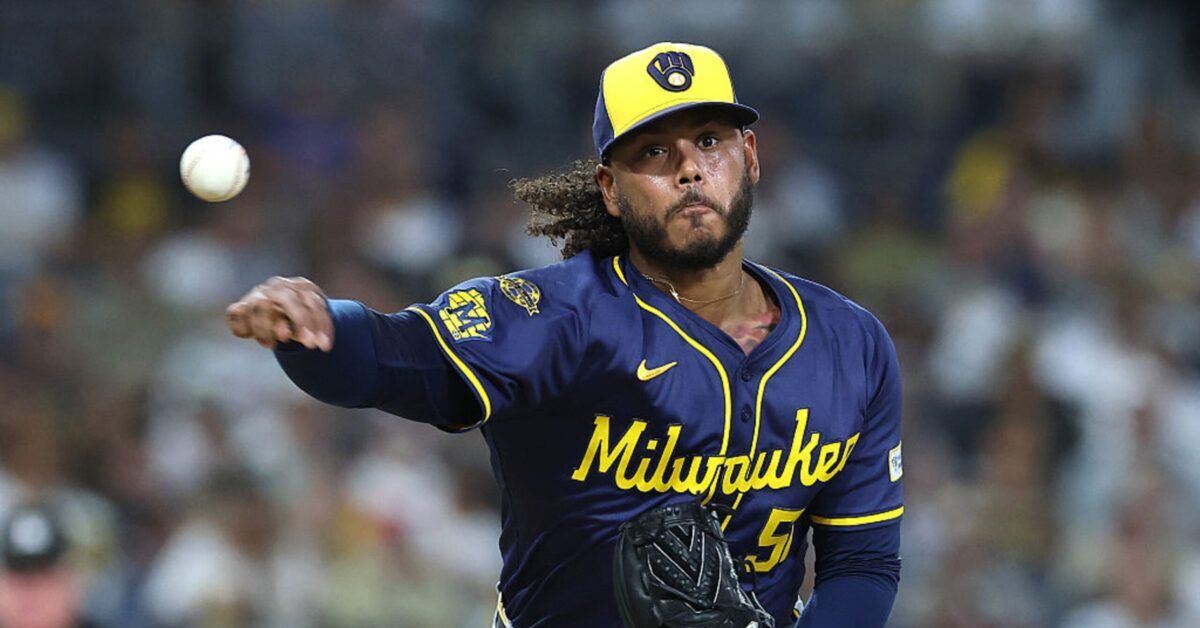
The New York Mets made their move under the lights. Late Wednesday, the club acquired two-time All-Star right-hander Freddy Peralta from the Milwaukee Brewers in a four-player trade that sends top prospects Jett Williams and Brandon Sproat to Milwaukee. Swingman Tobias Myers also heads to Queens, while the Mets designated righty Cooper Criswell for assignment.
This is a fix aimed squarely at the Mets’ most glaring 2025 problem: a rotation that sagged to 27th in ERA from June 12 to season’s end. Peralta, 29, arrives as a ready-made No. 1 or No. 2 with elite swing-and-miss, durability, and one year of cost control before free agency.
Why the Mets pounced on Freddy Peralta
Peralta is coming off the best year of his career: a 2.70 ERA over 33 starts and 176 2/3 innings. The underlying numbers back it up. He struck out 28.2% of hitters with a near-13% swinging-strike rate, and he kept his walks at 9.1%. Across the last three seasons, hitters slashed just .210/.288/.367 against him. In other words, very few get on, and even fewer do damage.
Just as important, he posts. Peralta hasn’t spent a day on the injured list in three years, piling up 95 starts (tied for fifth in MLB) and 516 innings (15th) in that span. For a Mets team that rode a pitching rollercoaster in 2025, availability is a skill—and Peralta has it.
On contract terms, the fit is clean. He’s playing 2026 on an $8 million club option with an $8.8 million luxury-tax hit, then he’s a free agent. The Mets can plug him in now while keeping long-term flexibility.
“This is the first real ace the Mets have had who’s both nasty and durable since the Scherzer/Verlander era ended.”
What Peralta brings to Citi Field
Peralta’s style is modern and aggressive. He lives up in the zone with a fastball that plays, chases whiffs, and accepts that a few fly balls may leave the yard. The trade-off works because he limits baserunners. With nine postseason games (six starts) on his ledger, he’s also pitched under bright lights before.
The Mets’ rotation picture now looks more balanced. Peralta joins rookie Nolan McLean, Sean Manaea, Clay Holmes, Kodai Senga, and David Peterson, with depth options behind them. That list will evolve, but the headliner is clear: Peralta changes the ceiling of this staff.
Myers adds another layer of protection. As a swingman, he can start or relieve and cover innings. For a team eyeing October, that flexibility matters across 162 games.
The cost: Williams and Sproat headline Brewers’ return
Deals like this hurt because the prospects are real. Jett Williams, 22, was the Mets’ No. 3 prospect and MLB’s No. 30 overall. He’s a high-energy mover who can play shortstop, second, and even center field. After wrist surgery in 2024, he came back strong in 2025, slashing .261/.363/.465 with 34 doubles, seven triples, 17 homers, and 34 steals across Double-A and Triple-A. He pressures defenses with plus speed and impacts games in many ways.
Brandon Sproat, 25, was New York’s No. 5 prospect and made his MLB debut in 2025. He logged four big-league starts (4.79 ERA, 17 K, 7 BB in 20 2/3 innings) and a full season at Triple-A (121 IP, 4.24 ERA, 113 K, 53 BB). His sinker averaged 95.7 mph, and his best weapons are breaking balls—a mid-80s sweeper that drew a 34.6% whiff rate in the majors and a high-70s curveball. A changeup helps him keep lefties honest. With improved command, he looks like a steady No. 3 or No. 4 starter.
“If Sproat clicks, the Brewers might have found their next rotation workhorse on a budget.”
Inside Milwaukee’s plan: control the window, restock the core
This is familiar terrain for the Brewers. They’ve made a habit of moving stars before their contract years to restock with controllable, MLB-ready talent. Corbin Burnes to the Orioles in 2024, Devin Williams to the Yankees in 2024, and now Peralta to the Mets. It’s surgical and, so far, sustainable.
General manager Matt Arnold praised Sproat’s upside, calling him “very high-octane” with “incredible stuff” and noting he’ll compete for a rotation spot right away. Williams, meanwhile, slots into an athletic outfield-and-infield mix that could include Brent Rooker, Joey Chourio, Sal Frelick, and Garrett Mitchell.
The Brewers also expect veteran Brandon Woodruff to lead the 2026 staff after nearly two years of shoulder rehab and a late-2025 lat issue. Young arms Quinn Priester (a 2025 standout), Jacob Misiorowski, Chad Patrick, plus prospects Logan Henderson and Robert Gasser, form a deep internal pipeline. As Arnold put it, they still feel “very, very” strong about the rotation picture for 2026.
The money and the margins: Mets push payroll to contender territory
The Mets are spending like a team that expects to win now. Their projected 2026 competitive-balance-tax payroll sits around $365 million after ending 2025 at $347 million with a $91.6 million tax payment. Peralta’s 2026 salary is $8 million with an $8.8 million CBT hit. That’s prime value for an All-Star, and it preserves optionality if New York wants to extend him or pivot next winter.
To make room, New York designated right-hander Cooper Criswell for assignment. It’s a small move in the headlines, but it reflects how the Mets are tightening the roster around impact arms and flexible depth.
How this reshapes the Mets’ 2026 identity
This trade caps a sweeping makeover. New York moved on from long-time faces Pete Alonso, Brandon Nimmo, and Edwin Díaz, then rebuilt the core with Marcus Semien at second base, Bo Bichette at third, and All-Star closer Devin Williams. Now they’ve added a frontline starter in Peralta.
Put simply, the Mets upgraded the middle of the field and front of the pitching staff in one winter. With Peralta atop a rotation that also includes Senga, Manaea, Holmes, Peterson, and rookie McLean, New York raises its floor and its October upside. Add swingman Myers and prospect depth like Jonah Tong and Christian Scott waiting in the wings, and the club can navigate injuries and slumps better than a year ago.
“Peralta, Bichette, Semien, Devin Williams — that’s a contender’s spine. The Mets finally look aligned.”
Bottom line
The Mets paid a real price in Williams and Sproat, but in Freddy Peralta they acquired what they lacked most: a healthy, high-end starter who misses bats and takes the ball every fifth day. The Brewers, true to form, turned one year of a star into years of control over two near-ready pieces who fit their model.
New York gets better today. Milwaukee keeps itself competitive tomorrow. That’s the mark of a trade that makes baseball sense on both ends.