
Key Takeaways:
- Mets acquire Luis Robert Jr. from the White Sox late Tuesday for Luisangel Acuña and RHP Truman Pauley; no cash included.
- Robert, 28, is owed $20M in 2026 with a $20M club option for 2027 ($2M buyout).
- Mets’ total 2026 commitment to Robert is $46.2M when factoring a 110% luxury tax; CBT payroll projected at $350–357M.
- Performance split: 2023 All-Star (.264/.315/.542, 38 HR) vs. 2024‑25 (.223/.288/.372, 28 HR, 56 SB over 856 PA); 33 SB in 2025 and 110 games.
- Health is the key risk: two left hamstring strains in 2025; still a Gold Glove-caliber center fielder.
- White Sox return: Acuña’s speed (97th percentile), defensive value (+3 OAA at SS in 2024), and Pauley (22) a 2025 12th-rounder from Harvard with a small pro sample.
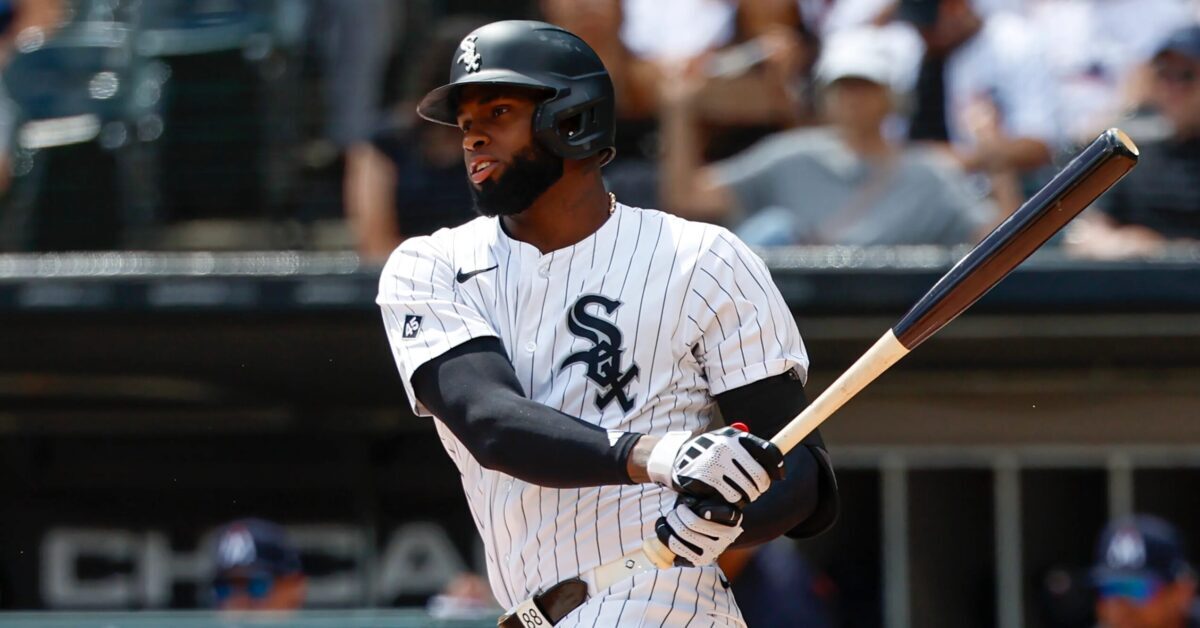
The New York Mets swung big late Tuesday night, pulling off a bold move that changes the look of their outfield and their payroll. The club has acquired center fielder Luis Robert Jr. from the Chicago White Sox, sending infielder Luisangel Acuña and right-hander Truman Pauley to the South Side. It’s a high-risk, high-reward bet on a 28-year-old with star tools and a recent history of nagging injuries.
Robert is owed $20 million in 2026. He also carries a $20 million club option for 2027 with a $2 million buyout. The Mets’ total outlay tied to the move is $46.2 million when their 110% luxury tax penalty is included, part of a projected Competitive Balance Tax payroll in the $350–357 million range. By season’s end, the luxury tax bill alone is expected to top $100 million. No cash is headed from Chicago in the deal.
The Mets, who finished 83–79 in 2025 and just missed the postseason, had been linked to Robert since the 2024 Trade Deadline. He now arrives on the same day the team signed shortstop Bo Bichette to a three-year, $126 million contract, a clear signal that New York is reshaping fast after losing Pete Alonso (Baltimore), Edwin Díaz (Dodgers), Brandon Nimmo (Rangers), and Jeff McNeil (A’s) in free agency and trades.
“If Robert stays on the field, the NL East just tilted.”
Why the Mets pushed for Luis Robert Jr.
This move is about defense up the middle, speed, and ceiling. Before the trade, Tyrone Taylor was set to be the primary center fielder. Robert brings a Gold Glove pedigree from his rookie year and the kind of range and first step that changes innings. At the plate, he has shown the ability to carry an offense for weeks. The Mets want both outcomes: run prevention and the threat of a 30-homer, 30-steal season.
New York is stacking difference-makers around its stars. The core now includes Francisco Lindor, Juan Soto, Jorge Polanco, Marcus Semien, Devin Williams, Luke Weaver, and, now, Robert and Bichette. On paper, that’s a lineup with length, power, and speed.
The player: five-tool upside, uneven results
Robert’s peak remains electric. In his 2023 All-Star season, he slashed .264/.315/.542 with 38 homers, 36 doubles, 20 steals, 90 runs and 80 RBIs, also winning a Silver Slugger. At the core, he remains a strong, sometimes spectacular, defender in center field.
But the last two seasons have been choppy. Across 2024 and 2025, he hit .223/.288/.372 with 28 home runs, 88 RBIs and 56 steals in 856 plate appearances. In 2025 alone, he played 110 games and posted a .223/.297/.364 line with 14 homers, 85 hits, 52 runs and 53 RBIs. The speed popped: he stole a career-high 33 bases last year. The power and on-base, however, dipped.
Staying healthy has been the biggest issue. Robert missed time with two left hamstring strains in 2025, the second one from late August through the end of the season. Over his career (577 games), he has 102 homers and 102 steals. When he’s on the field, he fills the box score. The question is availability.
“Cohen-level tax for an elite glove in center? That’s a message.”
Money, options and the massive tax hit
This isn’t just a baseball trade; it’s a financial statement. Robert’s $20 million salary for 2026 and the $20 million club option for 2027 are team-friendly for a player with his ceiling. But the Mets’ taxable payroll pushes the cost higher. With a 110% luxury tax rate applied, New York’s estimated commitment tied to Robert reaches $46.2 million.
The Mets’ CBT payroll projects around $350–357 million, and by season’s end the club expects to pay more than $100 million in luxury tax. That is the price of chasing a title window. The club added no cash relief from Chicago.
How Robert fits the Mets’ lineup and defense
Center field defense has outsized value in today’s game. Robert’s jumps, routes, and closing speed can turn doubles into outs. For a staff that will lean on contact management, that matters. His glove should elevate the outfield immediately.
At the plate, the Mets can be flexible. Robert can hit near the top if his on-base rebounds, or slot into the middle to drive the ball and put pressure on pitchers with his speed. With Soto and Lindor as table-setters and finishers, Robert doesn’t have to be perfect; he just has to be present and dangerous.
- Projected core bats: Francisco Lindor, Juan Soto, Bo Bichette, Marcus Semien, Jorge Polanco, Luis Robert Jr.
- Speed/pressure: Robert’s 33 steals in 2025 add a new gear on the bases.
- Defense: Instant upgrade versus the pre-trade plan with Tyrone Taylor in center.
What Chicago gets: Acuña’s speed and Pauley’s arm
The White Sox move their last star from the recent core and pivot to tools and speed. Luisangel Acuña, younger brother of Braves outfielder Ronald Acuña Jr., brings true position flexibility: shortstop, second base, third base, and even center field. He posted +3 Outs Above Average at shortstop in 2024 and +1 OAA at second in 2025, stole 16 bases in 95 games last year, and grades in the 97th percentile in sprint speed.
Acuña’s batted-ball profile shows why he’s still a work-in-progress at the plate. His 2025 ground-ball rate was 55.6% with an average launch angle of 3.4 degrees. If the White Sox can lift the ball more without losing his speed game, his value could jump in a hurry.
Truman Pauley, 22, is a 12th-round pick from the 2025 MLB Draft out of Harvard. He split time as a reliever (2024) and starter (2025) in college, posting a 5.20 ERA across 114.1 innings. In a tiny pro sample in 2025, he allowed one run in 4.1 innings (2.08 ERA). He’s a development project with some early results and the size and smarts to keep climbing.
“Acuña’s tools are loud. If the launch angle comes, watch out.”
The bigger picture: end of an era on the South Side
This trade closes a chapter for the White Sox. Robert, signed out of Cuba in 2017 with a $26 million bonus, later penned a $50 million extension in the 2019–20 offseason — then the largest deal ever for a player yet to make his MLB debut. Chicago picked up his $20 million club option for 2026, but a change of direction was coming.
Robert was the final pillar left from a core that once featured Yoan Moncada, Andrew Vaughn, Eloy Jiménez, Tim Anderson, and José Abreu. Since their last winning season in 2021, the White Sox have gone 162–324 over the past three years. Moving Robert cleanly, without cash attached, signals full commitment to a long-term reset.
Bottom line
The Mets are betting that health unlocks the best version of Luis Robert Jr. They want the All-Star from 2023, the Gold Glove defender, and the 30-homer threat who also swipes 20-plus bags. They know the risks. The last two years brought a .660 OPS stretch and injury stops. Yet the ceiling is worth the bill for a team aiming to win right now.
For Chicago, this is about runway. Acuña can defend, run, and grow at multiple spots. Pauley brings fresh pitching depth. It’s the kind of package that can look smarter each year if development clicks.
New York’s tax number will make headlines. But titles are won by stars who change games on both sides of the ball. If Robert is on the field, he can be that star. And if he is, Tuesday night’s gamble may look like the moment the Mets took control of their window.