
Key Takeaways:
- Mercedes reveals the W17 for F1 2026 with active aerodynamics and a 50/50 electric-combustion power split.
- Silverstone shakedown: 200km completed, 67 laps on the 2.979km International Circuit, driven by George Russell and Kimi Antonelli.
- The car is smaller, narrower, and lighter, aligning with the new rules and a threefold increase in electrical power output across F1.
- Livery keeps the iconic silver-and-black look with PETRONAS green; Microsoft appears as a new sponsor on the airbox and front wing endplates.
- Next up: three days of running at Barcelona (Jan 26–30), followed by Bahrain testing before Australia opens the season on March 8.
- Mercedes powered McLaren, Williams and Alpine in 2026; the team finished P2 in 2025 and owns eight straight titles from 2014–2021.
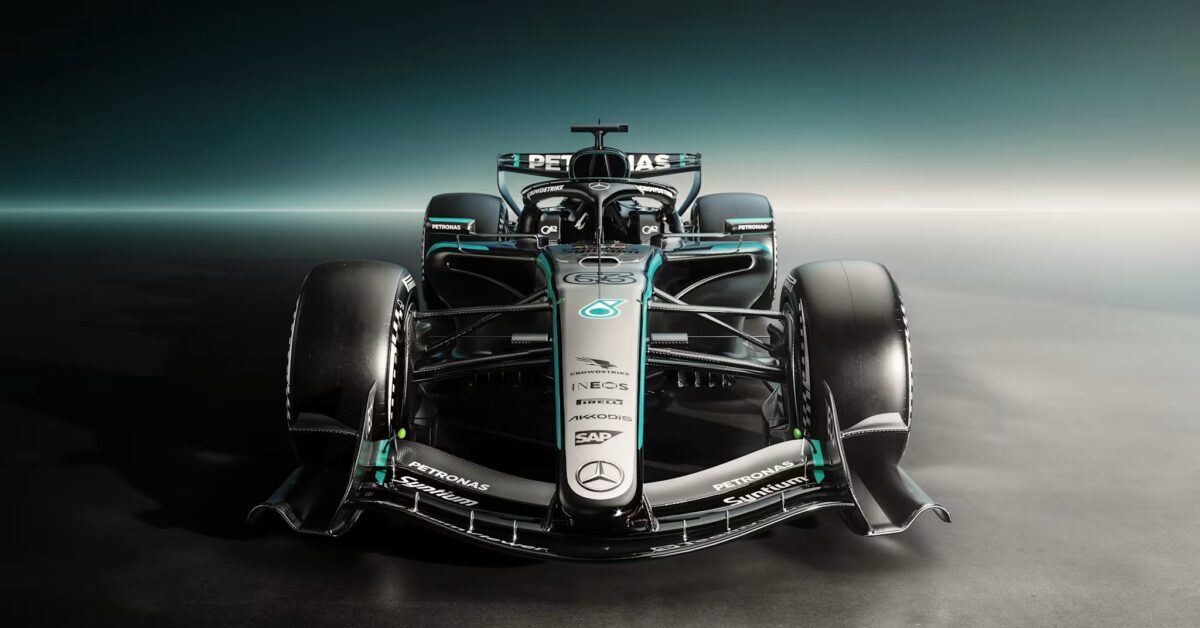
Mercedes has lifted the covers on its 2026 challenger, the Mercedes-AMG F1 W17 E PERFORMANCE, and rolled it straight onto the track at Silverstone. The headline? A bold new package built around active aerodynamics and a near 50/50 split between electric and combustion power. In a sport about to change more than at any time in the hybrid era, the W17 shows Mercedes is not waiting to react — it is moving first.
Across 67 laps and 200km of running on the 2.979km International Circuit at Silverstone, George Russell and Kimi Antonelli gave the car its first real-world checks. With new rules requiring smaller, lighter, and narrower machinery, and with far more electrical energy in play, this shakedown was more than a filming day. It was a statement of intent.
Active aerodynamics and a 50/50 power split: the W17’s radical core
The 2026 regulations reset the playbook. The W17 embraces the biggest change with active aero: movable front and rear wings designed to cut drag on straights and add grip in corners. Paired with a power unit that aims for a near 50/50 energy split between electric and combustion, the car is built to harvest, deploy, and manage energy with ruthless efficiency.
This is not just clever bodywork. F1’s new era brings a threefold increase in electrical power output and advanced sustainable fuels with PETRONAS. The job for Mercedes is to blend that extra electrical punch with the internal combustion engine, then use the active wings to keep the car fast and stable. Done right, that combination is a lap-time weapon.
“Active aero changes the game — who masters the switch wins 2026.”
Silverstone shakedown: 67 laps of answers
Shakedowns are about basics: systems, safety, and reliability. By that measure, Mercedes ticked the right boxes. Andrew Shovlin, the team’s Trackside Engineering Director, kept it plain: “We have had a sensible first day of running with the W17 at Silverstone. As with any shakedown, the focus is on ensuring everything operates safely and reliably. We were able to get through our allotted mileage, with both George and Kimi getting to experience the 2026 car on track for the first time. That is testament to the hard work of everyone at Brackley and Brixworth. Our attention now turns to Barcelona where we will look to build on today’s running and add to our understanding of the W17.”
Getting two drivers through meaningful mileage on day one matters. It builds an early data bank on temperatures, power deployment, and how the active wings behave in the real world. With Barcelona running set between January 26–30, Mercedes now has a solid base to tweak setup windows and energy strategies.
“Sixty-seven laps on day one? Reliability is the headline, not the paint.”
Design and livery: familiar colors, sharper message
Mercedes has not walked away from its identity. The W17 wears a fresh take on the team’s silver-and-black look, cut through by a PETRONAS green flow line that tracks speed across the bodywork. The AMG rhombus signature sits on the sidepods, while the engine cover hosts the three-pointed star — a quiet reminder of pedigree.
There’s also a notable new partner: Microsoft appears on the airbox and the front wing endplates. In a season where software will be as important as hardware, that badge placement speaks to the team’s focus on data, simulation, and control systems to unlock active aero and hybrid performance.
Power unit and partners: Brixworth bets big on 2026
Toto Wolff framed the project as a long game that started years ago: “Formula One will undergo significant change in 2026, and we are prepared for that transition. The new regulations demand innovation and absolute focus across every area of performance. Our work on the new car, and the long-term development of the Power Unit and advanced sustainable fuels with PETRONAS, reflects that approach. Releasing the first images of the W17 is simply the next step in that process. It represents the collective, sustained effort of our teams in Brixworth and Brackley. We will continue to push hard in the months ahead.”
That Brixworth-built power unit will not only sit in the works car. Mercedes power will also run in McLaren, Williams, and Alpine machinery in 2026. More cars on the grid mean more data streams and more validation under different chassis philosophies — a quiet but real advantage in a season of unknowns.
“If anyone can master the 50/50 energy split, it’s Mercedes with PETRONAS in lockstep.”
The competitive picture: why early laps matter
Mercedes finished second in the Teams’ Championship in 2025, a sign of steady recovery after Red Bull’s dominant early-hybrid years. History matters too: eight consecutive constructors’ titles from 2014–2021 prove they can lead a formula change and then build a dynasty. The 2026 rewrite is the biggest yet, but the pattern is familiar: understand the rules early, turn reliability into performance, and scale upgrades fast.
From here, the roadmap is clear. The team heads to Circuit de Barcelona-Catalunya for three days of running between January 26–30. Bahrain follows, then the lights go out in Australia on March 8. Each step will reveal more about energy recovery, straight-line efficiency with the movable wings, and how drivers can attack corners with the new balance. Expect the first real pecking order hints by the end of Bahrain testing.
So what does the W17 tell us?
First, Mercedes is leaning into F1’s new DNA: smaller cars, smarter aero, and heavier use of electric power, all fed by advanced sustainable fuels. Second, execution speed looks strong. Completing 200km without drama on day one is not a trophy, but it is a foundation. Third, the brand work is no afterthought. The livery refresh signals continuity, while the Microsoft tie-in nods to the software race that will define active aero tuning and hybrid control.
There is a long way to go. But if 2026 is about mastering the dance between electrons, fuel, and airflow, the W17 has taken a confident first step. Now comes the hard part: turning a clean shakedown into a fast race car when everyone else unleashes their own radical tricks.
For now, the stopwatch can wait. The story is that Mercedes has shown up early, shown up prepared, and put 67 laps of proof behind its biggest-ever rules reset. The W17 looks built for the new world. Soon, we will see if it can rule it.