
Key Takeaways(TL;DR):
- Sean McVay questioned a replay overturn that awarded Seattle a 2-point conversion.
- He said, “I’ve never seen anything like that,” showing real shock and frustration.
- The decision came via replay review; full play details are still emerging.
- McVay also responded to Puka Nacua’s tweet and livestream during his postgame comments.
- The controversy puts a spotlight on NFL replay standards and consistency.
- Fans and players await league clarification on the two-point conversion ruling.
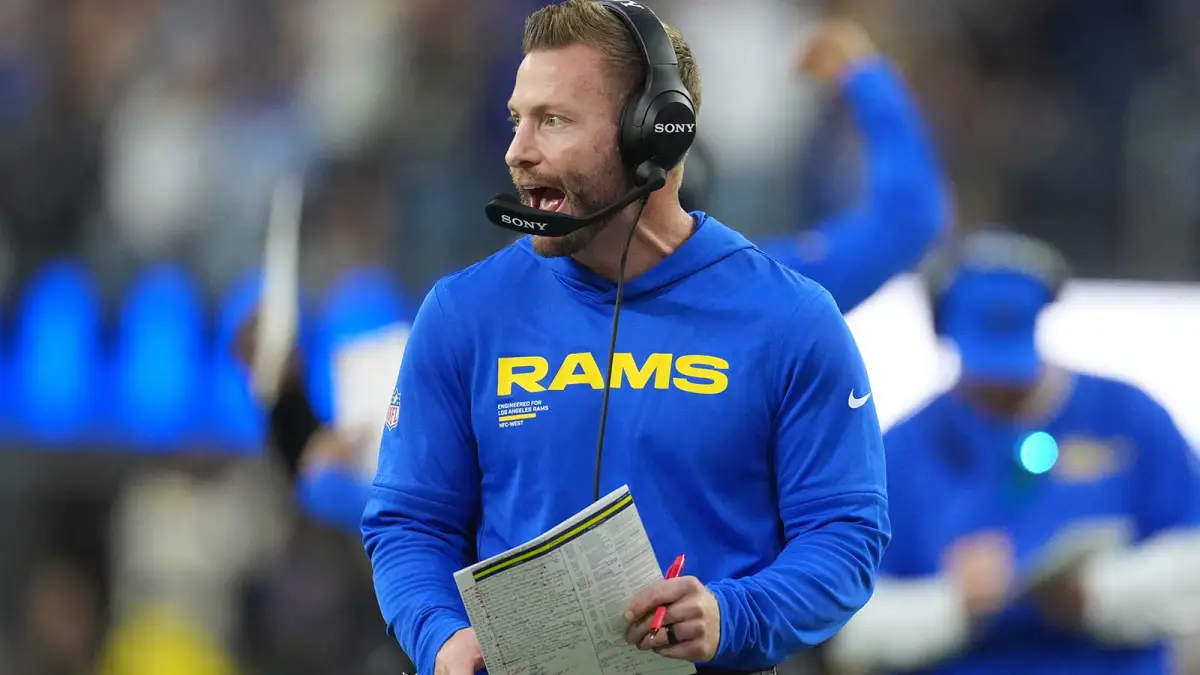
On a night already charged with rivalry and emotion, a single decision stole the headlines: a replay review that awarded the Seattle Seahawks a successful two-point conversion. Los Angeles Rams head coach Sean McVay didn’t hide how he felt about it. In the immediate aftermath, he delivered a rare, pointed reaction that echoed well beyond the locker room.
“I’ve never seen anything or never been a part of anything like that, and I’ve grown up around this game,” McVay said after the game. It was as clear and forceful a message as you’ll hear from him about officiating or replay, and it set the tone for a conversation that will likely carry into this week.
Why the 2-point replay call became the story
Two-point conversions are already pressure-packed moments. In today’s NFL, every scoring play and try can be reviewed by replay officials, who are tasked with using clear and obvious video evidence to confirm or overturn a call. That standard is meant to protect the integrity of the game during its biggest moments.
Here, the replay didn’t just confirm what was called on the field. It overturned it and awarded Seattle two points. The lack of immediate clarity around what exactly the replay showed or how the standard was applied is precisely why this decision exploded into a talking point. When the ruling itself becomes the headline, trust and understanding are tested.
“If it takes five angles and three minutes, is it still ‘clear and obvious’?”
Sean McVay’s stance: measured, but unmistakable
McVay is known for keeping his comments focused and controlled. That’s part of why his reaction resonated. Saying he’d “never seen anything” like this tells you he believes the process or the standard broke down, at least in this moment. He wasn’t just upset about the outcome; he was questioning how the decision was reached.
In a league that has poured resources into replay technology and centralized decision-making, coach reactions like this carry weight. When a respected voice pushes back, it signals a larger problem: the message about what replay can and can’t do isn’t landing with coaches, players, or fans in the heat of the game.
What replay is supposed to do — and where it frustrates
Replay exists to correct obvious mistakes. The bar is high for a reason. It’s not meant to re-referee every inch of a play or guess at what might have happened. It’s meant to spot what the entire stadium might have missed because the moment moved too fast.
When a conversion swings on a review, the entire standard gets put under the microscope. Was the evidence truly clear? Did the video angles line up? Were the criteria explained in real time? When those answers aren’t easy to find, you get the sort of backlash we saw here.
“Transparency isn’t optional on game-deciding calls.”
Puka Nacua, social buzz, and the postgame swirl
The noise didn’t stay on the field. McVay also responded to wideout Puka Nacua’s tweet and a livestream that turned into a postgame flashpoint of its own. That matters because today’s NFL is shaped as much by what happens online as what happens at the line of scrimmage. Players react in real time, fans rally around what they see, and narratives harden quickly.
McVay addressing Nacua’s social posts in the same breath as the replay ruling shows how connected all of this is. The coach wasn’t just fighting a call; he was managing the message to his locker room and to a fan base that wanted answers.
Rams vs. Seahawks: rivalry, emotion, and the margin for error
Rams-Seahawks games often live on the edge. The teams know each other well. The stakes, even in December, tend to feel bigger than the standings. In that context, a two-point swing is massive. It changes play-calling, it changes clock math, and it changes how both sidelines see risk and reward.
That’s why this review stands out, even before we see full breakdowns or get an official league explanation. In a rivalry like this, a decision that decides momentum will always be remembered, fair or not, as the story of the night.
“Rivalry games deserve clearer answers than ‘trust the booth.’”
What the NFL should clarify now
There are straightforward steps the league can take to calm the waters:
- Explain the exact element replay used to overturn the call, in plain language.
- Release the specific angles and the time stamps that drove the decision.
- Restate the “clear and obvious” standard and how it applies to two-point tries.
- Confirm whether the on-field call was changed by the booth or confirmed by New York, and why.
None of that changes the result, but it does change the conversation. When fans and teams understand the process, even tough calls feel more credible.
The human side: trust, buy-in, and how teams move forward
Coaches ask their players to control what they can control. That’s hard after a moment like this. McVay’s job is to channel the anger into focus, keep the team together, and move on. Questioning a ruling doesn’t mean losing control. It can also be a way to defend the room and reset the narrative.
For the Seahawks, the flip side applies. They’ll say the game asked for plays, and they made them. The replay system is part of the sport, and you don’t apologize for rulings that go your way. Both truths can live in the same space: a team’s pride in execution and an opponent’s frustration with the process.
Big picture: this is about more than one conversion
Every controversial review becomes a case study. This one will be no different. The next time a two-point try is reviewed in a tight game, fans will remember tonight. They’ll look for consistency, and they’ll listen closely to the explanation. That’s the cost of confusion.
McVay’s words will outlast the highlights: “I’ve never seen anything or never been a part of anything like that.” Whether you agree with the final ruling or not, that sentence captures the heart of the issue. If the people inside the sport feel blindsided by how a call gets made, the system needs a clearer voice.
The NFL doesn’t need fewer reviews. It needs better ones. Faster, clearer, and more transparent. Especially when a two-point conversion — a single snap that swings everything — is on the line.