
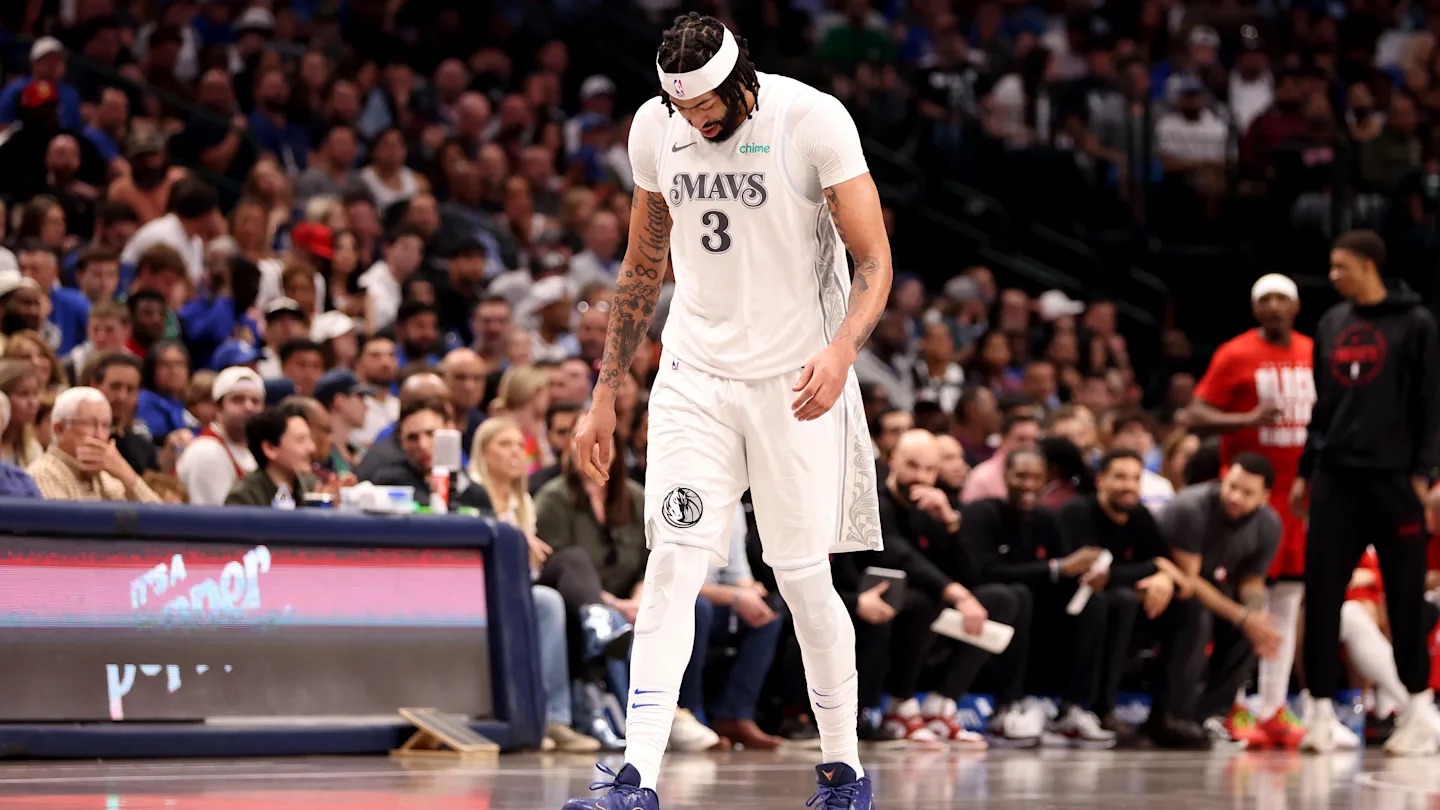
Key Takeaways:
- Anthony Davis hurt his left hand late in the Mavericks’ 116–114 loss to the Utah Jazz on Thursday night and did not return.
- Head coach Jason Kidd’s only postgame update: “He hurt his left hand. That’s all we had.”
- Davis posted 21 points, 11 rebounds, 4 assists, 1 block, 1 steal in 35 minutes before exiting with 2:08 to play.
- Dallas falls to 14–24 and is now 4–9 combined against Portland, Utah, Sacramento, New Orleans, and Memphis.
- Brandon Williams left early due to illness after averaging 19.0 points over his previous five games.
- Outside reports say Dallas is not actively shopping Davis, though his future could be influenced by an external “X-factor.”
On Thursday night in Salt Lake City, the Dallas Mavericks lost more than a game. Anthony Davis exited late with a left-hand injury in a 116–114 defeat to the Utah Jazz, and the postgame update from head coach Jason Kidd did little to calm nerves. In a season already asking tough questions about direction and identity, Dallas left the arena with another one: How long will their star be out?
Davis was hurt while defending Lauri Markkanen on a drive late in the fourth quarter. He tried to tough it out and initially stayed in, but checked out with 2:08 remaining and never returned. He was later seen doubled over in pain in the tunnel. Kidd’s assessment afterward was as brief as it was blunt: “He hurt his left hand. That’s all we had.”
What happened in Utah: the injury and the loss
The timing could not have been worse. Dallas trailed by a single possession, and Davis had been part of the push that chipped away at a 14-point Utah lead built in the second quarter (53–39 after a Markkanen dunk). The Mavericks answered with a 16–5 run to close the half, sparked by seven late first-half points from Davis, to trim the gap to three at the break.
From there, the game tightened. Dallas had chances, but the Jazz made just enough plays to complete a season sweep over the Mavericks. The final box said 116–114. The bigger headline was Davis’ hand and what it means next.
Before he exited, Davis posted 21 points, 11 rebounds, four assists, a block and a steal in 35 minutes. On paper, that’s productive. But in a telling line from a Mavericks-focused analysis piece, the eye test didn’t match the numbers: “Anthony Davis just isn’t the same player he used to be. 21 points, 11 rebounds, 4 assists, a block, and a steal have never looked so… lazy? He’s not giving effort half the time, and I don’t know if he’s just anticipating a trade or what, but he doesn’t look like he wants to be out there.”
“If the box score says 21 and 11, why did it feel so quiet?”
Context matters: record, road swing, and trend lines
This loss drops Dallas to 14–24. It also continues a worrying pattern: the Mavericks are now a combined 4–9 against Portland, Utah, Sacramento, New Orleans, and Memphis. That’s a cluster of Western opponents you need to beat if you want to make real noise, or even just steady the ship.
This was the second of three straight road games for Dallas. The Jazz had taken the last meeting even with a 42-point outburst from Mavericks rookie Cooper Flagg. With Davis available this time, Dallas was looking for a revenge win. Instead, it got a familiar result and a late-game scare.
“Being 4–9 against that group tells you where this team sits right now.”
Effort, perception, and the Davis conversation
It’s not new for star bigs to be judged by more than numbers. With Davis, the conversation has sharpened. The quote above isn’t an outlier; it captures a growing tension between his stat lines and his perceived impact. Fair or not, when a team slides to 14–24, effort and engagement become magnified.
That doesn’t mean the criticism is automatically right. Davis was central to the late first-half surge, protected the rim, and moved the ball. But the Mavericks need more late-game imprints from him—those two or three possessions that swing tight finishes on the road. Dallas has been in too many one- or two-possession games without closing them, and that’s where your best player has to be loud.
Depth takes a hit: Brandon Williams’ illness
Compounding matters, guard Brandon Williams left early due to illness. Williams had quietly been in strong form, averaging 19.0 points, 4.4 rebounds, and 3.4 assists in 27.0 minutes over his previous five games. Against Utah, he managed just two points in under nine minutes before exiting. For a bench already stretched, that’s another missing spark.
“Are we trying to push for wins, or is it time to sell and reset?”
Trade chatter and the franchise dilemma
Even before Thursday’s injury, Davis’ future in Dallas was a hot topic. Supporting coverage indicates the Mavericks are not actively shopping him, and an “X-factor” outside the organization could influence how his long-term situation unfolds. Now, with a left-hand injury in the mix, timing and leverage become trickier elements for any hypothetical move.
Inside the fan base and media ecosystem, patience is wearing thin. One analysis tied to this loss went as far as suggesting that two defeats to Utah should be enough to “call the tank brigade in,” advocating for selling veterans and embracing the draft. That’s a bold stance, but it reflects how far expectations have fallen.
Still, the front office’s job is to separate emotion from strategy. If Dallas believes in its core, the focus shifts to getting healthy, tightening late-game execution, and stabilizing against the West’s middle tier. If not, and if the market presents value, the organization has to weigh the cost of moving a star versus the price of standing still. Davis’ health—and clarity on it—sits at the center of that choice.
What we know—and don’t—about the injury
There’s no diagnosis yet beyond Kidd’s brief comment. The sequence is clear: contact while defending Markkanen, visible discomfort, a short attempt to play through, then an exit with 2:08 left and pain evident in the tunnel. Without more detail, everything else is guesswork. The only responsible read is that Dallas will need to see how Davis responds in the coming days.
In the meantime, the Mavericks can control the controllables: sharpen defensive possessions, reduce empty trips late, and find reliable secondary scoring if Williams remains limited. The margin for error is thin, and the schedule offers little mercy.
Bottom line
Thursday brought the worst kind of double: a narrow road loss and a cloud over the franchise’s centerpiece. Davis’ 21 and 11 looked solid on the stat sheet, but the moment that will linger is him walking off, hand hurting, season picture blurring. Until there’s a clearer update, Dallas sits in limbo—too close in too many games, too far in the standings, and now waiting on the health of the one player who can tilt both.
That is the story for the Mavericks right now: close, complicated, and incomplete. The next update on Anthony Davis’ left hand will tell us a lot about what comes next.