
Key Takeaways(TL;DR):
- Marcus Rashford visited two Barça Foundation projects in Barcelona, including a specialised school and a community centre for vulnerable children.
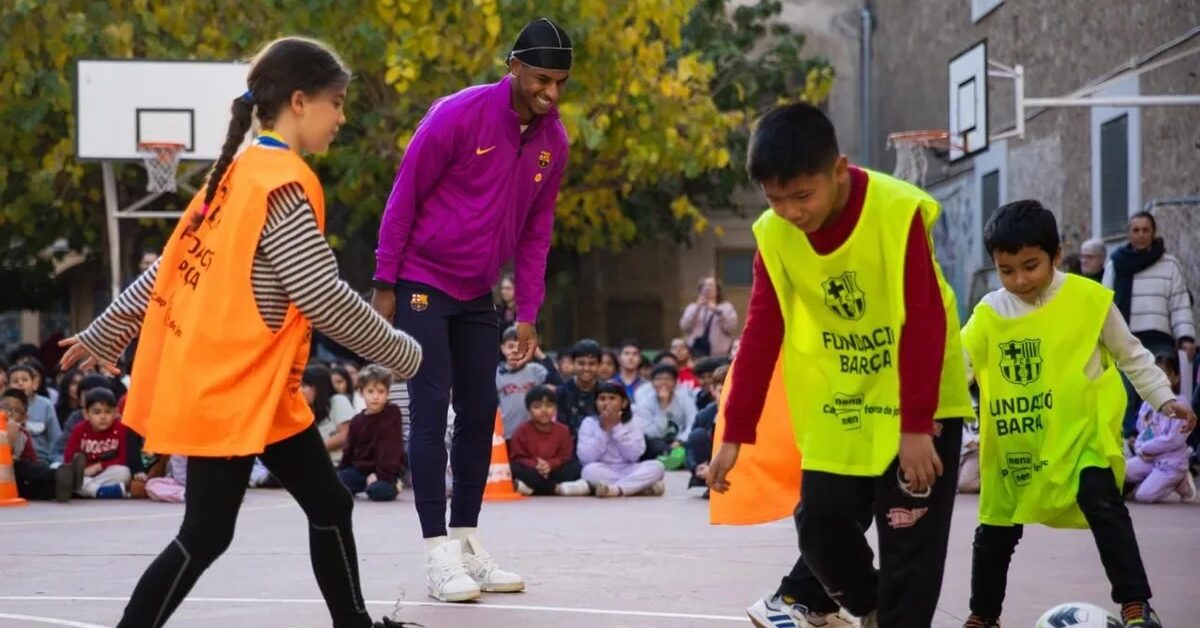
- He spent time in a Ciutat Vella education facility, giving a speech, talking one-on-one with students and then playing football with them.
- Rashford has stayed active in Barça Foundation work since joining FC Barcelona, carrying over his strong social work record from the UK.
- The visits around 11 December 2025 helped him win the support and affection of local Barcelona communities.
- He underlined that connecting with young people “remained important” to him, showing his focus on more than just football trophies.
- The story builds Rashford’s image as a leader who uses his platform for social impact, fitting with Barça’s “more than a club” identity.
In a football world often ruled by transfer fees and goal counts, Marcus Rashford has once again reminded everyone that a player’s true value can stretch far beyond the pitch. During a recent series of visits with the Barça Foundation in Barcelona, the forward, now at FC Barcelona, quietly did what he has done for years in England: he showed up for children who need it most.
Around 11 December 2025, Rashford spent time at two key Barça Foundation projects, including a specialised education centre in Ciutat Vella and a community hub for vulnerable young people. It was not a publicity stunt. It was a continuation of a personal mission.
Rashford brings his UK social mission to Barcelona
Rashford’s story off the field is already well known in the UK. From leading campaigns to fight child food poverty to speaking up for kids from low-income families, he has built a reputation as more than just a star forward. That same identity has now travelled with him to Catalonia.
Since arriving at FC Barcelona, Rashford has been actively involved with the Barça Foundation, the social arm of the club that focuses on education, inclusion and child protection. The recent outreach in Barcelona is part of that work, showing that Rashford did not leave his values at the airport when he moved.
In Barcelona, as in Manchester, the pattern is familiar: he looks for the spaces where children are most at risk of being forgotten, and he turns up there first.
“This is the kind of signing that changes a club’s soul, not just its attack.”
Inside the Ciutat Vella school visit: talk, trust and football
One of the main stops on Rashford’s day was a specialised education facility in Ciutat Vella, one of Barcelona’s oldest and most diverse districts. The centre works with vulnerable children who often face social, economic or family difficulties. For many of them, school is not just a place to learn, but a safe space.
Rashford did not only pose for photos or sign shirts. He went into a classroom, delivered a speech to the students, and then spent time listening. According to accounts from the project, he spoke about the importance of staying in school, of believing in yourself even when the odds feel stacked against you, and of asking for help when life gets hard.
Then he did something that matters just as much to young people: he stayed. He interacted personally with the kids, answering questions, sharing stories and making sure the moment felt two-way, not staged. The visit ended the way any good afternoon with Rashford should: with a ball at his feet and children around him, playing football.
For a 10-year-old watching from the touchline, that is more powerful than any billboard. The message is simple and easy to understand: someone at the very top of the game thinks your life matters.
Community centre visit: footballer meets real life Barcelona
Rashford also visited a local community centre linked to the Barça Foundation’s programmes for vulnerable young people. These centres are often the front line for children dealing with tough realities: unemployment at home, overcrowded housing, or feeling left behind at school.
There, the focus was not on tactics or trophies. It was on connection. Rashford’s presence gave staff and volunteers a chance to highlight the daily work that rarely makes headlines: mentoring, after-school support, social inclusion and safe places to play.
For the local community, it mattered that this was not just any visiting star. This was a player whose track record in the UK proves that his interest in social issues is long term, not a fresh media strategy. His arrival in Barcelona has simply given him a new city to care about.
“Rashy is proving you can wear the Barça shirt and still be a champion for kids first.”
“Connecting with young people remained important to him”
Rashford himself has been clear about his priorities. Speaking about the outreach, he underlined that “connecting with young people remained important” to him. That line might sound simple, but in the context of modern football, it is anything but.
Players at the very top operate in a bubble of tight schedules, media duties and commercial deals. Choosing to spend time in classrooms and community centres is a conscious decision. It means saying no to something else. For Rashford, the trade-off seems obvious: if his voice can make even a small difference to one child’s path, it is worth protecting that time.
The Barça Foundation’s own communication around the day stressed his “social commitment” and his active support for their projects. Reports and captions shared by trusted sources such as Fabrizio Romano highlighted that this was not a token appearance, but an extension of the player’s long-standing work away from the lights.
Why this matters for Barcelona – and for football
For FC Barcelona, Rashford’s involvement fits perfectly with the club’s long-standing motto: “Més que un club” – “More than a club.” The Barça Foundation is a key part of that identity, and having one of the team’s high-profile players fully engaged gives that message extra weight.
There is also a football culture angle. In a time when player brands are often built on luxury and lifestyle, Rashford is pushing a different model of what it means to be a global star. His “brand” is children’s rights, access to food, education, and hope. That is not the usual social media content – and that is exactly why it cuts through the noise.
For young Barça fans watching on, the lesson is clear: being a hero is not just about scoring at Camp Nou or Montjuïc. It is about what you choose to stand for when the whistle is not blowing.
Winning the heart of Barcelona’s communities
The reaction in the local community has been strong. Reports from the visits describe Rashford “winning the heart of Barcelona communities” with his charity work and presence. This is not just about charm, it is about recognition. Families in Ciutat Vella and similar neighbourhoods know struggle. When a top-level player comes to their school or centre, listens to their children, and spends real time with them, it sends a powerful signal of respect.
These small but meaningful moments build a bond that goes deeper than club colours alone. Rashford is no longer just a new signing. He is the player who turned up in the neighbourhood when he did not have to.
“If he keeps this up, Rashford will be remembered in Barcelona for his heart as much as his goals.”
From Manchester to Barcelona: a clear social identity
What stands out most in this story is the continuity. This is not a new version of Marcus Rashford invented for a new market. The same player who fought for free school meals and helped shape national debate in the UK is now bringing that same energy to a new city, through the Barça Foundation.
For supporters and for young people, that consistency builds trust. It shows that his message about young people, school and opportunity is not linked to one country’s politics or one club’s image. It is deeply personal.
There will always be debates about form, tactics and finishing. That is part of football. But there is a growing sense that players like Rashford are helping to shift something bigger: what we expect from our heroes. Goals still matter. So do trophies. But so does what you do when the cameras are not pointed at the scoreboard, but at a classroom in Ciutat Vella.
What comes next for Rashford and the Barça Foundation?
The visits around 11 December 2025 feel less like a one-off and more like the opening chapter of Rashford’s Barcelona story off the pitch. With the Barça Foundation already running a wide range of projects across Catalonia and beyond, there is huge room for deeper collaboration.
Future work could focus on:
- Regular school and community visits where Rashford joins education and inclusion sessions.
- Campaigns that link his voice with Barça Foundation programmes on topics like bullying, school dropout or child poverty.
- Joint projects that help young people see a clear path from their own neighbourhood pitches to bigger dreams, inside or outside football.
Whatever shape it takes, one thing is clear: Rashford has already made an impact in Barcelona that will not show up on any stats graphic. It lives instead in the memories of the children who heard him speak, shook his hand, or spent a few precious minutes playing football with a global star who treated them like equals.
Those are the kind of moments that can quietly change a life. And that is why, for all the hype around big signings and big games, Marcus Rashford’s most important work in Barcelona may end up being the work that happens far away from the scoreboard.