
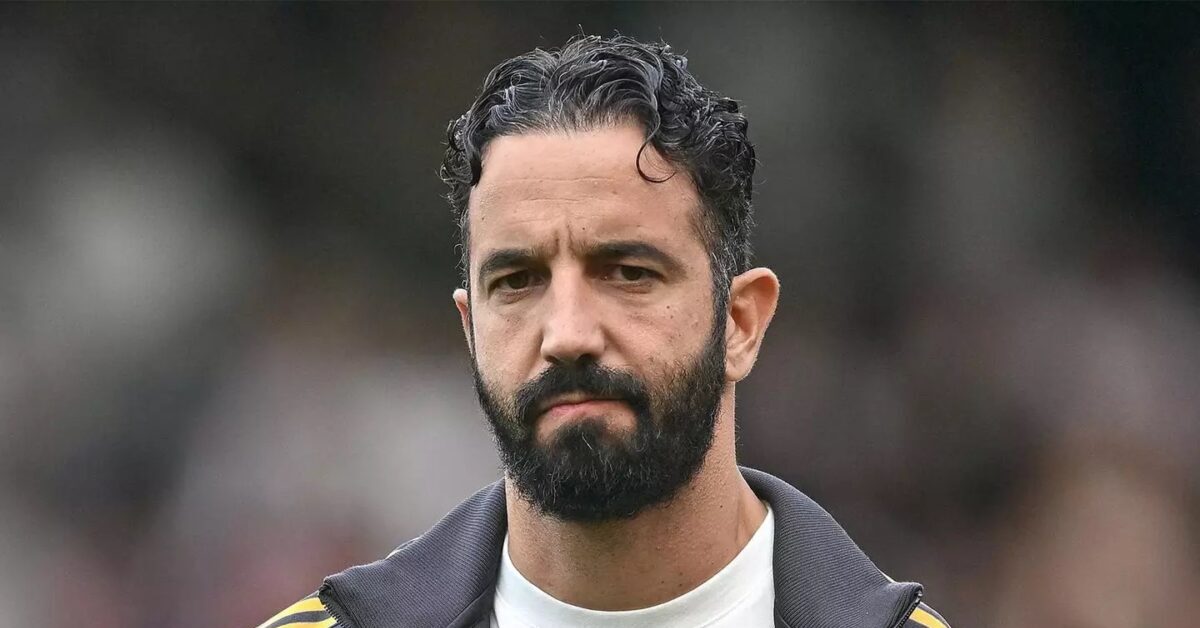
Key Takeaways:
- Manchester United sacked Ruben Amorim on January 5, 2026, less than 24 hours after a 1-1 draw with Leeds United.
- The trigger was Amorim’s post-match outburst on power and recruitment, insisting he’s the manager, not just a head coach.
- United sit 6th with 31 points after 20 games (8 wins); the club says the change aims to boost league finish.
- Darren Fletcher takes interim charge for Wednesday’s game against Burnley.
- Amorim’s 14-month tenure: 63 matches, 24 wins; last season’s 15th-place finish but a Europa League final loss to Tottenham.
- United paid €11m to Sporting CP; contract ran to 2027 (with an option), and must now be paid in full; it’s the shortest permanent reign since David Moyes.
Manchester United have sacked head coach Ruben Amorim, ending his tenure after just 14 months. The decision dropped less than a day after Sunday’s 1-1 draw with Leeds United and followed Amorim’s fiery post-match comments that challenged the club’s power structure.
The club announced the move on Monday, January 5, 2026, describing it as reluctant but necessary to give the team the best chance of a stronger Premier League finish. United sit sixth with 31 points from 20 games and only eight league wins this season.
How a 1-1 draw lit the fuse
Amorim’s press conference after the Leeds game became the flashpoint. He insisted he came to be the manager of Manchester United, not just the coach, and he bristled at what he called “selective information” flowing around the club.
“I came here to be the manager of Manchester United, not to be the coach of Manchester United,” he said, adding that he wouldn’t quit and would stay until the board decided otherwise. He also told the scouting department and technical director Jason Wilcox “to do their job.”
By Monday morning, the board had acted. United’s statement read: “Ruben Amorim has departed his role as Head Coach of Manchester United. With Manchester United sitting sixth in the Premier League, the club’s leadership has reluctantly made the decision that it is the right time to make a change. This will give the team the best opportunity of the highest possible Premier League finish.”
“If he wasn’t really the manager, what chance did he have to build a team?”
Board logic vs. results: the numbers behind the call
Sources at the club stress the decision was driven by performance and the lack of clear progress, rather than any breakdown with Wilcox. The simple truth: United felt they hadn’t seen enough evolution on the pitch.
Amorim, 40, was hired in November 2024 from Sporting CP with a reputation for sharp, modern football. Across 63 matches in all competitions, United won 24. In the league specifically, they managed just 15 Premier League wins during his time. This season’s record of eight wins in 20 has them in 6th place at the halfway mark.
Last season, United finished 15th in the league, a low that hurt confidence even as they made a spirited run to the UEFA Europa League final, where they lost to Tottenham Hotspur in Bilbao. Domestic cups also stung: out in the FA Cup fifth round (to Fulham) and Carabao Cup quarter-finals (to Tottenham).
- Premier League 2024/25: 15th place
- Europa League: runners-up (lost to Tottenham)
- FA Cup: fifth round exit (to Fulham)
- Carabao Cup: quarter-final exit (to Tottenham)
The draw with Leeds United on January 4 was the last act of a tense winter. The club’s league position and shaky form made the board’s call feel, to them, unavoidable.
“Sixth with 31 points and still no clear style — how long do you wait?”
Power lines at Old Trafford: manager or head coach?
At the heart of this split was the role itself. Amorim wanted manager-level control. United’s modern setup leans toward a head coach working within a recruitment structure. That mismatch showed up in public over the weekend, with Amorim openly calling out the club’s hierarchy and telling the scouting team and Wilcox to “do their job.”
Club figures insist the choice to move on was about a lack of on-field progress, not personal politics. But tensions over transfers and squad balance have been there for months, including frustration around the January window. When the lines blur on who calls which shots, friction follows. It did here.
This episode will fuel a wider debate: in the Premier League, does the classic “manager” still fit, or is the head coach model the only way to build a stable club? United’s answer, at least today, is clear.
“Pick a model, back it, and stick to it. The churn is killing momentum.”
What happens next for Manchester United
Darren Fletcher, currently the club’s Under-18 head coach, will take interim charge for Wednesday’s match against Burnley. The brief from upstairs is simple: stabilize results and climb as high as possible.
United’s leadership thanked Amorim and wished him well. But this decision carries a cost. The club paid roughly €11 million to prise Amorim from Sporting CP in 2024, and he signed a contract to 2027 with an option for an extra year that now must be paid in full. On the timeline, his 14-month spell is the club’s shortest permanent reign since David Moyes in 2014.
United have not won the Premier League since Sir Alex Ferguson’s final title in 2013. Since then, the dugout has been a revolving door. Amorim’s exit adds another chapter to that story of churn and competing visions.
The bigger picture: results, identity and recruitment
Amorim was hired for progressive tactics and promise. The Europa League run hinted at what could be. But the league table remains the ultimate judge. A 15th-place finish last season, patchy performances this season, and the feeling that United still lack a clear identity left the decision-makers uneasy.
The other thread is recruitment. Every great team blends strong coaching with smart signings that fit a shared plan. If the lines of power and responsibility are fuzzy, you get mixed squads, gaps in key roles, and managers who feel exposed. Amorim’s public stance was that he wanted manager-level authority and clarity. The club felt that change at head coach was the cleaner fix.
Final word
In the end, this is about control and clarity as much as it is about goals and points. Manchester United want a higher league finish this spring. They believe a reset now gives them the best shot. Darren Fletcher steps in, a search begins, and Amorim — 40 years old, talented, and strong-willed — leaves with hard lessons from English football’s most demanding stage.
United’s next appointment must align the model, the message, and the manager. Without that, the cycle will only repeat.