
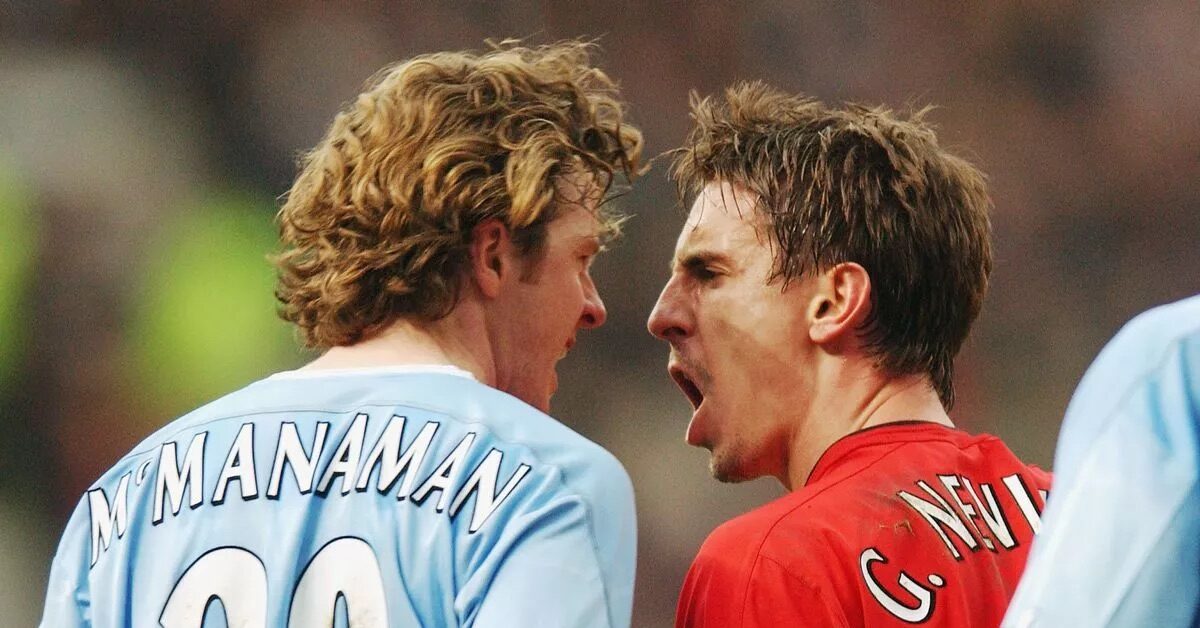
The Manchester derby is the meeting between Manchester United and Manchester City, two clubs from the same city divided by red and blue. First played in 1881, it remains one of football’s most-watched local rivalries, shaped by tradition, changing tactics, and the shifting balance of power in English football.
Across 197 competitive fixtures, Manchester United lead the head-to-head with 80 wins to Manchester City’s 62, alongside 54 draws. Despite United’s edge in victories, the goals scored are remarkably close: United 274 and City 276. The derby is played at Old Trafford and the Etihad Stadium, two venues that symbolize the scale and intensity of this fixture.
Origins and a Rivalry Stretching Back to 1881
The first meeting in 1881 set the foundation for a contest that has bridged eras, competitions, and styles. League games have provided the most frequent chapters, but the FA Cup and League Cup have added their own drama and momentum swings.
Over time, the derby has become a barometer for local supremacy in Manchester. It is also a reliable lens for viewing broader changes in the Premier League, as strategies, managerial eras, and squad profiles evolve on both sides of the city.
Head-to-Head Records and All-Time Scorers
Derby numbers tell a story of longevity and fine margins. United hold the historical lead in wins, while the overall goals are split almost evenly across more than a century of meetings.
- Total competitive matches: 197
- Manchester United wins: 80
- Manchester City wins: 62
- Draws: 54
- Overall goals: United 274, City 276
- All-time top scorers: Wayne Rooney (11 for United); Francis Lee and Joe Hayes (10 each for City)
- Primary venues: Old Trafford and the Etihad Stadium
These figures underline the derby’s competitive nature. United’s historical advantage coexists with fine goal margins and long runs where momentum swings between the two sides.
Defining Manchester Derby Matches
Certain meetings have left lasting marks on the rivalry. They are remembered for their scorelines, their stakes, and how they reframed the contest in the months and years that followed.
- 2011 (Premier League, Old Trafford): Manchester City beat Manchester United 6-1 in one of the fixture’s most famous scorelines.
- 2004 (FA Cup): Manchester United 4-2 Manchester City, a high-scoring cup tie that added another layer to the rivalry’s knockout history.
- 10 Sep 2016 (Premier League): Manchester United 1-2 Manchester City, a tight league meeting that helped set the tone for the modern era.
- 26 Oct 2016 (League Cup): Manchester United 1-0 Manchester City, a narrow cup win that showed how frequently the margins shift.
- Dec 2024 (Premier League, Etihad): Manchester City 1-2 Manchester United, an away win that disrupted City’s momentum.
- Apr 2025 (Premier League, Old Trafford): Manchester United 0-0 Manchester City, a stalemate that reflected a more controlled, tactical balance.
- Sep 2025 (Premier League, Etihad): Manchester City 3-0 Manchester United, with Phil Foden and Erling Haaland (two goals) on the scoresheet.
These fixtures, spread across league and cup competitions, show how derby outcomes can swing from emphatic to finely poised—and how both clubs regularly find ways to reset the narrative.
The Modern Era: A Shifting Balance Over the Last Decade
Recent years have brought a recalibration. In the past 15 years, Manchester City have won 21 of the last 40 derbies, with Manchester United winning 15 and 4 ending level. That trend is echoed in Premier League results over the last decade.
From 2016 to 2026 in the Premier League, City recorded W10 D3 L7 against United. The numbers point to a narrow but clear edge for City in league play during this period, balanced by United’s ability to land significant results—home and away—when they find structure and tempo.
Managerial eras have played a central role. Pep Guardiola’s tenure at City has shaped many recent encounters through control and precision. On the United side, the arrival of Ruben Amorim is part of a newer chapter, aimed at establishing a defined identity to match City’s consistency. The most recent competitive meeting on record—City’s 3-0 win at the Etihad in September 2025—illustrates how quickly the dynamic can swing when one side dictates key moments.
Old Trafford and the Etihad: Stages That Shape the Contest
Derby days at Old Trafford and the Etihad carry distinct rhythms. The 6-1 in 2011 at Old Trafford remains an emblem of how away sides can seize control in hostile territory. Conversely, September 2025’s 3-0 at the Etihad shows the power of City’s home platform when their plan clicks.
While home advantage matters, the fixture’s recent history shows that both clubs can produce decisive results away from home. That unpredictability keeps the derby relevant beyond form tables and league positions.
What the Numbers Tell Us About the Rivalry
Across 197 matches, the Manchester derby presents a balance between tradition and change. United’s overall lead in wins speaks to the rivalry’s long arc, while the recent 15-year picture highlights City’s surge in head-to-head results. The near-parity in total goals underscores how rarely the gap is wide for long.
In practical terms, the derby remains a benchmark for both clubs. For City, continued league-level efficiency has translated into more recent head-to-head success. For United, targeted wins across league and cups, and the ability to reset defensively or strike in transition, keeps the rivalry competitive in key moments.
Why This Derby Endures
The Manchester derby matters because it compresses decades of history, identity, and ambition into 90 minutes. It tests managerial ideas, squad depth, and composure. It also offers a reliable storyline across seasons: even as one side builds a run, the other often finds a way to respond.
As the numbers evolve—wins, draws, and the ever-tight goal count—the fixture stays essential to understanding both clubs. The derby is a mirror for Manchester’s footballing identity and a marker for where each team stands now, and where they aim to go next.
Key takeaway: United hold the long-term edge in wins; City have edged recent years. The goals are nearly level. The venues are iconic. And every new meeting has the weight of 1881 behind it.