
Key Takeaways:
- Jessica Pegula beat Amanda Anisimova 6-2, 7-6 (1) in 1 hour 35 minutes to make her first Australian Open semifinal.
- Pegula will face Elena Rybakina next; Rybakina defeated Iga Swiatek 7-5, 6-1 earlier.
- It was an all-American quarterfinal, and Pegula has now won eight straight matches vs. Americans at Slams.
- Pegula is the first American woman to beat three compatriots at one Australian Open since Gigi Fernandez in 1993.
- Key stats: Aces 6–2, double faults 2–7; Pegula won 64% on second serve and broke four times from 11 chances.
- Pegula trailed 5-3 in set two, then dominated the tiebreak 7-1 with early mini-breaks at 3-1 and 4-1.
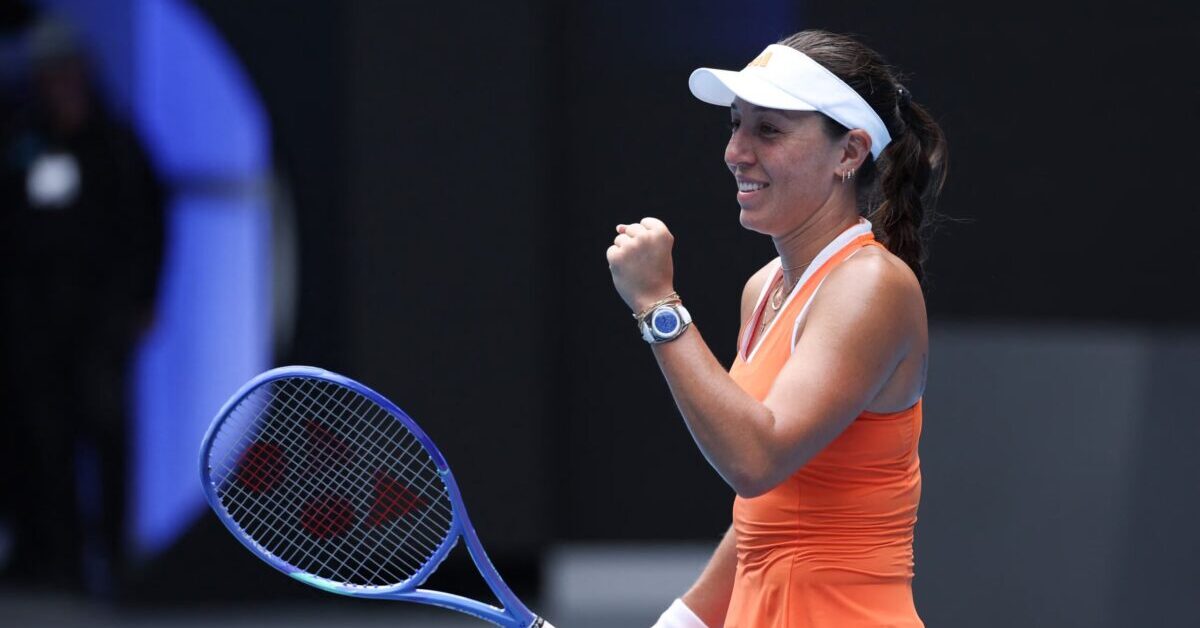
On Wednesday, January 28, 2026, under the bright lights of Rod Laver Arena, Jessica Pegula cleared a wall that had stood in her way three times before. The American beat fellow American Amanda Anisimova 6-2, 7-6 (1) to reach her first Australian Open semifinal, a strong and steady performance that sets up a blockbuster meeting with Elena Rybakina.
This was more than a simple win. It was a statement about control, nerve, and timing. Pegula has been close in Melbourne, with three past quarterfinal exits. This time, she held firm when the match turned tough. She also continued a rare streak at the majors, earning her eighth straight victory over an American opponent at a Grand Slam. And in doing so, she became the first American woman to defeat three compatriots at one Australian Open since Gigi Fernandez did it in 1993.
Composed from the start, clutch at the finish
The first set showed Pegula’s plan clearly. She protected her serve and put heavy pressure on Anisimova’s. Pegula served 60% first serves and won 70% of those points. She was even better behind her second serve, taking 64% of those points (16 of 25). That steadiness was the base of the win.
On return, Pegula targeted the second serve and reaped the rewards. Anisimova landed 61% of first serves but won just 39% behind her second serve (11 of 28). The gap in that area told the story. Pegula earned 11 break chances and converted four, two in each set. She also limited her mistakes: only two double faults to Anisimova’s seven, while adding six aces to keep scoreboards calm.
The second set brought real tension. Anisimova, who had reached the last two major finals and was aiming for a third, surged ahead 5-3. Pegula did not blink. She broke back, held serve, and forced the tiebreak. Then she took over. Early mini-breaks at 3-1 and 4-1 gave her the runway, and she raced through seven straight points to close 7-1.
“When she’s down, she really plays with nothing to lose and that’s really dangerous,” Pegula said on court. “So I’m happy I was just able to flip that in the tiebreak.” Later she added, “I felt like I was winning a lot of the points. It was just like I…” Her point was simple: keep the level, win the big moments.
“Pegula’s return game is the blueprint against Anisimova’s second serve.”
All-American duel, familiar edge
This quarterfinal was an all-American chapter of a growing rivalry. Pegula had won all three of their previous meetings, and she looked confident from the first ball. The number that jumps off the page is the second-serve battle. Pegula’s 64% win rate there was elite. Anisimova’s 39% put her under stress in almost every service game.
That pattern fed into the broader trend: Pegula has now beaten eight Americans in a row at majors. It is an odd, impressive streak that also speaks to how well she handles familiar styles and pressure. And the wider milestone is a slice of history: three wins over compatriots in one Australian Open, not done by an American woman since Gigi Fernandez in 1993.
Pegula’s path this fortnight has run through American talent: McCartney Kessler in the second round, Madison Keys—the defending champion—in the fourth, and now Anisimova in the quarters. Each match posed a different test. Each time, Pegula found the answers.
“Three Americans down at one Slam—this is Pegula’s most complete Melbourne run.”
Numbers that matter: serve and nerve
For Pegula, the match boiled down to two key edges:
- Service stability: 6 aces, only 2 double faults, 70% of first-serve points won, and a strong 64% on second serve. That balance kept her out of danger.
- Return pressure: 11 break points created and four converted. The constant push on Anisimova’s second serve opened the court and the scoreboard.
The match lasted 1 hour and 35 minutes, and Pegula controlled most of it. Even the rough patch at 3-5 in set two became a springboard. She steadied, then slammed the door in the tiebreak.
Rybakina next: a semifinal with real bite
Waiting in the semifinal is Elena Rybakina, the 2022 Wimbledon champion, who beat Iga Swiatek 7-5, 6-1 earlier in the day. That result underlines Rybakina’s form. She serves big, takes the ball early, and loves to play from the front.
Pegula knows the step that is coming. But this is a different Pegula in Melbourne. “I’ve been waiting for the time where I can kind of break through,” she said. “Well, I’d say that’s a breakthrough right here.” It is her first Australian Open semifinal, and her third Grand Slam semifinal overall—but the first outside New York. The confidence from this run, and the way she managed the big points against Anisimova, will matter against Rybakina.
“Rybakina vs. Pegula is power vs. poise—who blinks first?”
Anisimova’s surge meets a wall
Anisimova arrived aiming for a third straight major final after deep runs at Wimbledon and the US Open. Her power can take the racket out of opponents’ hands. But on this night, the free points did not flow. Seven double faults hurt, and the second serve was under fire for two sets.
There were bright spots—her first-serve percentage matched Pegula’s (61%), and she led 5-3 in set two—but she could not land the knockout punch. Against Pegula’s clean serving and smart returning, the margins were too thin.
The bigger picture in Melbourne
Pegula’s place in the final four adds fresh spice to a strong women’s draw. On the other side of the bracket, Aryna Sabalenka meets Elina Svitolina. That means three major winners or finalists are alive, plus a player in Pegula who is chasing a first Slam title with form and belief.
For Pegula, this Melbourne run confirms what many felt for the past two seasons: the tools are all there. A smooth baseline game, a reliable serve, and a clear plan on return. The missing piece was a big week-two push at the Australian Open. Now she has it.
The job, of course, is not done. Rybakina awaits, and the margin for error shrinks even further in a semifinal. But the message from this 6-2, 7-6 (1) win is simple. Pegula is ready for the moment. She handled a hot opponent, turned a tight set her way, and closed with authority.
In her own words: “Yeah, it’s awesome… I’ve always felt like even matches I’ve lost here that I’ve played well… I’ve been waiting for the time where I can kind of break through.” The breakthrough is here. Now comes the hardest test—and the biggest chance yet.