
Key Takeaways:
- Iga Swiatek beat Australian qualifier Maddison Inglis 6-0, 6-3 in 73 minutes to reach the Australian Open 2026 quarterfinals.
- Swiatek will face No. 5 seed Elena Rybakina next in a blockbuster quarterfinal.
- Swiatek has dropped only three games in this match and just one set all tournament (vs Anna Kalinskaya in the third round).
- This is Swiatek’s 14th career Grand Slam quarterfinal; she’s the youngest woman to reach six consecutive Major quarterfinals since Serena Williams.
- Inglis earned big Melbourne support, but Swiatek’s heavy topspin and movement proved too strong.
- The Rybakina clash will be their 12th meeting; Rybakina won their latest at the 2025 WTA Finals and their only prior AO match in 2023.
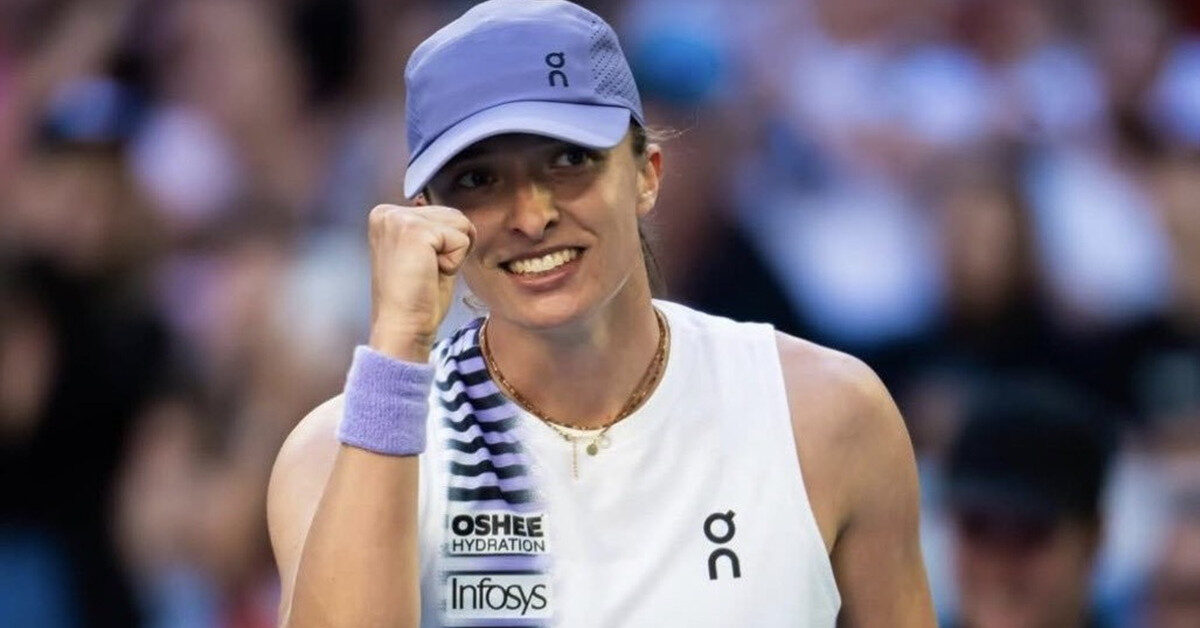
World No. 2 Iga Swiatek showed why she is the player to beat in Melbourne, racing past local qualifier Maddison Inglis 6-0, 6-3 to book her spot in the Australian Open 2026 quarterfinals. The match lasted just 73 minutes, and it felt even shorter, such was Swiatek’s control from the first ball.
The win sets up a heavyweight quarterfinal against No. 5 seed Elena Rybakina — a rivalry many describe as “one of the best matchups in women’s tennis.” It will be their 12th meeting, and it already looks like the match of the round.
A clinical Swiatek performance in Melbourne
Swiatek came out swinging and never let up. Her forehand heavy with topspin, her feet always on time, she pinned Inglis deep behind the baseline and took time away on almost every rally. The bagel first set was not about flashy winners; it was about clean, repeatable patterns and a wall of defense that turned into instant attack.
Even when Inglis settled, Swiatek’s level did not dip. The Pole gave up only three games across the two sets, closing the door as soon as any opening appeared. After dropping a set in the third round to Anna Kalinskaya, this was a sharp reset. The rhythm returned. The focus was ruthless again.
“Swiatek’s forehand had Inglis on a string. That depth was unreal.”
Inglis’ fairytale run still earned the roar
Maddison Inglis walked onto Rod Laver as a qualifier with the crowd at her back. She fought for every point, earned her way into rallies in the second set, and soaked up a moment that many players dream of. The Aussie could not match Swiatek’s pace or court coverage, but she did not fold.
In the end, class told. Yet the ovation told another story: a homegrown player who made a second-week push from the qualifying rounds and gave Australia a reason to cheer. Inglis leaves Melbourne with new belief and a much bigger platform.
“Inglis made the most of the stage. That second set fight was gutsy.”
By the numbers and the milestones
- Final score: 6-0, 6-3
- Match time: 73 minutes
- Games lost today: 3
- Sets lost in the tournament: 1 (to Anna Kalinskaya in R3)
- Grand Slam quarterfinals: 14th of Swiatek’s career
- Streak: Youngest woman to reach six straight Major QFs since Serena Williams
These numbers underline two truths. First, Swiatek’s floor is incredibly high. Even when she’s not at her absolute peak, she rarely gives opponents room. Second, her consistency at the biggest events is historic. Reaching six consecutive Major quarterfinals at her age places her on a path we usually reserve for legends.
There is also a bigger chase here. Swiatek is pursuing the career Grand Slam. After lifting both Wimbledon and the US Open in 2025, Melbourne is the next box she wants to tick. Performances like this are the blueprint: early aggression, clean serving, and no let-up once ahead.
Swiatek vs Rybakina: why it’s box-office
Swiatek versus Rybakina is a clash of styles and will. It’s also a rivalry with real stakes. This will be their 12th meeting. Rybakina won their most recent showdown at the 2025 WTA Finals and also beat Swiatek at the Australian Open in 2023. The matchup swings on first strikes and composure under pressure.
Rybakina brings a big, flat serve and a straight-line baseline game that can rush opponents. Swiatek brings return depth, foot speed, and patterns built on heavy spin. If Rybakina lands a high percentage of first serves, she can take the racquet out of almost anyone’s hands. If Swiatek pushes returns deep and gets into forehand exchanges, she can turn the court into her canvas.
That tension is why people say, “It’s one of the best matchups in women’s tennis.” It’s power versus problem-solving. It’s pace versus precision. And it comes with history on both sides.
“Rybakina’s serve vs. Iga’s return. That’s the whole story right there.”
What will decide the quarterfinal
- Swiatek’s start: Fast starts matter against big servers. If she breaks early, the match tilts her way.
- Second-serve pressure: Swiatek’s depth on return can force short balls. Those chances are gold.
- Forehand vs forehand: When rallies stretch, Swiatek’s heavy spin can push Rybakina off the baseline.
- Rybakina’s first-serve count: If the first serve lands, she controls tempo and scoreboards.
- Scoreboard calm: Both players front-run well. Holding nerve at 30-30 and deuce will be key.
Big-picture impact on the title race
Swiatek’s clean win over Inglis answers any doubts raised by her brief stumble against Kalinskaya. She looks fresh, clear-minded, and on plan. The forehand is biting, the movement is tight, and the patterns are humming.
But Melbourne crowns are not handed out; they are earned through challenges like Rybakina. The Kazakh star has the tools to bother Swiatek, and recent results show it. That is what makes this quarterfinal feel like a final before the final. The winner will carry a massive surge into the last four.
For now, Swiatek leaves the court with a statement: three games dropped, job done, eyes forward. Inglis leaves with pride and a louder voice in the locker room. And the tournament gets the blockbuster it wanted. If you’re circling one match on the schedule, circle this one in red.