
Key Takeaways:
- Egypt coach Hossam Hassan says AFCON should be held every two years, not every four.
- His comments followed Egypt’s 0-0 draw with Angola that still kept them top of Group B on 7 points.
- CAF recently announced a switch to a four-year AFCON cycle, ending a long biennial tradition.
- Hassan made 11 changes vs Angola to test depth, resting stars like Mohamed Salah and Omar Marmoush.
- South Africa are second on 6 points after a 3-2 win over Zimbabwe; Egypt earlier beat South Africa 1-0.
- Egypt face the round of 16 in Agadir next Monday; Hassan says they are ready for any team.
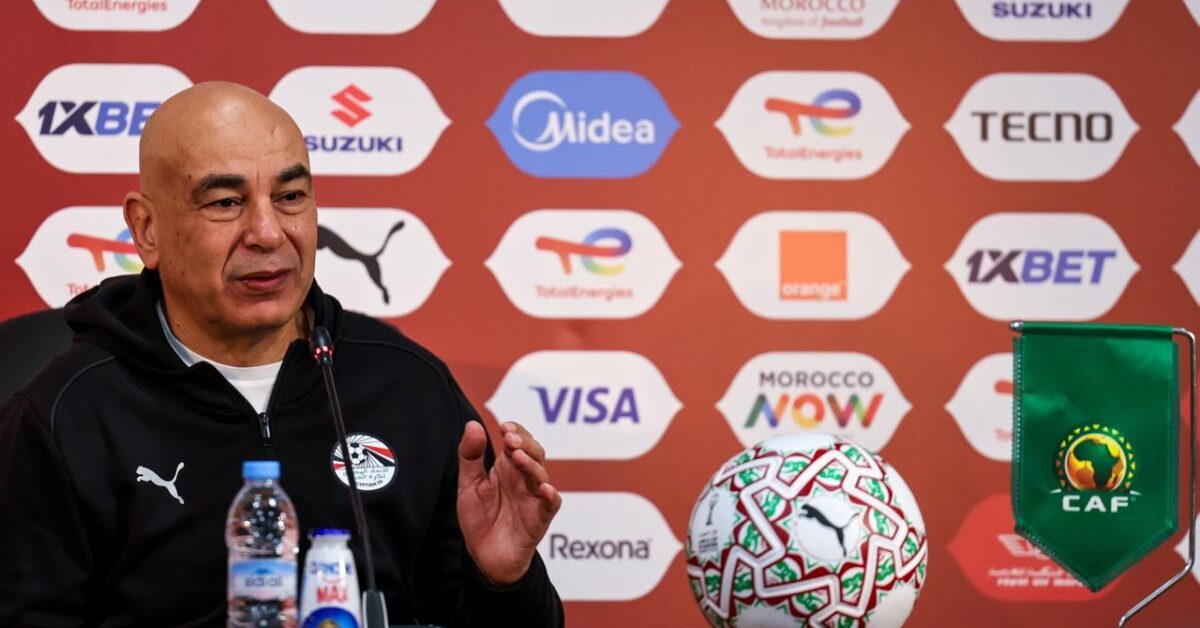
Hossam Hassan has never been shy about what he thinks the Africa Cup of Nations should be. After Egypt’s 0-0 draw with Angola, the Pharaohs’ coach cut through the noise with a clear message: keep AFCON every two years. His view lands right as CAF pushes a major change, moving the tournament to a four-year cycle. The timing is no accident — and neither is the intent behind his words.
Hossam Hassan challenges CAF’s four-year AFCON plan
In the wake of a cautious but effective draw that kept Egypt top of Group B on seven points, Hassan stepped into a bigger fight than a single match. “In my view, it is better that the Africa Cup of Nations be held every two years instead of four,” he said. He added that a biennial schedule would “serve the interests of European leagues.”
It is a simple argument with big stakes. AFCON has been the heartbeat of African football since 1957, regularly showcasing stars and new talent every two years. CAF’s new plan breaks with that tradition. Hassan’s stance is not just nostalgia. It is about rhythm, exposure, and the pathways that help African players grow and shine on the biggest stages.
“If Europe benefits every two years, why stretch AFCON to four?”
Why a biennial AFCON matters to European leagues and players
When Hassan says a two-year AFCON “serves the interests of European leagues,” he is pointing to the calendar problem. A clear, predictable international rhythm helps clubs plan, helps players manage workloads, and keeps relationships between national teams and clubs steady. A four-year gap can feel like a long silence followed by a loud shock. A two-year beat is steady — and fair to all sides.
There is also visibility. Many African stars build their name at AFCON. The tournament gives them a stage more often, which can lift careers and keep national teams sharp. Fewer editions mean fewer chances to learn, adjust, and grow together. Hassan’s view, shaped by decades in the game, reads like a plea to protect the ladder that helped him and many others climb.
Rotation in Angola, control of Group B
Hassan’s words came on a night he made a huge call: 11 changes to Egypt’s lineup against Angola. He did not hide the reason. “The aim of the Angola match was to test more players,” he said, adding he was “satisfied with the performance of those who played for the first time in the Africa Cup of Nations.”
Even with a changed team, Egypt did what was needed. The 0-0 draw was enough to stay top with seven points. It kept them ahead of South Africa, who sit on six after a 3-2 win over Zimbabwe. It also followed a morale-boosting 1-0 win over South Africa earlier in the group — a result that now looks even bigger in the final table.
The rotation told a story about trust and timing. “Resting more than one player was due to the short time between the South Africa and Angola matches,” Hassan explained. Key names like Mohamed Salah and Omar Marmoush sat out the Angola game. The message was plain: the group was in hand, the squad needed minutes, and the knockout round was coming fast.
“Eleven changes and still top the group—Egypt’s bench looks ready.”
Depth, rest, and a clear target: the last-16 in Agadir
Egypt will play their round of 16 tie in Agadir next Monday. Hassan’s mood was steady and calm: “We are ready to face any team in the round of 16. The next stage will be tough, and the competition is strong. We will work on increasing the positives in the next match and correcting the negatives.”
These are not empty lines. They reflect a plan. Egypt have used the group stage to spread minutes, shield stars, and build options. That can pay off when the stakes rise, because knockout games often turn on fresh legs, quick changes, and cool heads.
Hassan’s approach also shows trust in the squad’s wider circle. Testing players in live tournament pressure, even in a 0-0, can tell a coach more than training ever will. It can also build belief in the room: everyone matters, everyone may be needed, and nobody is just a spectator.
The legend’s perspective: a guardian of AFCON’s rhythm
Hossam Hassan is not only a coach. He is an AFCON great. He won the tournament as a player in 1986, 1998, and 2006. That history gives his words extra weight. He has lived the value of a regular, reliable AFCON both as a leader and as a teammate. When he calls for the tournament to stay every two years, he speaks as a guardian of a tradition that built champions.
In a moment when policy meets passion, Hassan brings a steady voice. He is not shouting. He is pointing to what has worked for Africa for generations and what he thinks will keep working: a biennial showpiece that keeps the continent in the spotlight and keeps its players moving forward.
“Let legends shape AFCON’s future, not TV schedules.”
What the format fight means for CAF and the game
CAF’s shift to a four-year cycle has already drawn coach criticism. Hassan’s stance adds a loud, respected voice to that pushback. The core question is simple: what schedule best serves the players, the teams, and the leagues that rely on them? For Hassan, the answer is the path AFCON has walked for most of its life: fast enough to stay fresh, steady enough to be trusted.
The debate will not end today. But Egypt’s situation gives the conversation a live example. A coach rotates, protects his stars, and still hits the target. A team manages the grind and stays on top. A legend makes the case for a format that helps players, clubs, and fans all meet in the middle.
Bottom line: Egypt ready, the AFCON debate even louder
Egypt leave the group stage with control, options, and a coach unafraid to say what many feel. The draw with Angola was not a showpiece, but it was smart. The squad is deeper for it, and the path to Agadir looks clear. Now the knockout stage arrives, where the margins shrink and one moment can change a tournament.
At the same time, the AFCON format story grows. Hassan’s call to keep AFCON every two years is more than a headline. It’s a reminder that the game’s heartbeat matters. Players need chances. Fans need rhythm. And African football needs a stage that comes around often enough to keep the lights bright.
In his own words: get the basics right, fix the small things, and be ready for anyone. That is true for Egypt in the last-16. It might be just as true for AFCON’s future too.