
Key Takeaways:
- UEFA Futsal EURO 2026 runs from Jan 21 to Feb 7 across Latvia, Lithuania and Slovenia.
- There are 16 teams, 4 groups and 32 matches overall.
- Groups: A (Latvia, Croatia, Georgia, France), B (Lithuania, Armenia, Czechia, Ukraine), C (Slovenia, Belarus, Spain, Belgium), D (Italy, Hungary, Portugal, Poland).
- Opening games: Croatia vs France and Latvia vs Georgia (Jan 21, Riga); Armenia vs Ukraine and Lithuania vs Czechia (Jan 22, Kaunas).
- Slovenia added as co-host on June 27, 2025 to stage Belarus games at Arena Stožice and Tivoli Arena in Ljubljana.
- Tickets went on sale Oct 27, 2025; 14-player squads were due by Jan 19, with Ukraine naming GKs Yuriy Savenko, Oleksandr Sukhov, Oleksandr Siritskyi and outfielders including Vladyslav Pervieiev and Danyil Abakshin.
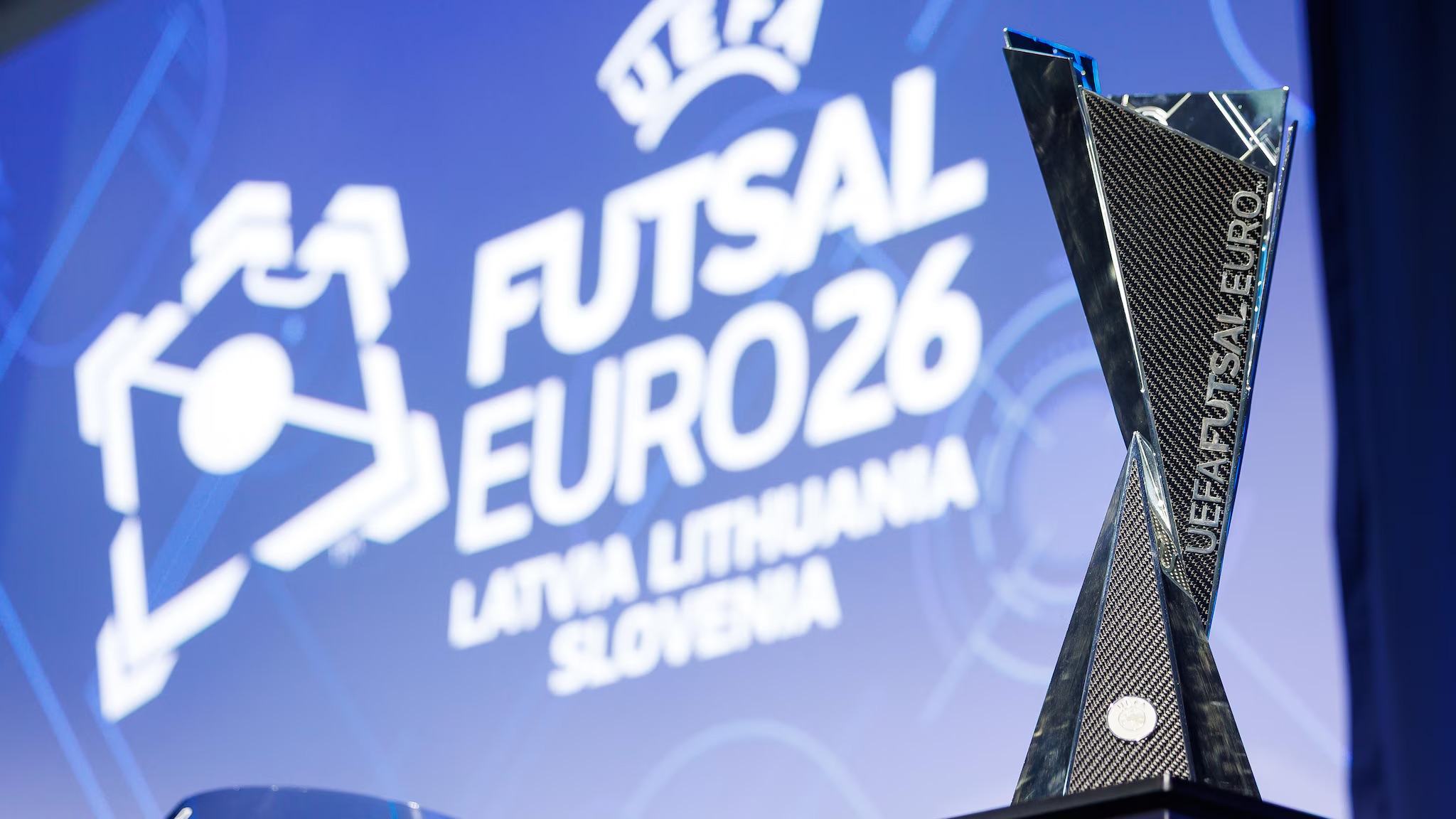
The 13th UEFA Futsal EURO opens today across three countries, a first for the competition and a landmark moment for the sport. From Riga to Kaunas to Ljubljana, 16 national teams will chase the European crown in 32 matches between January 21 and February 7. As UEFA put it, “UEFA Futsal EURO 2026 runs in Latvia, Lithuania and Slovenia from 21 January to 7 February and the match schedule is confirmed.”
This is no ordinary edition. It’s the first time three nations co-host, after Slovenia was added in 2025 to accommodate Belarus fixtures. That decision reshaped the map of the tournament and turned this EURO into a bigger, more connected celebration of futsal.
Three hosts, one tournament: how we got here
UEFA confirmed Slovenia as a co-host on June 27, 2025, joining Latvia and Lithuania. The move ensured Belarus games would be staged at Arena Stožice and Tivoli Arena in Ljubljana. Alongside Riga and Kaunas, these sites now form a triangle of venues designed for full houses and fast play.
The practical gain is clear: more fans in more cities get close to the action. The symbolic gain is bigger: a multi-nation stage that shows how futsal continues to grow, even as organizers adapt to political and logistical realities.
“Three hosts, one crown — this is the futsal we deserve.”
Futsal EURO 2026 format and schedule
The set-up is simple and sharp. There are 16 teams split into four groups. Each team plays three group matches. The top sides move on to the knockouts, where the margins get even tighter.
- Group stage: January 21–29
- Quarter-finals: January 31–February 1
- Semi-finals: February 4
- Third place and Final: February 7
It all adds up to 32 games in just over two weeks. Expect packed days, quick turnarounds and a final weekend built for drama.
Groups at a glance
Every pool has its own feel and storyline. Here are the four groups in full:
- Group A: Latvia, Croatia, Georgia, France
- Group B: Lithuania, Armenia, Czechia, Ukraine
- Group C: Slovenia, Belarus, Spain, Belgium
- Group D: Italy, Hungary, Portugal, Poland
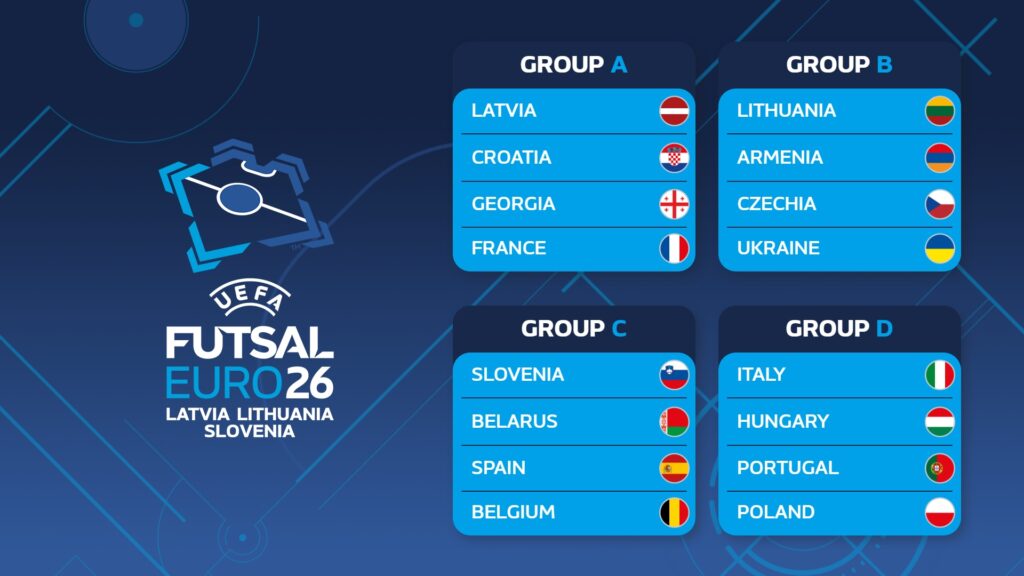
Group A puts the host Latvia in front of home fans in Riga, facing Croatia, Georgia and France. Group B lives in Kaunas with Lithuania leading the line against Armenia, Czechia and Ukraine. Group C is Ljubljana’s showcase, with Slovenia hosting Belarus, Spain and Belgium. Group D features Italy, Hungary, Portugal and Poland, a slate that promises intense, technical futsal.
“Group C in Ljubljana could be a powder keg from day one.”
Opening night and early fixtures
The ball rolls first in Riga on January 21 with two Group A matchups: Croatia vs France and Latvia vs Georgia. For Latvia, a strong start at home would energize the tournament right away. The following day (January 22) in Kaunas, Group B begins with Armenia vs Ukraine and Lithuania vs Czechia, setting an early tone for one of the most balanced pools on paper.
With games spread across three host cities, supporters will get a steady rhythm of action from the first whistle through the end of the group phase on January 29.
Where it’s played: Riga, Kaunas and Ljubljana
Three cities anchor the event. Riga, Latvia’s capital, shares the stage with Kaunas, Lithuania’s sporting hub, and Ljubljana, Slovenia’s lively capital. In Ljubljana, Arena Stožice and Tivoli Arena will host the Belarus games as part of the co-hosting plan set in 2025. These arenas are built for speed and noise, ideal for futsal’s quick passes and lightning transitions.
Ticket sales began on October 27, 2025 via the host nations’ futsal sites and the UEFA platform. For fans still looking to attend, check official channels for the latest availability across the three venues.
“Three cities, 32 games — clear your calendar.”
Squads, deadlines and a look at Ukraine
Each nation named a 14-player squad by January 19, a tight cutoff that locks in depth charts and rotations before opening night. That size fits futsal’s demands: sharp, short shifts, with coaches leaning on specialist goalkeepers and flexible outfield players who press and create at pace.
Ukraine’s list offers a snapshot of that balance. The goalkeeping group features Yuriy Savenko, Oleksandr Sukhov and Oleksandr Siritskyi. In front of them, outfielders include Vladyslav Pervieiev and Danyil Abakshin among others. With Armenia first up on January 22, Ukraine will need control, composure and fast restarts to set the tone in Group B.
The road to February 7
Group play will quickly compress the field. By February 1, only four teams will be left standing after the quarter-finals. The semi-finals arrive on February 4, and then it all funnels to the closing day on February 7, when third place and the final are decided.
Three hosts mean three pulses beating at once. Each city will write its own chapter, and together they’ll crown one champion. The co-hosting decision gave UEFA a bigger canvas. Now it’s up to the players to turn it into a classic.
Here’s what matters now: stay healthy, start strong and manage minutes. In a tournament this compact, a single five-minute surge can tip a group, and one moment of calm under pressure can set the route to the title match.
By the time the final arrives, we will have lived a tour of Europe in futsal form, from Riga’s opening roars to Ljubljana’s decisive nights, with Kaunas in constant chorus in between. Sixteen teams are ready. Thirty-two matches await. Let the games begin.