
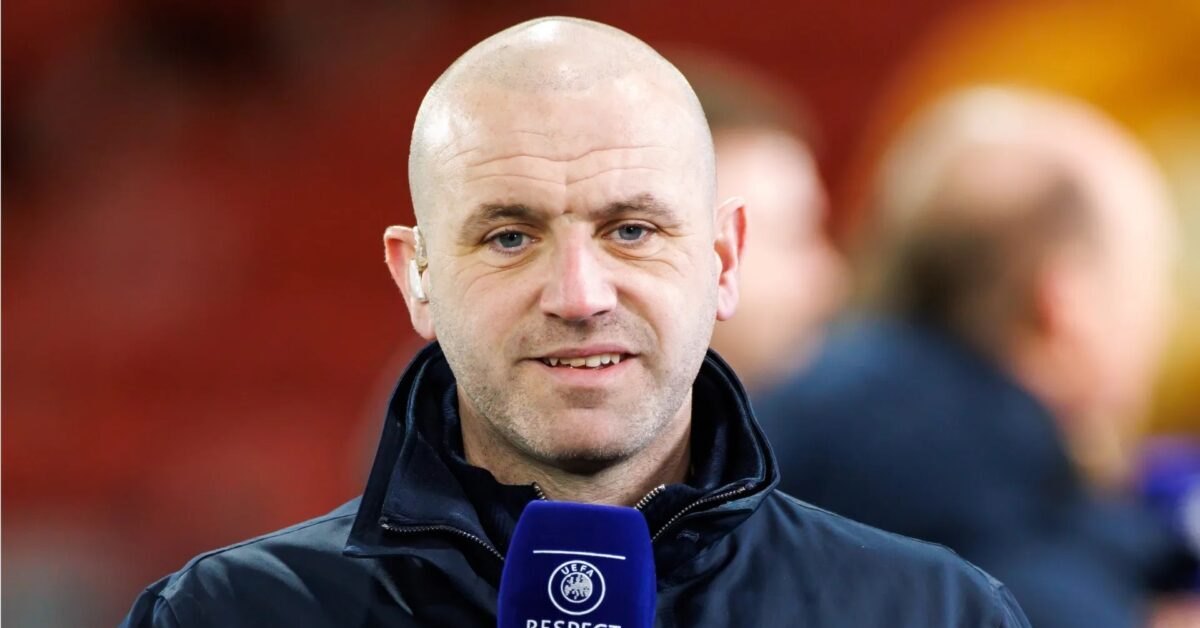
Key Takeaways:
- James McFadden, 42, has been declared bankrupt in Scotland after debts reached £2,594,192.
- Sequestration approved last month; trustee appointed is Paul Dounis of Opus Restructuring.
- Insolvency linked to historic property and film investment schemes and related tax matters.
- Sequestration order lists McFadden as a commentator and references Sports and Media Consultancy Limited (funds: £25,796).
- McFadden won 48 Scotland caps with 15 goals, including an iconic winner vs France in 2007.
- Earlier brush with collapse came seven years ago over tax, underlining a recurring problem for ex-players.
Published 07/01/2026 (13:33 UTC)
A former Scotland star has been declared bankrupt after debts rose beyond £2.5 million, a stark reminder of how fast fortunes can turn in football. The case reaches back to the early 2000s and the era of property and film investment schemes that later collided with tax rulings.
The player is James McFadden, the 42-year-old forward whose left foot lit up Goodison Park and who gave Scotland one of its greatest modern nights in Paris. McFadden voluntarily applied for bankruptcy in Scotland after his liabilities hit £2,594,192. The Accountant in Bankruptcy approved his sequestration last month.
Opus Restructuring has been appointed to handle the estate, with insolvency specialist Paul Dounis named as trustee. McFadden has stated he has no assets to satisfy what is owed.
James McFadden bankruptcy: what the court heard
Documents presented to Hamilton Sheriff Court outline the scale of the debt and note that McFadden sought help from a family member before entering sequestration. The order lists his profession as commentator and references a business, Sports and Media Consultancy Limited, where his wife, Gillian, is the sole director. Company funds are recorded at £25,796.
The insolvency is linked to historic property and film investment schemes dating back to the early 2000s and “associated tax matters.” Many of those film vehicles promised tax relief but were later ruled as tax avoidance by HMRC, leaving investors exposed. McFadden is not alone among former players who found themselves caught out by those schemes.
“We can confirm that James McFadden has voluntarily entered sequestration in Scotland. This follows losses connected to historic property and film investment schemes from the early 2000s and associated tax matters. All appropriate legal processes are being followed.” — Opus Restructuring spokesperson
“That goal in Paris won’t pay a tax bill — but it still means everything to Scotland.”
How did it come to this? The schemes, the tax, the squeeze
For a generation of footballers, the promise of “efficient” investment vehicles was powerful. The pitch sounded safe: put money into film projects or property, gain tax relief, and diversify beyond wages. Years later, when HMRC challenged and courts sided against the schemes, the bills landed hard.
McFadden narrowly avoided a similar collapse seven years ago. This time, with liabilities now at more than £2.5 million and few assets available, sequestration is the route chosen to deal with what he owes. It is a blunt process, but it is the legal way to reset after debts become unmanageable.
From Motherwell prodigy to Premier League stage
McFadden’s rise was fast and joyful. Born in Glasgow on 14 April 1983, he made his Motherwell debut at 17 and broke through in the 2000/01 season. By 2002/03, he was the SPFA Young Player of the Year. Everton moved in 2003, paying £1.25 million, to add his street football flair to the Premier League.
He would go on to make 164 Premier League appearances, returning 20 goals and 11 assists, the numbers of a hard-working forward who could also create. Birmingham City paid £5 million for him in 2008, and he was part of the club during their 2011 League Cup triumph. Knee injuries, however, bit hard at St Andrew’s and he missed the 2010/11 season.
- Motherwell: 2000/01 breakthrough, returns in 2013–14 and 2015–17
- Everton: signed in 2003 for £1.25m
- Birmingham City: signed in 2008 for £5m
- St Johnstone: 2014–15
- Queen of the South: 2017–18
“How many ex-pros were pushed into those film schemes? The advice needs to be better.”
The Tartan Army memories: France 2007 and a legacy intact
For Scotland, McFadden’s legacy is secured. He made his debut at 19 against South Africa in 2002, scored his first goal in a Euro 2004 qualifier against the Faroe Islands, and then wrote his name into folklore in September 2007. A 30-yard thunderbolt at the Parc des Princes gave Scotland a 1-0 win over France — their first on French soil since 1950.
He finished with 48 caps and 15 goals for the national team. Those numbers carry weight, but it was his sense of occasion and courage on the biggest nights that made him a fan favourite.
“This is a lesson for the next generation — protect your money like you protect the ball.”
What sequestration means for McFadden now
Sequestration in Scotland places control of a debtor’s estate with a trustee, who works to realise available funds for creditors. In McFadden’s case, Opus Restructuring’s Paul Dounis will oversee the process. The firm says all legal steps are being followed.
The order identifies McFadden’s current profession as commentator. He has been a familiar face on television and is a Sky Sports pundit, recently covering Rangers vs Aberdeen. The sequestration also references Sports and Media Consultancy Limited, where filings show £25,796 in company funds and his wife, Gillian, as the sole director.
A wider problem football can’t ignore
McFadden’s case is a cautionary tale. It highlights how financial advice to young players in the 2000s often leaned on complex schemes rather than clear, long-term planning. Many ex-pros faced similar fallout when HMRC challenged those vehicles.
The so-what is simple: players need robust, independent guidance from the start, better checks on third-party schemes, and a plan for life after the final whistle. The industry has improved, but stories like this show there is more to do.
Bottom line
James McFadden’s bankruptcy is a painful personal chapter for a player who gave Scottish football some of its brightest modern memories. The figures are stark — £2,594,192 owed, no assets declared — but the legacy on the pitch remains untarnished.
The hope now is that the process brings closure, while the lesson helps protect the next wave of players. Form on the field fades; good financial choices need to last much longer.