
Key Takeaways:
- Novak Djokovic beat Jannik Sinner 3-6, 6-3, 4-6, 6-4, 6-4 to reach his 11th Australian Open final.
- The semifinal ran over four hours and finished past 1:30 a.m. on Rod Laver Arena.
- Sinner converted just 2 of 18 break points despite a fast start and heavy hitting.
- Djokovic held serve 36 times in a row at one stage and amped his forehand beyond 140 km/h in the fourth set.
- It was Djokovic’s first five-set match since Roland Garros 2024; both men’s semifinals went five sets for the first time since Wimbledon 2018, with Alcaraz–Zverev lasting 5:27.
- Djokovic faces Carlos Alcaraz in the final; he leads their head-to-head 5–4, Alcaraz leads 3–2 in majors, and Djokovic has never lost an Australian Open final.
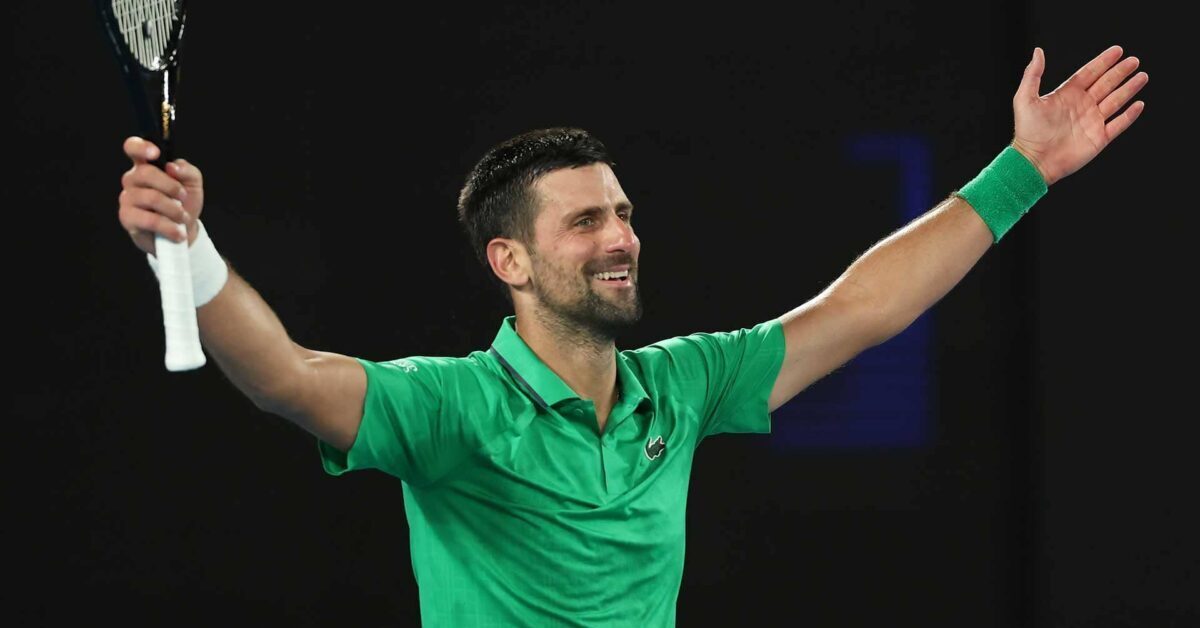
Novak Djokovic is still the last word in Melbourne midnight drama. The 38-year-old, seeded No. 4, outlasted No. 2 seed and two-time reigning champion Jannik Sinner in a five-set Australian Open semifinal that stretched beyond four hours and past 1:30 a.m. on Rod Laver Arena. The scoreline—3-6, 6-3, 4-6, 6-4, 6-4—tells you it was close. The feel of the night said even more: the sport’s greatest closer found one more gear.
Djokovic moves into his 11th Australian Open final, where he will meet world No. 1 Carlos Alcaraz. For a player who had not played a five-setter since Roland Garros 2024, this was a stern test. For Sinner, who had won the last five meetings with Djokovic—including three Grand Slam semifinals—this was a night where chances came and went, and the door never fully opened.
How Djokovic flipped the match against a fast-starting Sinner
Sinner came out flying. He struck 15 winners to Djokovic’s 8 in a crisp 6-3 first set, taking time away from the Serb and pinning him behind the baseline. When Sinner’s first serve landed, it was heavy and hard to read. In the third set, he won a stunning 90% of his first-serve points (18 of 20) and nicked the lead again, two sets to one.
Yet the defining stat was not just how Sinner started— it was how often Djokovic refused to blink. Across the middle and late phases, Djokovic pieced together 36 consecutive service holds, a model of control under pressure. At 4-3 in the fourth, he saved two break points, then immediately surged, driving his forehand beyond 140 km/h to muscle past rallies he had been losing earlier. The fourth set went his way, 6-4, and the momentum shifted for good.
“That 4-3 hold in the fourth was the match—pressure broke first on Sinner’s racquet, not Novak’s.”
In the decider, the pattern held. Djokovic soaked up pace, stretched points, and forced Sinner to play one extra ball, again and again. Sinner saw openings—he had 18 break-point looks for the night—but converted just 2 of 18. Djokovic finally closed on his third match point. It was not flashy; it was relentless.
Numbers that told the story of the Australian Open semifinal
- Score: Djokovic def. Sinner 3-6, 6-3, 4-6, 6-4, 6-4
- Duration: Over four hours, finishing after 1:30 a.m.
- First-set firepower: Sinner 15 winners, Djokovic 8
- Third set serve: Sinner won 90% (18/20) first-serve points
- Clutch serves: Djokovic held serve 36 straight times at one stage
- Conversion gap: Sinner 2/18 on break points
- Context: Djokovic’s first five-setter since Roland Garros 2024
- Historic night: Both men’s semis went five sets for the first time since Wimbledon 2018; Alcaraz–Zverev ran 5 hours 27 minutes
What they said: grit, humor, and respect
Djokovic called it as he felt it: “It already feels like winning tonight, but I know I will have to come back in a couple of days and fight the number 1 in the world… I hope I have enough gas to stay toe-to-toe with him, that is my desire.”
He also gave fans their due: “I think you guys got your value for the ticket today, that’s for sure.” Then came the grin and the jab: “I want 10 percent of tonight’s tickets sold. Craig, 10 percent, no negotiations.”
On the late-night scheduling, Djokovic shared a playful exchange with his next opponent: “I saw Carlos after the match… He told me, ‘I’m sorry to delay the start of your match.’ I told him, ‘I’m an old man, I need to go earlier to sleep.’”
Sinner, just 24 and already a two-time Melbourne champion, was clear-eyed: “It hurts, for sure… He’s won 24 Grand Slams. We know each other very well… you can not be surprised, because I feel like he’s the greatest player for many, many years.”
“Sinner had the punches, Djokovic had the answers—18 break points and only two landed.”
What it means: a blockbuster final vs Carlos Alcaraz
Now it is Djokovic vs Alcaraz for the trophy. The head-to-head leans to Djokovic, 5–4, but Alcaraz owns the edge in majors, 3–2. Djokovic has never lost an Australian Open final. Alcaraz is the current No. 1 and fresh off a 5-hour-27-minute marathon win over Alexander Zverev. Fatigue and recovery will matter for both men.
Djokovic’s ability to raise pace late, steady his serve, and manage big moments remains unmatched in Melbourne. If he brings that same focus, the margin is real. But Alcaraz is fearless in best-of-five and has already shown he can take Djokovic to the edge on the biggest courts. The tactical chess—Djokovic’s depth and direction vs Alcaraz’s first-strike aggression—should define the final.
Sinner’s night and what comes next
Sinner came in hunting a third straight Australian Open title after his wins in 2024 and 2025. He had also beaten Djokovic five times in a row, including three Grand Slam semifinals. For two and a half sets here, that pattern looked set to continue.
But two factors turned the tide: Djokovic’s surge on serve and forehand in the fourth set, and Sinner’s missed chances on return. The Italian’s timing was often perfect; the finishing touch was not. Against Djokovic, that thin margin is everything.
Even so, the long view is bright. Sinner’s profile speaks to a star in full flight:
- Age: 24; Nation: Italy; Right-handed
- Height/Weight: 191 cm, 77 kg
- Coaches: Simone Vagnozzi and Darren Cahill
- Career singles titles: 24
- Career record: 321–86
With that foundation, he will be back in this position again soon. Clean up the break-point conversion, sharpen the patterns on return, and the Melbourne night may look different next time.
“If Sinner turns 2/18 into even 5/18, is this match over in four? That’s the lesson.”
The flow of five: the turning points
Set 1: Sinner blitzed through 6-3 with 15 winners, taking time away and landing first strikes.
Set 2: Djokovic answered 6-3, tightening his first serve and extending rallies to draw errors.
Set 3: Sinner’s first serve peaked—he won 90% of first-serve points—and he edged it 6-4.
Set 4: The hinge. Djokovic saved two break points at 4-3, then ripped through with forehands over 140 km/h to take it 6-4.
Set 5: Djokovic stayed solid and closed 6-4 on his third match point, the night’s final word.
In Melbourne, the clock is often the enemy. For Djokovic, it is sometimes a friend. The later it gets, the more certain he seems. On Sunday, he chases another Australian Open crown against the sport’s most fearless young star. Night or day, it feels like one more classic is coming.