
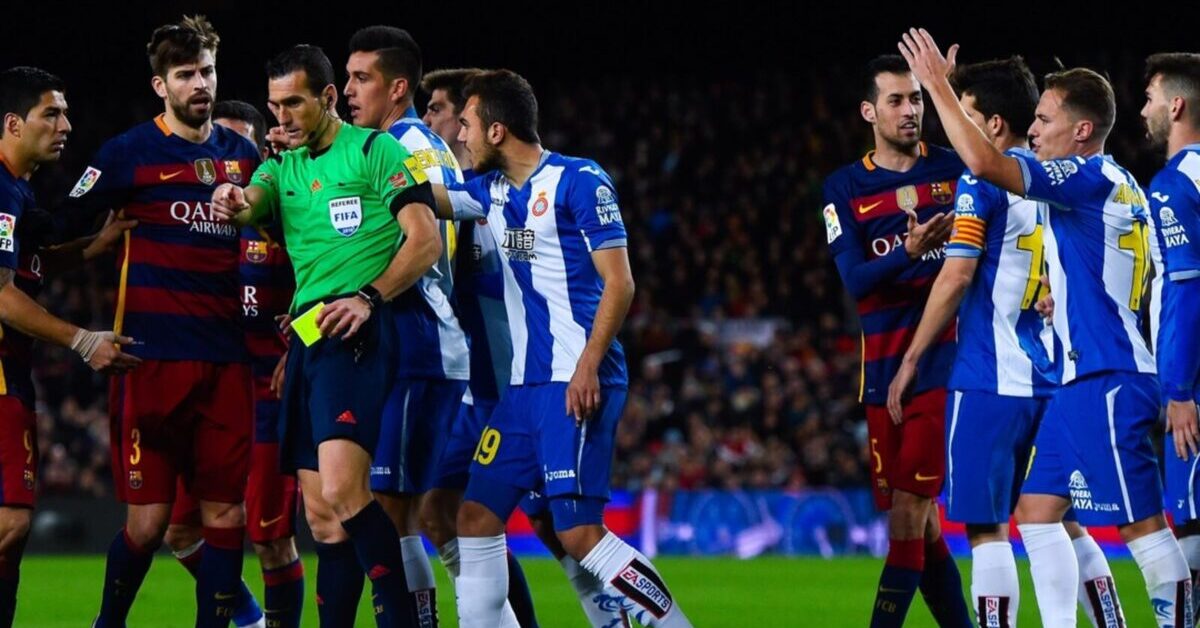
The Derbi Barceloní is the local derby between FC Barcelona and RCD Espanyol de Barcelona. It is more than a football match. It is a long story about identity, community, and how a city sees itself. The fixture brings neighbors, friends, and families to opposite sides for 90 minutes, with roots that stretch back to the start of organized football in Catalonia.
Origins of a Barcelona Rivalry
FC Barcelona was founded in 1899 by Joan Gamper, a Swiss sportsman who helped shape the club’s international outlook from day one. One year later, in 1900, Ángel Rodríguez formed RCD Espanyol as a response to that foreign influence, creating a team with a more local, Spanish/Catalan-only base at first. Those different starting points still echo today.
The rivalry appeared almost immediately in early competitions. In 1903, Espanyol won the Copa Macaya, an early regional tournament that helped put Catalan football on the map. That same year, Barcelona and Espanyol played two 2-2 draws in the Copa Barcelona, showing how closely matched the clubs could be from the beginning.
Politics, Identity, and a City Split
The derby has often reflected the wider life of Barcelona. In 1918, FC Barcelona took part in a campaign for Catalan autonomy. Espanyol did not join that push. This difference marked a clear line in how each club related to politics and identity.
Over time, Barcelona carried an international identity. Espanyol often set itself as the city’s more local voice. These themes shaped how fans saw themselves and how the derby felt in the stands. The match became a space where football, culture, and identity met.
Catalan Championship Era and Early Honors
Before the national league settled into place, local tournaments were the main stage. The Catalan Championship ran from 1903/04 to 1939/40 and featured regular clashes between the two clubs. In that era, Barcelona won 21 titles, while Espanyol claimed 11. The balance showed both the long-term strength of Barcelona and the consistent ability of Espanyol to challenge.
These early competitions, along with the Copa Macaya and Copa Barcelona, set routines and rivalries that would carry forward into the professional age. The city learned to plan around derby days, and the fixture became a shared calendar event for Barcelona residents.
LaLiga Beginnings and Milestone Matches
FC Barcelona and RCD Espanyol are founder members of LaLiga. Their first official league derby arrived in the 1928–29 season, with Barcelona winning 1-0. The fixture was part of the league from its earliest days, helping build national attention for both clubs.
One historic note sits in 1939, when Espanyol defeated Barcelona in Barcelona’s only LaLiga home opener loss on record. Results like this kept the derby sharp even when one side held a wider edge over time. Each meeting offered a chance to shift momentum and memory.
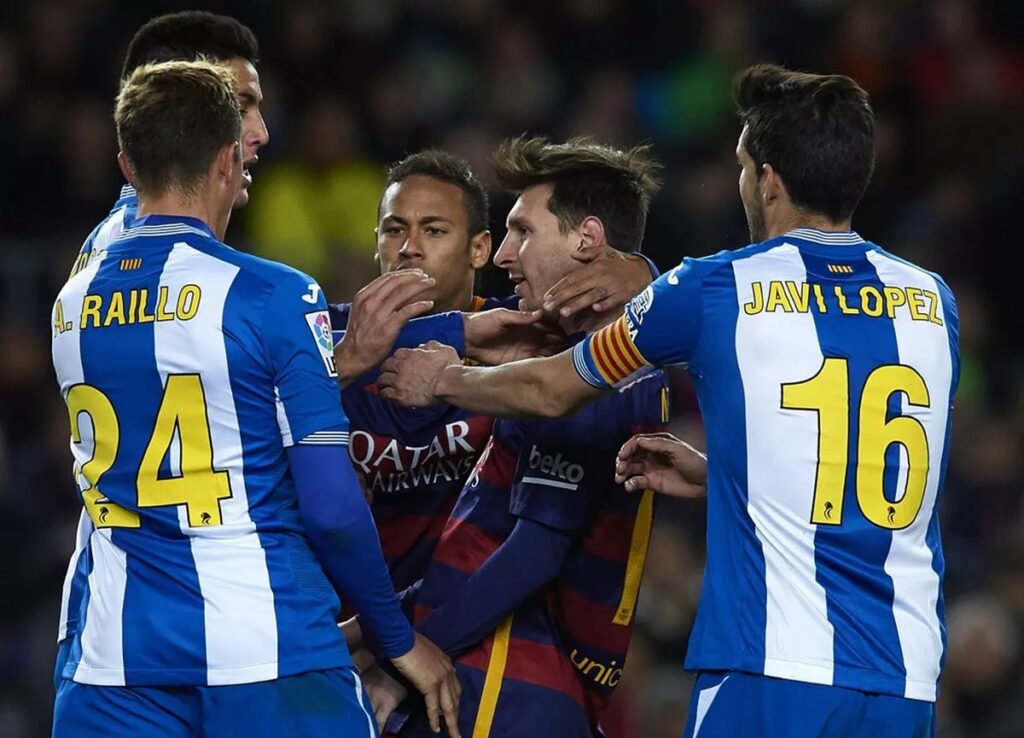
Head-to-Head Record: A One-Sided Balance with Lasting Meaning
The numbers tell a clear story while leaving room for nuance. Across sources focused on LaLiga, there have been 174 league meetings. When considering all competitions in some records, the total reaches 189. The results show Barcelona’s long-term edge, yet every derby matters in its own right.
- Total matches: 174 in LaLiga; up to 189 across all competitions
- Barcelona wins: 101 in LaLiga; up to 112 across all competitions
- Espanyol wins: 34 in LaLiga; up to 36 across all competitions
- Draws: 39 in LaLiga; up to 41 across all competitions
Espanyol’s win rate in the derby is around 19% in the broad head-to-head figures cited, the lowest such figure for them in domestic play. Even so, the derby remains a key point of pride and defiance for Espanyol fans and players. A single result can lift a season or deepen a narrative for years.
Record Setters: Messi and Xavi in the Barcelona Derby
Individual records in the Derbi Barceloní underline the tie’s elite level. Lionel Messi holds the scoring mark with between 22 and 25 goals, depending on how the data is counted. Xavi Hernández leads in appearances, with sources listing between 27 and 36. The ranges reflect differences in record-keeping across competitions and eras, but the message is the same: the derby drew the very best out of some of the game’s greatest players.
Modern Era Notes: High Stakes, Familiar Themes
In the last decade, detailed year-by-year derby scores are not included here, but the core themes have stayed the same. The match week still divides the city and commands attention beyond the table. Barcelona’s broader success remains visible in the long-term data, yet single games can still swing mood and momentum.
One famous example from the modern era is the 2-2 draw at Camp Nou in the 2006/07 season. Raúl Tamudo’s late equalizer for Espanyol had a major impact on the title race. Moments like this show why the derby endures: even in a rivalry with a clear historical balance, a single play can change everything.
How to Read the Numbers: Method and Discrepancies
Derby totals often vary because different sources count different sets of matches. Some lists include league-only games; others add cups and regional competitions. This explains why totals can appear as 174 (LaLiga) or 189 (all competitions) and why Messi’s goal tally and Xavi’s appearance count are expressed as ranges.
Rather than focusing on a single exact total, it helps to view the derby through patterns. Barcelona’s sustained edge is clear. Espanyol’s key wins and draws still carry weight, shaping narratives within both clubs. The competition remains a measure of identity, pride, and performance in Catalonia.
Why the Barcelona Derby Still Matters
The Derbi Barceloní endures because it blends history, culture, and sport. It began with different visions for what a club should be, grew through political and social contrasts, and settled into a fixture that reflects a city’s diversity. It matters to league tables, but also to family dinners and daily conversations around Barcelona.
From early tournaments like the Copa Macaya and the Catalan Championship to the first LaLiga derby and modern-era flashpoints, the match has never been only about three points. It is a mirror for Catalan football and a lesson in how local rivalry can shape national stories. The numbers may show a one-sided balance, but the meaning of each derby remains fresh, and its impact lasts far beyond the final whistle.