
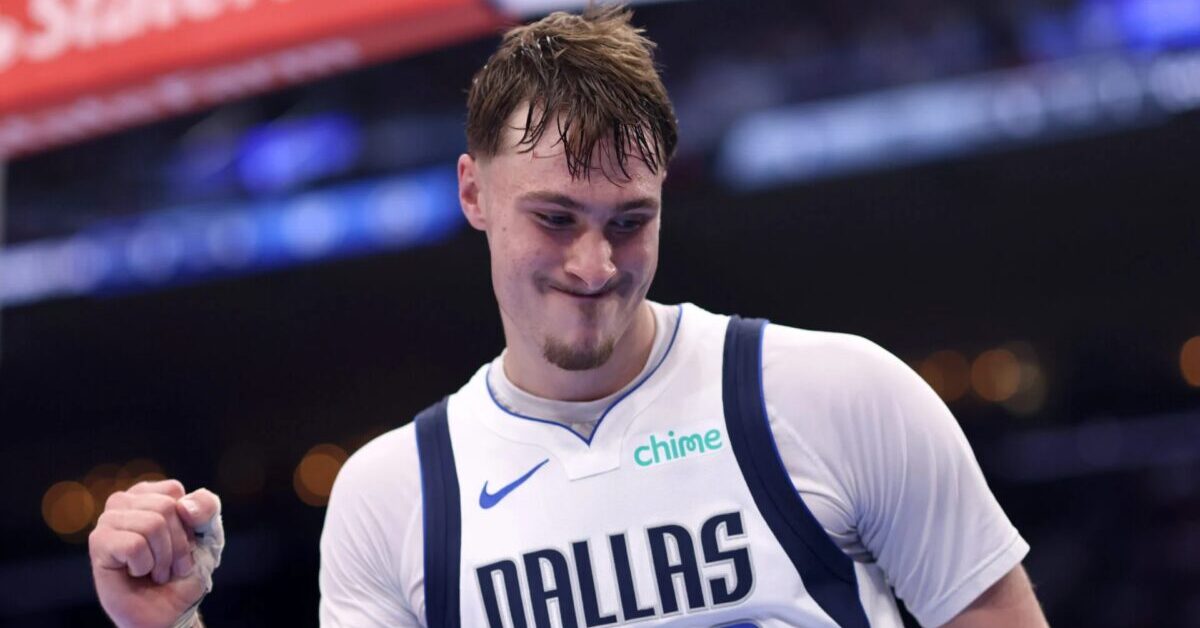
Key Takeaways(TL;DR):
- Cooper Flagg scored a career-high 42 points and became the youngest player in NBA history to hit 40 in a game.
- His line: 42 points, 7 rebounds, 6 assists in a tight Mavericks–Jazz contest that sat 112-110 Dallas at one point.
- He did most of his damage within 10 feet of the basket with strong drives and left-hand finishes.
- Flagg scored out of timeouts and delivered go-to moves, including an and-1: “Coup to the hoop with a foul.”
- Broadcast calls captured the moment: “CAREER HIGH FOR COOP” and “Cooper Flagg becomes the youngest player in history to score 40 points in a game.”
- Context: rookie Bailey (No. 5 pick, ~9–10 ppg) and shot-blocker Gafford were among the key figures on the floor.
On Dec. 16, 2025, Cooper Flagg didn’t just score. He stamped his name into NBA history. The Dallas Mavericks forward poured in a career-high 42 points against the Utah Jazz and became the youngest player ever to reach the 40-point mark in a game. The headline tells one story. The way he did it tells the rest.
Flagg’s night wasn’t built on heat-check threes or a long string of jumpers. It was built near the rim. It was steady, smart, and fearless. He kept getting to the paint, finishing with either hand, and staying strong through contact. And in a game that was tight late — 112–110 Dallas at one point — his points came when they mattered most.
Youngest to 40: a record that changes the timeline
Becoming the youngest in NBA history to reach 40 points isn’t just a trivia note. It’s a line in the sand. It says Flagg’s ceiling isn’t some far-off future. It’s happening now. The broadcast summed it up in real time: “Cooper Flagg becomes the youngest player in history to score 40 points in a game.” Moments earlier, as he crossed the old personal best, the call rang out: “The next basket for Coop will get him a career high. And he’s got it. 36 for Cooper Flagg and counting.” Then, as the total kept rising: “CAREER HIGH FOR COOP.”
These are not empty words. They marked the exact moments when a teenage star grabbed a game and refused to let go.
How 42 happened: paint touches and poise
Pre-game, coach Will Hardy talked about an expected push: Flagg’s improved shooting and finishing within 10 feet. He was right. Flagg hit the paint, over and over, with control. He used his body to shield defenders, kept his dribble alive, and carved space with quick footwork. The signature play captured it perfectly: “Coup to the hoop with a foul.” That was the theme. Take the hit, keep the focus, finish the play.
Flagg’s left-hand finishes stood out. They weren’t flashy. They were firm and on target. When a young player embraces simple, high-percentage shots, the scoreboard moves. Tonight, it did.
“He didn’t hunt threes—he hunted the rim. That’s star stuff.”
Out-of-timeout execution: go-to moves on call
The Mavericks leaned on Flagg in the big moments. After timeouts, he delivered. Twice late — around the 6:35 and 4:10 marks — Dallas drew up actions to get him downhill. He took the angle, beat the first defender, absorbed help, and scored. That’s the difference between a good night and a great one: making the set plays count when a defense is locked in.
This is what coaches call a “reliable package.” It’s the small set of moves you trust when the game is tight. Flagg has already built that: change of speed, shoulder into space, soft touch with the left, and balance through the bump.
“When the playbook shrank, Flagg’s game got bigger.”
The line that tells the story: 42-7-6
Flagg didn’t just score. He also grabbed 7 rebounds and handed out 6 assists. That matters. It means he wasn’t forcing the game. He played inside the flow and punished every mistake. When a second defender came, he found the open man. When his shot was there, he took it with no hesitation.
It was efficient basketball born from simple choices: get to the rim, take the easy pass, win the possession. That’s how box score numbers become winning habits.
Context and resistance: Jazz rookies, size and length
Utah didn’t make anything easy. Rookie Bailey, the No. 5 pick who’s been around 9–10 points per game, was part of the mix. There was also size and rim protection on the floor, with a presence like Gafford challenging shots in the paint. Flagg’s answers came with craft more than brute force. He slipped into space, used his left to keep the ball away from shot blockers, and finished clean.
That’s the kind of scoring that translates. It isn’t streaky. It’s built on angles, footwork, and touch. Those tools travel to every arena.
“If this is the floor, what’s his ceiling?”
What it means now
It’s one game, yes. But it’s a loud one. Becoming the youngest to 40 while dropping 42, and doing it with inside scoring and late-game poise, is a sign of what’s next. Teams will adjust. They’ll send earlier help. They’ll shade left. They’ll try to wall off the paint. The next test is how Flagg counters: kick-outs to shooters, quick one-two dribbles into pull-ups, and keeping that same strong finishing touch.
For Dallas, the takeaway is clear: they have a young star who can carry a half-court offense in crunch time. For the league, the message is simpler: the kid is ready now.
Tonight’s numbers will land on every highlight show. The clips will pop. But the best part of this performance wasn’t just the record. It was the method. Simple shots. Tough finishes. Smart reads. That’s a foundation you can build a season on.