
Key Takeaways:
- CAF sanctioned Senegal and Morocco after the AFCON 2025 Final in Rabat for breaches of fair play and integrity.
- Senegal’s FSF hit with $615,000+ in fines; coach Pape Bouna Thiaw banned 5 CAF matches and fined $100,000.
- Senegal’s Ismaila Sarr and Iliman Ndiaye suspended 2 CAF matches each for misconduct.
- Morocco’s FRMF fined $315,000; Achraf Hakimi gets a 2-match ban (1 suspended on probation).
- Ismaël Saibari suspended 3 CAF matches and fined $100,000; CAF cited conduct “damaging to the image of football.”
- Bans apply only to CAF competitions (e.g., 2027 AFCON qualifiers), not the 2026 World Cup; Morocco’s protest was rejected.
The CAF Disciplinary Board has come down hard after a chaotic TotalEnergies CAF Africa Cup of Nations Morocco 2025 Final in Rabat, issuing bans and heavy fines to both Senegal and Morocco. The message, in CAF’s own words, is “quite clear”: the showpiece game broke the “principles of fair play, loyalty, and integrity,” and it will carry a cost.
That cost is highest for Senegal. The Fédération Sénégalaise de Football (FSF) has been fined more than $600,000, including itemized punishments that add up to $615,000. Morocco’s Fédération Royale Marocaine de Football (FRMF) also faces a major hit, with $315,000 in fines.
CAF also rejected Morocco’s protest against Senegal, closing the door on attempts to overturn the result or the process.
Why CAF acted: a final that lost control
The final itself was tense and turbulent. A controversial penalty for Morocco late on, struck by Brahim Diaz and saved by Senegal keeper Edouard Mendy, lit the fuse. The game went to extra time, where Pape Gueye’s goal sealed Senegal’s second AFCON title. But the drama did not end with the final whistle.
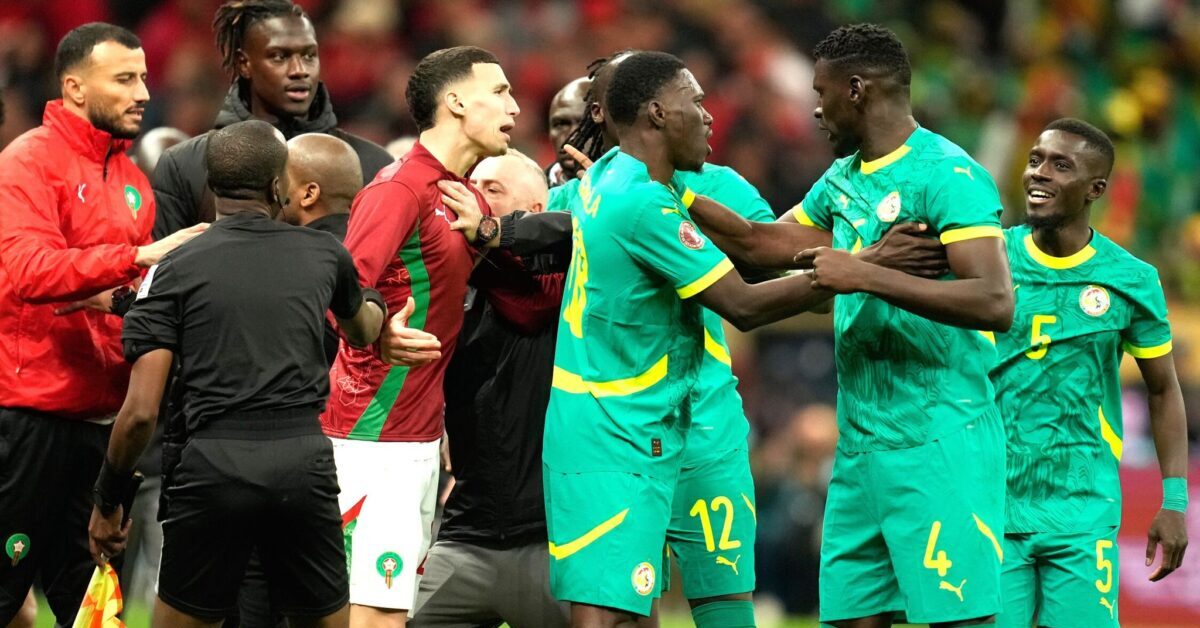
CAF cited multiple flashpoints: Senegal fans threw objects and there was a brief pitch invasion; Moroccan ball boys engaged in improper behavior; players and staff from both sides pressed into the VAR area; and lasers shone from the stands. In the Board’s view, these acts “violated the CAF Disciplinary Code” and amounted to conduct “damaging to the image of football.”
“If the final looks like chaos, the punishments will look like a warning shot.”
The punishments: bans, fines, and a firm line on fair play
CAF’s decisions target both the federations and individuals. The goal is clear: set standards for behavior on the field, on the touchline, and around the technical areas.
Senegal sanctions
- Pape Bouna Thiaw (head coach): suspended for 5 CAF matches and fined $100,000.
- Ismaila Sarr and Iliman Ndiaye: each suspended for 2 CAF matches.
- Fédération Sénégalaise de Football (FSF): fines totaling $615,000, including $15,000 for team misconduct after five player cautions in the final.
Morocco sanctions
- Achraf Hakimi: suspended for 2 CAF matches, with 1 match suspended for one year on probation.
- Ismaël Saibari: suspended for 3 CAF matches and fined $100,000.
- Fédération Royale Marocaine de Football (FRMF): fines totaling $315,000, including $200,000 for ball boys’ behavior, $100,000 for players/staff invading the VAR area, and $15,000 for fans using lasers.
CAF’s rationale leaned on the fundamental values of the game. The Board pointed to breaches of the “principles of fair play, loyalty, and integrity.” The verdict also highlighted actions that “violated the CAF Disciplinary Code.” Put simply: football’s biggest African stage demands better.
“You can debate the penalty all day, but you can’t defend lasers and VAR invasions.”
What it means for the stars and the next cycle
These suspensions only apply to CAF competitions. That means AFCON qualifiers, CHAN, or other CAF-run matches are affected, but not the 2026 FIFA World Cup. Fans of Senegal and Morocco can breathe a little easier about global fixtures, but the early steps toward AFCON 2027 will be shaped by these bans.
For Senegal, missing coach Pape Bouna Thiaw for five matches is a major setback during a period when new systems and younger players are often tested. Losing Ismaila Sarr and Iliman Ndiaye for two games each also removes speed and creativity from the attack. The FSF’s financial hit, at $615,000, is the clearest sign of CAF’s stance: federations must control the bench, the technical area, and their fans.
For Morocco, the impact is different but still sharp. Achraf Hakimi’s ban includes one game suspended on probation, which is essentially a warning: one more step out of line, and the punishment grows. Ismaël Saibari’s three-game ban and $100,000 fine are among the toughest individual penalties issued, reflecting CAF’s view of his role in the incidents. The FRMF’s $315,000 total — especially $200,000 linked to ball boys — underlines that match-day organization is on the federation’s watch.
“If ball boys and staff cross the line, the federation pays. That’s the new standard.”
The protest that went nowhere
The FRMF lodged a protest against Senegal after the final. CAF rejected it. No relief, no replay, no adjustment to the result. By closing the case decisively, CAF has tried to stop the post-match noise from dragging on into the new year. The football, not the courtroom, will decide what comes next.
The bigger picture: the line between passion and order
AFCON finals are loud, colorful, and emotional. That is part of the magic. But there is a bright line between passion and disorder, and CAF is telling everyone where that line sits. Crowd control, behavior around the VAR, respect for officials, and safe match operations are not optional extras. CAF described parts of the night as “conduct … damaging to the image of football.” It is a strong phrase, but it speaks to what millions saw: a great game that threatened to spiral.
The football moments will still live long: Mendy’s penalty save, Diaz’s courage to step up, and Pape Gueye’s extra-time winner. But the aftermath is now part of the story too, and it arrives with numbers, bans, and lessons.
What to watch next
Both federations must now plan for early AFCON 2027 qualifiers without key players and, in Senegal’s case, without their head coach on the touchline. Internal protocols around VAR zones, ball boy supervision, and fan management will likely be revised. Expect tighter sidelines, faster steward responses, and clearer briefings for all match-day roles.
CAF wanted to send a message. By using its strongest terms and its biggest tool — the disciplinary code — it has done so. The challenge for teams, staff, and fans is to keep the fire for the game, not the chaos around it.
Bottom line
Senegal and Morocco leave the AFCON 2025 final with very different results on the pitch, but both face a similar off-field reality: respect the code, or pay for it. With the protest rejected and the sanctions set, focus now shifts to the next CAF cycle. The bans and fines are a lesson and a warning all at once. The best answer from the teams will be discipline during the qualifiers, and football that lets the headlines be about goals, not hearings.