
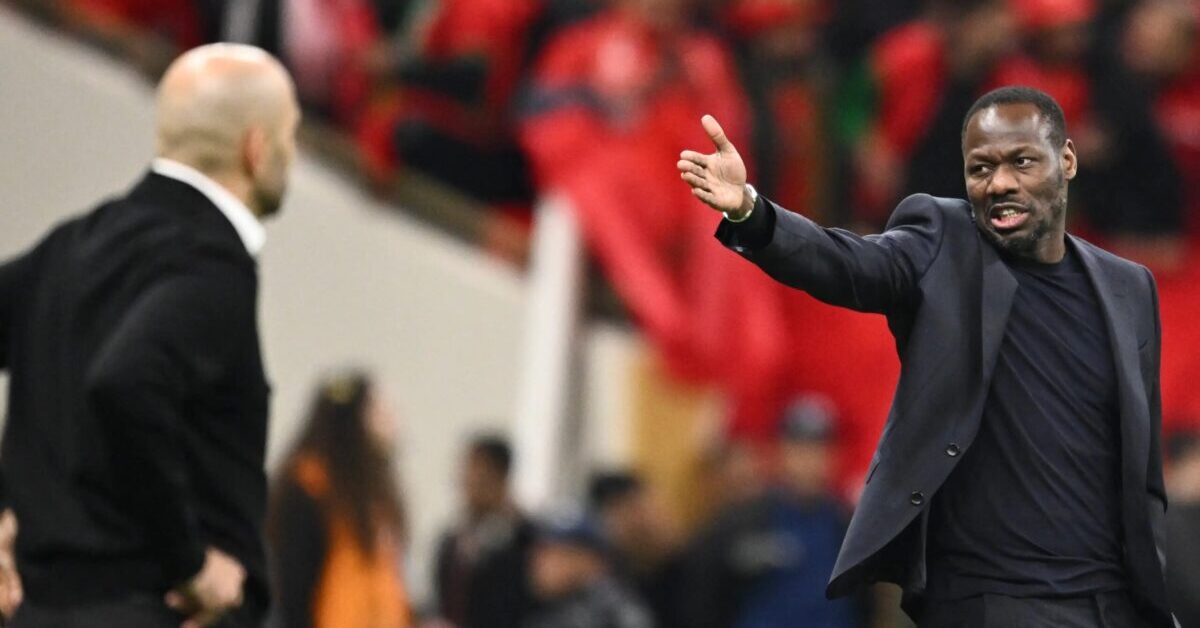
Key Takeaways:
- CAF opened disciplinary proceedings against Senegal coach Pape Thiaw after the AFCON 2025 final protest.
- Senegal beat hosts Morocco 1-0 in extra time; Pape Gueye scored early in extra time in Rabat.
- Thiaw told his players to walk off after a late VAR-awarded penalty to Morocco; play stopped for 15 to nearly 30 minutes, reports say.
- FIFA’s Gianni Infantino condemned the scenes and urged action, saying respect for officials is essential.
- Morocco will file complaints to FIFA and CAF; coach Walid Regragui called the match “shameful for Africa” and blamed the delay for the missed penalty.
- Any suspension could impact Senegal at the 2026 World Cup, where they face France on June 16; no sanction length confirmed yet.
The Confederation of African Football has opened a disciplinary case after chaotic scenes marred the AFCON 2025 final in Rabat. The coach at the heart of it is Senegal’s Pape Thiaw, whose on-pitch protest during stoppage time has put his place on the touchline for the 2026 FIFA World Cup at risk. It was supposed to be a night remembered for a champion’s grit. Instead, the controversy has stolen the spotlight.
On January 18, 2026, Senegal beat hosts Morocco 1-0 in extra time at Prince Moulay Abdellah Stadium. The Lions of Teranga lifted the trophy, but their happiest moment was overshadowed by a stunning interruption: a walk-off ordered by their coach after a late penalty was awarded to the hosts by VAR. The next day, January 19, CAF confirmed it had begun formal proceedings into Thiaw’s conduct.
What happened in the AFCON 2025 final
Senegal’s winner came from Pape Gueye, who struck early in extra time to make it 1-0. It was a hard, tense game between two of Africa’s top sides, with the title on the line and the stadium roaring behind the hosts. Then, deep into stoppage time, VAR recommended a review for a potential penalty to Morocco. The spot-kick was given.
That decision ignited the night’s most dramatic twist. Thiaw, the Senegal coach, brought his players to the sideline and told them to leave the field in protest. The match stopped. Reports differ on the length of the delay, ranging from almost 15 minutes to nearly half an hour, but the images were the same everywhere: a final in limbo, officials pleading, and a confused stadium unsure how it would all end.
“Walking off risked everything — the trophy, the respect, the future.”
The protest, the apology, and the tipping point
Eventually, cooler heads prevailed. Senegal’s veterans, led by captain Sadio Mané, helped calm teammates and urged a return to play. The penalty was finally taken and missed — a moment Morocco coach Walid Regragui later argued had been spoiled by the long delay. “The match we had was shameful for Africa,” he said, adding, “I think a lot of time passed before [Brahim] was able to take the penalty, and this put him off.”
After the game, Thiaw apologized. “I apologize for my behavior,” he said, acknowledging that the protest crossed a line. But an apology may not be enough to avoid punishment. CAF called the incidents unacceptable and said it is reviewing video and match reports to determine action.
CAF opens a disciplinary case: What’s at stake
CAF has formally opened proceedings against Thiaw. Sanctions can range from a fine to a multi-match ban. There is no confirmed suspension length or timeline yet, and that uncertainty is now a major storyline as Senegal shift focus to 2026.
This is more than a one-off scolding. If a suspension is handed down and carries into international fixtures, it could impact Senegal’s bench for the World Cup. The schedule matters: Senegal open against France on June 16 at MetLife Stadium. Losing their head coach for any part of that could affect preparation, in-game decisions, and the pulse of the squad.
“If a World Cup ban lands, that walkout will define this era.”
FIFA’s reaction: Integrity and respect for referees
The episode drew global criticism, including from FIFA President Gianni Infantino. “The ugly scenes witnessed [Sunday] must be condemned and never repeated,” he said. “I expect that the relevant disciplinary bodies at CAF will take the appropriate measures.” He added a clear reminder: “Respect for match officials is essential to preserving the integrity of the game.”
That message carries weight. Football has always allowed emotion, but it draws a hard line when authority on the pitch is challenged in a way that stops play. Coaches set the standard. A coach directing a walk-off sends a message every governing body fears: that teams can decide when the game continues. CAF’s case is not just about Rabat; it is about the example this sets for future finals at any level.
Morocco’s stance and a looming appeals battle
Morocco’s Royal Football Federation is preparing formal complaints to both FIFA and CAF. Regragui’s post-match comments framed the night as a loss for the sport as much as for his team. From Morocco’s view, the long delay, the pressure around the penalty, and the way the game spiraled should bring broader sanctions, not just on Senegal’s coach.
CAF has already signaled it is reviewing all footage and reports and could consider wider misconduct cases if it finds grounds. That means both federations might have to answer questions about how staff and players behaved during the stoppage.
“VAR drama is part of the game; leadership is staying on the pitch.”
The human moment: Sadio Mané’s calm amid the storm
One image that did the rounds: Sadio Mané urging teammates to settle and return. In finals, small acts by leaders often matter more than tactics. With emotions boiling, his steady hand helped avoid a complete meltdown. That intervention kept the final alive and protected Senegal’s win from becoming a full-on farce.
It’s a reminder that while coaches make calls, veteran players often save nights. Mané did just that, guiding Senegal back to the pitch and, in the end, to the trophy lift.
Why this matters beyond AFCON
CAF’s decision will echo into the World Cup cycle. Senegal are not just continental champions; they’re a team with global ambition. Any ban for Thiaw that extends into June affects scouting, training blocks, and matchday choices. Against a giant like France, those margins matter.
There’s also the wider football lesson. If coaches feel emboldened to halt play after a VAR decision, the sport risks a copycat problem. CAF’s action, and the clarity of its reasoning, will set a line for everyone to see. Strong, fair, and fast communication will be key to restoring trust.
What happens next
CAF will review the match footage and officials’ reports, then announce its verdict. Thiaw’s apology will be weighed, as will the disruption and its impact on the match. Any appeals process could involve both federations and, if escalated, FIFA. For now, Senegal must plan for two futures: one with their coach on the sideline in June, and one without.
And yet, the football remains. Senegal won a grueling final, thanks to Pape Gueye’s extra-time strike and a resilient defense. They earned their crown. The hope, for Africa and beyond, is that the sport’s leaders now bring the same clarity and control to the game’s governance that Senegal showed in its play, so that the next final is remembered for football — not for the wait before a penalty.