
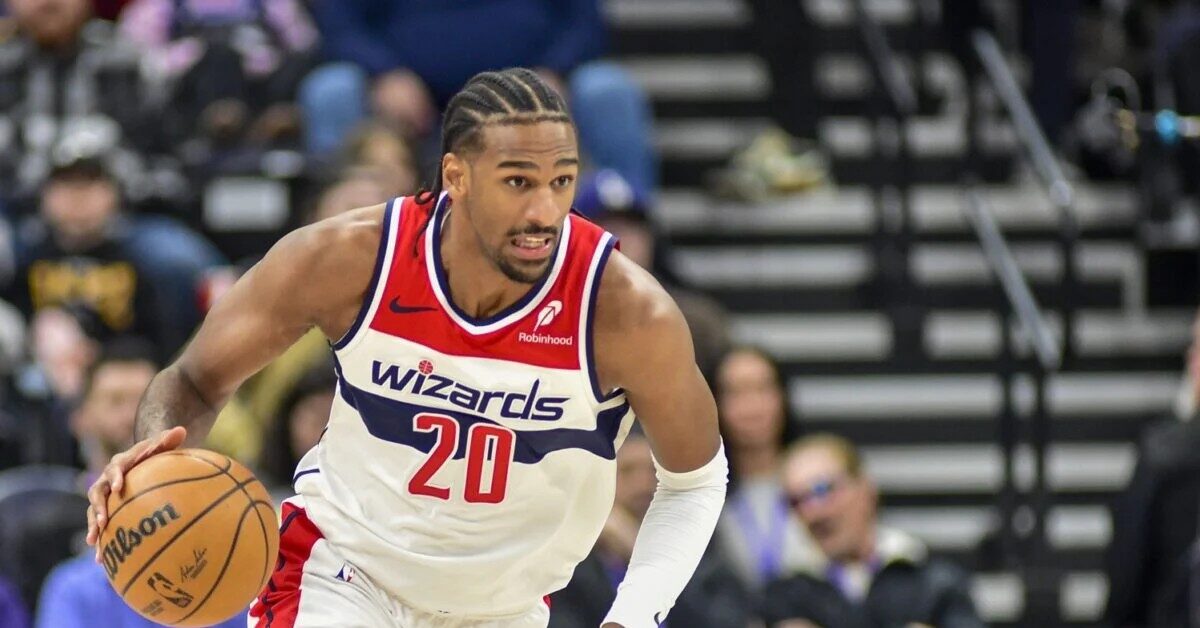
Key Takeaways:
- Milwaukee vs. Washington tips at 7 p.m. EST on Thursday, Jan. 29, 2026, at Capital One Arena.
- Giannis Antetokounmpo (calf) and Trae Young (knee/quad) are out; Wizards also miss Marvin Bagley III as both sides manage heavy injuries.
- Bucks enter 18-27 (12th East) on a 3-game slide; Wizards are 11-34 (14th) and hunting another upset after already beating Milwaukee twice this season.
- Both teams average 112.0 PPG, but the Wizards allow 122.8 PPG compared to the Bucks’ 116.0; Milwaukee shoots ~51.3% FG to Washington’s ~45.9%.
- Spotlight: Alex Sarr (listed at 17.7 PTS, 7.5 REB, 2.2 BLK or 15.7 PTS, 6.4 REB, 2.3 BLK), Ryan Rollins (about 15–16 PPG), and Kyshawn George (15 PTS, 5 REB).
- Last meeting Jan. 1: Wizards 114-113 (Bub Carrington 20, Giannis 33). Rebounds and rim protection again loom large.
The Milwaukee Bucks and Washington Wizards meet Thursday night with both teams patched together and playing through the pain. Tip is set for 7 p.m. EST at Capital One Arena, and the final injury report tells the story: Giannis Antetokounmpo is out for Milwaukee with a calf issue, and Trae Young is out for Washington with a knee/quad problem. The Bucks need a stop to a three-game slide. The Wizards, fresh off an upset and already holding two wins over Milwaukee this season, see another opening.
Why this matchup matters right now
Record-wise, it is 12th vs. 14th in the East: the Bucks at 18-27 and the Wizards at 11-34. That sounds like midseason grind, but the stakes are real. Milwaukee is trying to steady the ship amid key absences. Washington is building confidence around a young core that has bitten the Bucks twice already. With the conference bunched in the lower half, every January result stacks up for the play-in chase.
There’s also style and identity at play. Without Giannis, Milwaukee’s usual inside punch must be re-imagined. Washington, missing its main playmaker in Young and frontcourt depth with Marvin Bagley III sidelined, needs to find creation by committee while leaning on length and energy.
“If Sarr controls the paint again, the Bucks are in trouble.”
Bucks vs Wizards injury report and who must step up
Milwaukee is without its best inside scorer and rim runner in Antetokounmpo. That puts more on the shoulders of Damian Lillard to steer late-game offense and on the veteran front line—Brook Lopez and, as noted in team plans, Myles Turner—to hold the paint and finish plays. The Bucks have also leaned into Ryan Rollins, who’s been in the 14.8–16.3 points per game range, adding rebounds (about 5.1) and playmaking (about 4.7 assists).
Washington’s sheet is just as heavy. With Trae Young and Marvin Bagley III out, the Wizards ride with their youth. Kyshawn (also listed as Keyshawn) George has been a steady 15 points and 5 boards type, while rookie guard Bub Carrington changes the tempo with speed and shot-making—he put up 20 in the New Year’s Day win over these same Bucks. The two-way anchor is Alex Sarr, the long center whose box scores vary by source (17.7 PTS, 7.5 REB, 2.2 BLK, or 15.7 PTS, 6.4 REB, 2.3 BLK), but whose impact is clear.
Wizards coach Brian Keefe didn’t hide his belief in Sarr’s defensive range: “We had him up high in pick-and-roll early to start the game, we had him switching on guards and he’s just roaming around there covering every drive into the paint. That’s a unique player, he does unique things.” That roaming presence could be the fulcrum again without Giannis attacking the rim.
What the numbers say about Bucks vs Wizards
On paper, both teams average the same points per game—112.0—but the defensive gap is sizable: the Bucks allow 116.0 PPG, the Wizards give up 122.8 PPG. Shooting efficiency leans Milwaukee: roughly 51.3% FG and 38.5% from three compared to Washington’s 45.9% FG and 37.5% from three. That suggests if the Bucks get clean looks through drive-and-kick and early actions for shooters, they can score at will.
On the glass, however, Washington has a path: around 48.0 boards per game to Milwaukee’s ~44.7. Second chances can flatten shooting edges. The Bucks’ passing (about 27.0 assists) has been a bright spot; the Wizards sit near 25.0. If Milwaukee keeps the ball pinging, it can tug Washington’s defense out of shape and shrink the rebounding gap by forcing longer misses.
“This is the night Dame has to own the fourth quarter.”
Recent form and the last meeting
Form lines are shaky for both. The Bucks are 3-7 over their last 10, averaging 108.0 points. The Wizards are 1-9, at 107.8 points per game. Yet head-to-head is where Washington has punched above its weight. On Jan. 1, the Wizards edged the Bucks 114-113, with Carrington’s 20 and Giannis’ 33 leading the scoring. Washington has claimed two wins over Milwaukee this season, and that history matters; it tells the Wizards they can win the muscle and the margins when it gets close.
Giannis’ own season line has varied in recent notes—17.4 PTS, 6.5 REB, 3.2 AST in recent listings versus the more familiar 28.0 PTS, 10.0 REB, 5.6 AST from earlier. However you slice it, his absence changes everything about Milwaukee’s rim pressure and transition game.
Projected starting lineups
Lineups may be fluid up to tip, but current projections indicate the following:
- Bucks: Kyle Kuzma, Bobby Portis, Myles Turner, Ryan Rollins, AJ Green
- Wizards: Bilal Coulibaly, Keyshawn (Kyshawn) George, Alex Sarr, Tre Johnson, Khris Middleton
Note: these are projected alignments based on ongoing injuries and recent usage patterns; game-time changes are possible.
“Washington winning the glass is the hidden swing stat.”
Key matchups and swing factors
Alex Sarr vs. Bucks’ interior: Without Giannis, Milwaukee must manufacture paint points through roll men and timely duck-ins. Sarr’s length and timing can erase layups, kick-starting runouts for Washington. If Sarr stays out of foul trouble and patrols the lane like Keefe described, he tilts the game.
Damian Lillard’s control vs. Wizards’ guards: With Trae Young sidelined, Washington’s ball pressure comes from younger legs. If Lillard manages tempo and gets into two-for-one situations late in quarters, Milwaukee’s efficiency advantage should show up on the scoreboard.
Rebounding battle: The Wizards’ edge on the boards (~48.0 per game) is a lifeline for an offense that can stall. If Coulibaly and George crash from the wings to help Sarr, Washington can create the extra 6–8 shots it needs to survive cold spells.
Three-point variance: Milwaukee’s ~38.5% from deep is a key separator. Early threes for role players like AJ Green can open driving lanes later. For Washington, George and Carrington hitting catch-and-shoot looks keep the defense honest and Sarr’s rim rolls open.
So what should we expect on Jan. 29?
Expect a grind that hinges on paint touches and late-game execution. The Bucks should lean on ball movement and spacing to make up for the missing star power inside. The Wizards will try to turn it into a rebounding and rim-protection game, trusting Sarr and the wings to run and crowd the paint.
Both teams average 112 points, so it may come down to which side trims its weak spot: can Milwaukee hold the glass, and can Washington hold the line at 115 or fewer allowed? History this season says Washington can drag the Bucks into a one-possession finish. Milwaukee’s shooting numbers say it shouldn’t have to. Without Giannis and Trae, the details decide it.
Either way, this is a chance for young names—Sarr, George, Carrington, Rollins—to write another chapter. And for veterans like Lillard and Lopez to steady the moment. In a season defined by availability, Thursday is about adaptability.