
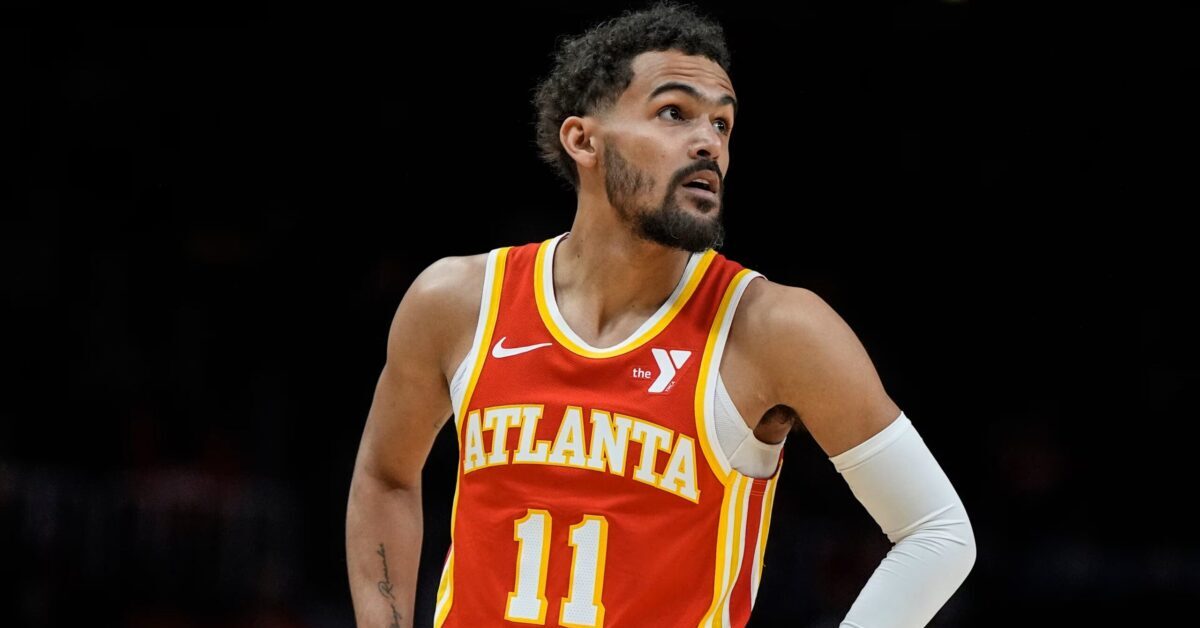
Key Takeaways:
- Hawks trade four-time All-Star Trae Young, 27, to the Wizards for CJ McCollum and Corey Kispert.
- Young at the time of the deal: 10 games with 19.3 PPG, 8.9 APG, 1.5 RPG in 28 MPG on 41.5% FG and 30.5% 3PT; career in Atlanta: 25.2/3.5/9.8 across 493 games.
- Wizards move $30M below the tax, open a roster spot and clear $46M in summer cap room; Young reunites with executive Travis Schlenk.
- McCollum, 34, averaged 18.6–18.8 PPG for Washington and is owed $30.6M this season; Kispert brings 9.2 PPG on 39.5% from three.
- Wizards were 10-26 (14th East) and Hawks 17-21; Washington seeks first playoff berth since a 2020-21 first-round exit.
- It’s the end of an era in Atlanta and the first domino of the 2025-26 NBA trade season.
On January 8, 2026, the first blockbuster of the NBA trade season dropped: the Atlanta Hawks dealt four-time All-Star Trae Young to the Washington Wizards for veteran guard CJ McCollum and forward Corey Kispert. It’s the end of an era in Atlanta, and a bold reset in Washington, where Young arrives as the new lead guard for a franchise still deep in a rebuild.
An early alert captured the shock: “BREAKING: The Atlanta Hawks are trading four-time NBA All-Star Trae Young to the Washington Wizards for CJ McCollum and Corey Kispert, sources tell ESPN.” Another trade tracker put it simply: “The first domino of the 2025-2026 NBA trade season has fallen!”
Trae Young to Washington: a new engine for a rebuild
Young, 27, leaves Atlanta after seven-plus seasons as the face of the franchise. He was drafted fifth overall by the Dallas Mavericks in 2018 and traded to Atlanta that night in a swap for Luka Doncic. In 493 games with the Hawks, he averaged 25.2 points, 3.5 rebounds and 9.8 assists, earning four All-Star nods.
This season at the time of the trade, Young had played 10 games, averaging 19.3 points and 8.9 assists with 1.5 rebounds in 28 minutes per game, shooting 41.5% from the field and 30.5% from 3-point range. He has $95 million remaining on his deal through the 2026-27 season, with a player option that offseason.
Washington targeted an offensive anchor for its young core, and Young had long signaled D.C. as a preferred landing spot. As one report framed it, “The 27-year-old point guard, who had long expressed a preference for Washington, will take over as the Wizards’ lead guard.” The Wizards were 10-26 and 14th in the East when the news broke, though they’d won five of seven before a road loss in Philadelphia. They haven’t made the playoffs since a first-round exit in the 2020-21 season.
From a fit standpoint, Washington badly needed pick-and-roll craft. They ranked 25th in points per chance off pick-and-rolls this season before the deal, and Young graded 12th in points per chance among ballhandlers who took at least 1,000 screens in 2024-25. On paper, he’s a ready-made organizer and shot creator the Wizards have not had since prime John Wall.
“D.C. finally has a star who bends defenses — now what’s the plan around him?”
Cap math and a reunion in the nation’s capital
The Wizards didn’t just add star power. By making this deal, Washington moves $30 million below the luxury tax, opens a roster spot, and clears $46 million in cap room for the summer. That combination gives them real flexibility to sign or trade for more help around Young.
There’s also a familiar face in the front office. Young reunites with Travis Schlenk, the Wizards executive who orchestrated the 2018 draft-night move that first brought Young to Atlanta. The message is clear: this is the next step in a longer-term build, with a point guard the organization believes can elevate its “burgeoning young talent.”
One more wrinkle to watch: Washington’s 2026 first-round pick is top-eight protected (due to an earlier deal with the Knicks). If the Wizards keep that pick, they’ll instead send New York second-rounders in 2026 and 2027. Adding Young could nudge Washington away from the bottom and change those pick outcomes.
Why Atlanta hit reset — and what McCollum and Kispert bring
Atlanta’s calculus was twofold: competitive balance now, and financial flexibility later. McCollum, 34, led Washington in scoring at 18.6 points per game in some reports, while others list 18.8 points along with 3.5 rebounds and 3.6 assists. Those reports also cite 44.9% versus 45.4% from the field and 39.2% versus 39.3% from three. He was a steadying presence for the Wizards before being held out in Philadelphia on the night the trade surfaced. He’s owed $30.6 million this season and becomes an unrestricted free agent this summer.
McCollum’s expiring deal is a cap lever for the Hawks. Post-trade, Atlanta no longer has any player making more than $31 million in any season of his contract, which gives the Hawks room to retool and even add salary without flirting with the tax. The expiring structure also positions them to pursue a large salary over the coming months if the right target shakes loose.
On the floor, McCollum’s shot creation should help the Hawks stay competitive. On certain self-created half-court attempts, his effective field goal percentage sits at 51.5% — a threshold that would top any current Hawk by that measure. That matters for a team that has learned to survive without Young; their minus-0.4 net rating this season when Young sits is the best “no-Young” mark of his Hawks tenure.
Corey Kispert adds needed shooting and wing depth. The fifth-year forward is averaging 9.2 points, 2.3 rebounds and 1.7 assists in 19 games, while hitting 39.5% from beyond the arc. He fits the archetype of spacers who can make life easier for drivers and bigs alike in Atlanta’s offense.
“Did Atlanta just trade its ceiling for flexibility? Or did they buy two paths at once?”
McCollum, for his part, offered a gracious goodbye to D.C.: “Loved my time in DC,” he said, per NBA insider Chris B. Haynes. “Organization was great to my family and I. Michael Winger and Will [Dawkins] did everything they said they would and kept their word from the very beginning. Love the city and they’re doing things the right way over there. Exited to get to The A and get to work. Very familiar with their style of play. Love the ownership group and front office. Good group of players.”
End of an era in Atlanta, new chapter for a young core
“It’s the end of an era in Atlanta.” Young’s time as the Hawks’ franchise cornerstone is over, and the team now leans into a younger core that includes Jalen Johnson, Nickeil Alexander-Walker, Dyson Daniels, Onyeka Okongwu and Zaccharie Risacher. With McCollum’s scoring and Kispert’s spacing, the Hawks can stay in the mix in the East’s middle while keeping powder dry for a bigger swing.
Atlanta’s record sat at 17-21 — the “middling zone” of the conference — when the trade broke. The flexibility won’t win banners on its own, but it creates options. And options are currency in a league where stars move fast.
“If the Hawks find the right big swing by July, this deal could age fast — in a good way.”
The night it broke — and what’s next
There were telltale signs on the night reports surfaced. Washington held out McCollum and Kispert during a road loss in Philadelphia. Young, in street clothes on the Hawks’ bench, stepped away in the fourth quarter, returned, then left again with about 30 seconds left, slapping hands with a few fans on his way to the locker room. By the next morning, the message around the league was unmistakable: the first big trade of the winter was done.
For Washington, the next steps are simple to say but hard to execute: build a stable roster around Young, maximize his pick-and-roll strengths, and spend that newly freed $46 million wisely in July. The Wizards brass believed they needed an offensive engine; now they have one. Whether this “throws a wrench” into any intentional losing this spring is a fair question, but officials view the move as a necessary step in the rebuild.
For Atlanta, the path is about balance: remain competitive in the short term with McCollum’s scoring punch and Kispert’s shooting, while using extra flexibility — aided by McCollum’s $30.6 million expiring and a cap sheet with no one above $31 million — to chase the next high-impact piece.
Bottom line
Trades of this size change teams’ identities overnight. The Wizards wanted a lead guard and face of the rebuild — and got a four-time All-Star who still bends defenses at 27. The Hawks wanted optionality — and got it, along with two rotation-ready shooters. The real verdict waits until July and beyond, but on January 8, 2026, both teams made their bet.