
Key Takeaways:
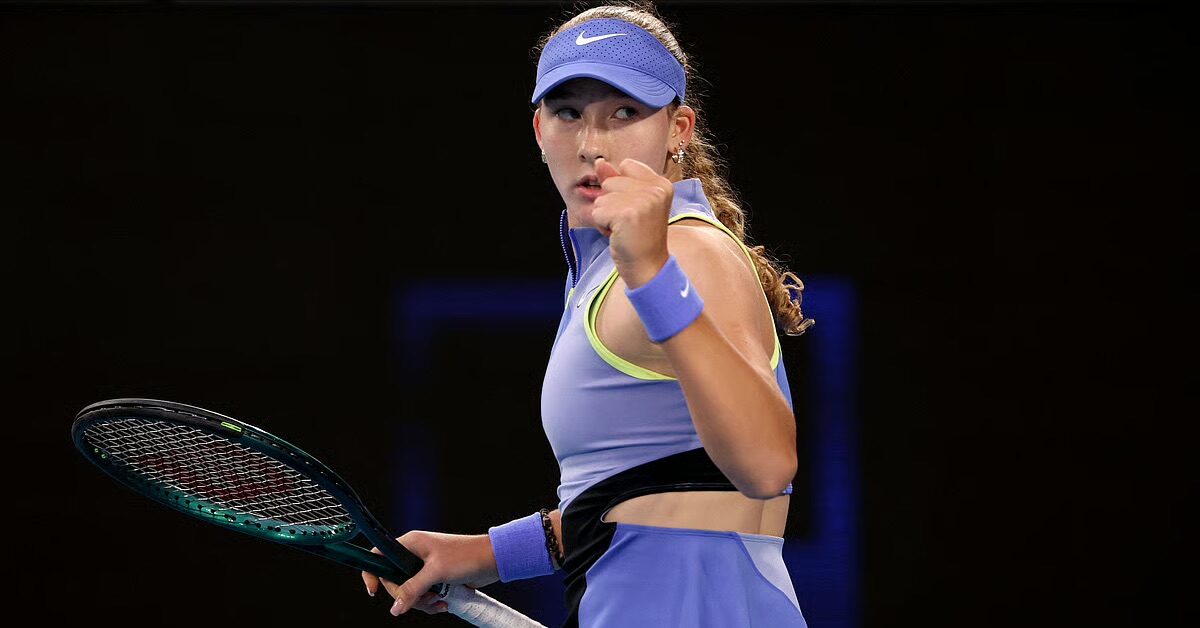
- Mirra Andreeva defeated Maria Sakkari 6-0, 6-4 in the Australian Open 2026 second round on Wednesday night at Margaret Court Arena.
- Andreeva opened the match by winning 8 straight games, handing Sakkari a first-set bagel.
- Match time: 1 hour 17 minutes. Next: Andreeva faces Elena-Gabriela Ruse, who beat Ajla Tomljanovic 6-4, 6-4.
- Sakkari finished with 27 unforced errors; Andreeva struck 11 winners.
- Sakkari won only 15% of first-serve points in set one (2/13), and 41% for the match.
- Andreeva is 5 wins in 6 matches to start 2026; this was her first tour-level bagel since the 2025 US Open (vs Alycia Parks).
On a crisp Wednesday evening in Melbourne, Mirra Andreeva made a tough second-round matchup look simple. The 18-year-old, the highest-ranked teenager on the WTA Tour and seeded No. 8 at the Australian Open, shut the door on former top-10 star Maria Sakkari 6-0, 6-4 in 1 hour 17 minutes at Margaret Court Arena. It was a performance that mixed fearless hitting with cool control, and it sent a clear message to the field: Andreeva is not just arriving—she is here to contend.
“You could just tell this was going to be Mirra Andreeva’s night.” That line from the commentary felt spot on as the Russian teenager sprinted out of the blocks, reeling off the first eight games of the match. The bagel in set one was Andreeva’s first on tour since the 2025 US Open, and it set the tone for a result that never truly felt in doubt.
Match report: Australian Open statement from a rising star
Andreeva came in with poise and purpose, and Sakkari never got comfortable. The Greek player, now ranked No. 51 and a two-time fourth-rounder in Melbourne (2020, 2022), struggled at the start. Her first serve—usually a strength—deserted her in the opening set. She won just 15% of points behind it (2 of 13), a number that simply does not win matches at this level. By the end, she lifted that figure to 41% for the match, but the damage was done early.
The first set zipped by as Andreeva took control with depth and timing. Sakkari’s 27 unforced errors piled up, especially in that fast, lopsided opener. Andreeva did not need to hit through every point; she picked her spots and finished with 11 clean winners, balancing aggression with margin. When Sakkari finally steadied in the second set to halt the slide, the teenager answered with calm holds and timely pressure on return.
“That was a statement bagel from an 18-year-old — title vibes.”
Numbers that tell the story: serve woes and rally control
This match turned on first-strike patterns. On the short exchanges (four shots or fewer), Andreeva owned the court, winning 29 of 55 such points—and a striking 19 of 29 in the very shortest rallies. She was just as assured when points stretched, edging Sakkari 12–7 in rallies of nine shots or more. That blend—winning both the quick-fire points and the long battles—left Sakkari with no safe plan B.
Pair those rally stats with serve numbers, and the picture is clear. Without reliable first-serve points to lean on, Sakkari had to play catch-up from her second shot, and Andreeva ate up that territory. The teenager’s clean returning and smart court position turned neutral balls into pressure. Sakkari’s 27 unforced errors were not just misses; they were forced by constant stress.
“Sakkari’s first serve at 15% in set one? You can’t win like that.”
Context and form: Andreeva’s 2026 is building fast
Andreeva entered Melbourne as the world No. 8, the top-ranked teenager in the sport, and she continues to look the part. She has started 2026 with five wins in her first six matches, and this was her most complete performance yet. It also delivered a small milestone: her first tour-level bagel since the 2025 US Open first round, when she blanked Alycia Parks in a set.
This was the first career meeting between Andreeva and Sakkari, and the youngster handled that unknown with veteran smarts. Even when Sakkari raised her level in the second set, Andreeva calmly held her ground. She leaned on high-percentage patterns, used the backhand down the line to change direction, and never let the moment speed up. For a teenager under the lights, that composure is a weapon in itself.
It is worth remembering Andreeva’s path this week: she opened by beating Donna Vekic in three sets (6-4, 3-6, 6-0), showing she can reset after a wobble and finish strong. Against Sakkari, there was no need for a reset. From game one, she set the tempo and never let it go.
What went wrong for Maria Sakkari
Sakkari, 30, has the résumé and power to trouble anyone, and she arrived from a solid first-round win over Leolia Jeanjean (6-4, 6-2). But this matchup got away quickly. The early serve dip led to shorter service games, and that, in turn, fed Andreeva’s confidence on return. Chasing the scoreboard, Sakkari pressed and missed, and the error count climbed.
There were positives in the second set—more first serves, better forehand length—but Andreeva answered each push with a tidy hold or a deep return game that blunted momentum. Nights like this can happen when a player starts cold against a sharp opponent. The lesson for Sakkari will be about settling faster and protecting the first serve under pressure.
“If Andreeva controls both the short and long rallies, who stops her?”
What’s next: Elena-Gabriela Ruse awaits in Round 3
Andreeva moves on to face Elena-Gabriela Ruse in the third round after the Romanian beat Ajla Tomljanovic 6-4, 6-4. Ruse brings grit, a solid serve, and a willingness to step inside the baseline. She will try to make Andreeva hit on the move and test the teenager’s patience. But if Andreeva’s depth and return patterns look like they did against Sakkari, she will be tough to shift off the baseline.
Key for Andreeva in that matchup: protect the first ball after serve, pick smart moments to change direction, and keep the return low and deep. If she stays balanced between first-strike aggression and rally control, she should like her chances.
Big picture in Melbourne
Every Slam asks the same question of title hopefuls: can you win cleanly when you should, and solve problems when you must? Over two rounds, Andreeva has shown both. She weathered a three-set test in her opener and then played a near-flawless night match against a former top-10 player. The result is a place in the last 32 and the feeling that her ceiling this fortnight could be very high.
The numbers underline the eye test: 8 straight games to start, a bagel set, control of both short and long rallies, and strong composure under lights. For an 18-year-old in her first meeting with Sakkari, that is real authority. Melbourne tends to reward players who can mix patience and punch. Right now, that’s Mirra Andreeva to a tee.
Final score: 6-0, 6-4. A message sent—and, perhaps, the start of something bigger.