
Key Takeaways(TL;DR):
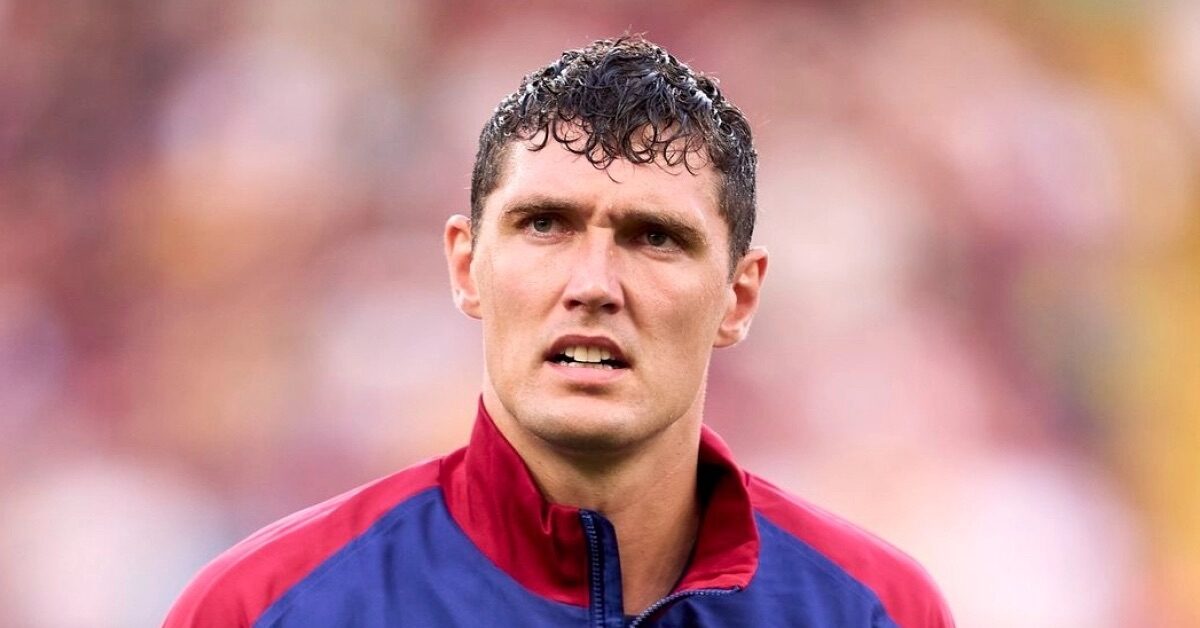
- Barcelona have confirmed Andreas Christensen has suffered a partial ACL tear in his left knee during training.
- The club says he will be out for several months, with no official return date set yet.
- Barcelona’s medical team has chosen conservative, non-surgical treatment for Christensen at this stage.
- The injury further reduces Barcelona’s centre-back depth and may force tactical and transfer changes.
- Christensen has already had fitness interruptions this season, making this long layoff even more worrying for club and player.
- Recovery from a partial ACL tear can vary widely, so his rehab progress will decide whether he avoids surgery.
Barcelona have been hit with the kind of news every club fears in the middle of a long season. Defender Andreas Christensen has suffered a partial tear of the anterior cruciate ligament (ACL) in his left knee during training, and he is now expected to miss several months of action.
The club has confirmed the diagnosis after medical tests and, crucially, has decided to start with conservative, non-surgical treatment rather than sending the Danish centre-back straight to the operating room. That choice shapes not only Christensen’s road back, but also Barcelona’s short-term future in LaLiga and in Europe.
What happened to Andreas Christensen?
The injury came in what is, for most clubs, the safest setting: a routine training session. On Saturday, the day before Barcelona’s LaLiga match against Villarreal, Christensen went down in training and was immediately ruled out of the game.
Follow-up tests delivered the worrying news. As Goal reported, Barcelona confirmed that the defender had sustained a partial tear of the ACL in his left knee. Ground News added that the club had decided on a conservative treatment plan at this early stage rather than immediate surgery.
For context, the ACL is one of the main ligaments inside the knee. It helps keep the joint stable when a player changes direction, jumps, or lands. When it is damaged, especially in football, it often means a long spell away from the pitch.
“Every time we get some rhythm at the back, another defender goes down – how are we supposed to build a title defence like this?”
What is a partial ACL tear – and why it matters
The word “partial” is important here. A partial ACL tear means that the ligament is damaged but not fully snapped. In many full ACL tears, surgery is almost always needed and the player is out for six to nine months, sometimes longer.
With a partial tear, doctors sometimes have another option: they can try to let the ligament heal and strengthen the muscles around the knee with careful rehab. That is the path Barcelona’s medical team has chosen for Christensen for now. The club has not given a fixed return date, only that he will be missing for several months.
Recovery from this type of injury can be unpredictable. Some players respond well to non-surgical treatment, regain full stability, and return to play earlier than if they had gone under the knife. Others struggle with pain or looseness in the knee and later need surgery after all.
Barcelona’s call: conservative treatment over surgery
Barcelona have been clear in their initial plan: no immediate surgery. Instead, Christensen will start a conservative rehab program, which likely includes:
- Rest and protection of the knee in the early phase
- Careful strength work for the muscles around the knee
- Balance and stability exercises to test the ligament
- A gradual return to running, then football-specific movements
This path suggests the medical staff believe the ligament still has enough structure to heal and hold, or at least that it is worth trying to avoid a full ACL reconstruction.
The flip side is risk. If the knee does not feel stable or if the pain does not settle, Barcelona may be forced to change course later. That could mean surgery and an even longer spell out, stretching the absence well beyond the current “several months” expectation.
“I get trying to avoid surgery, but if this goes wrong we could lose Christensen for almost a whole season instead of half of it.”
How long will Christensen be out?
Here is the honest answer: no one can say for sure yet.
Different outlets have hinted at estimates in the region of three to four months, but Barcelona have not put a date on his return. They have only confirmed that he will be out for a multi-month layoff. His rehab over the next weeks will decide how the timeline looks.
Key checkpoints will include:
- How quickly the pain and swelling in the knee settle
- Whether the joint feels stable when he cuts and turns
- How the ligament looks in follow-up scans
- Whether he can complete full training without reaction
Until those answers are clear, any exact return date is guesswork. What is certain is that Barcelona must plan to be without him for a significant chunk of the season.
Christensen’s fitness history: a worrying pattern
This is not the first time this season that Christensen’s body has slowed him down. Reports have pointed to earlier fitness interruptions, including calf and muscle problems that stopped him building a long, steady run of games.
For a defender who relies on timing, positioning, and sharp shifts in movement, repeated injuries can be more than a physical issue. They can affect rhythm, confidence, and the coach’s planning. Every time he nears full speed, another setback pushes him back to the treatment room.
At his best, Christensen is one of Barcelona’s most reliable centre-backs: calm on the ball, smart in reading the game, and strong in one-on-one situations. Losing that profile is painful in any season, but especially in one where the margin for error is thin.
“Christensen isn't flashy, but you notice how safe we feel when he's there – and how nervous we look when he's not.”
Defensive headache for Hansi Flick and Barcelona
For head coach Hansi Flick, the injury throws another problem onto an already busy table. Barcelona’s centre-back depth is now under real pressure.
Christensen’s absence forces a reshuffle. Depending on who is fit, Barcelona may have to:
- Rely heavily on other senior centre-backs, increasing their workload and risk of fatigue
- Drop full-backs into central roles in some matches
- Push younger defenders from the academy into higher-pressure games earlier than planned
- Adjust the defensive line, perhaps playing slightly deeper to reduce exposure
This is not just about one player missing. It affects training plans, rotations, and even how brave Barcelona can be in possession, knowing the back line is thinner and less settled.
Transfer market and tactical implications
When a key defender is ruled out for months, the question soon turns to the transfer market. Do Barcelona need to move for another centre-back, even on a short-term deal, or can they ride this out with what they have?
The answer will depend on several factors:
- How many other defenders are dealing with knocks or minutes limits
- Christensen’s early progress in rehab and updated medical feedback
- The club’s budget and Financial Fair Play room
- The level of trust in young or fringe defenders already at the club
Tactically, Flick may have to be more careful. With fewer trusted centre-backs, Barcelona may:
- Rotate less aggressively in defence, risking tired legs in congested periods
- Ask midfielders to protect the back line more, with less open, end-to-end play
- Be more cautious in pressing, to avoid exposing a makeshift defence to big spaces
This is where Christensen’s calm presence will be missed most. He is not only a defender; he is a piece of structure. Remove that piece, and the whole shape sometimes shifts.
LaLiga and Europe: how big is the blow?
With Christensen sidelined, Barcelona enter a crucial phase of the season with fewer options at the back. In LaLiga, where consistency across many months is key, losing a starter for a long stretch can be the difference between chasing the title and simply fighting for the top four.
In European competition, small details matter even more. One mistimed run, one missed challenge, one untested partnership at centre-back – these can decide a knockout tie. Depth is not a luxury; it is a requirement.
Christensen’s injury does not end Barcelona’s hopes in any competition. But it does remove one of the coach’s safest cards, and it adds a layer of uncertainty to every big game plan until he returns.
What happens next for Christensen and Barcelona?
From here, the timeline splits into two main paths.
- If the conservative treatment works well, Christensen could return after several months without needing surgery, hopefully with full stability and confidence in his left knee.
- If problems remain – pain, swelling, or a sense that the knee is not holding – surgery may be back on the table, which would extend his time out significantly.
For now, Barcelona can only control what they can: careful rehab, clear communication between the medical staff, the player, and the coach, and smart squad management in his absence.
Christensen, for his part, faces a familiar battle for any injured player. The physical work in the gym and on the training ground is hard, but the mental side can be even harder. Watching from the stands while your teammates fight on the pitch is never easy, especially when you know the team needs you.
Barcelona will hope the early choice to avoid surgery proves wise, that the partial ACL tear heals strongly, and that their defender returns in time to help in the business end of the season. Until then, this is a test of depth, planning, and resilience – for the club, for Hansi Flick, and for Andreas Christensen himself.