
Key Takeaways:
- Red Bull Racing and Racing Bulls unveiled their 2026 F1 liveries at a joint Detroit launch inside Michigan Central Station, home to partner Ford.
- Red Bull’s RB22 returns to a glossy blue-and-black look with a jacquard pattern; Racing Bulls go all-white with bold blue accents.
- The event marks the start of the Red Bull Ford Powertrains era with in-house power units as Honda moves to Aston Martin.
- 2026 engine rules set a 16:1 compression ratio (down from 18:1), with rivals questioning potential thermal expansion gains; FIA meets Jan 22.
- Red Bull says its engine is legal; static checks at ambient temperature apply per Article C5.4.3, while Article C1.5 demands compliance at all times.
- Drivers: Max Verstappen and Isack Hadjar for Red Bull; Liam Lawson and 18-year-old rookie Arvid Lindblad for Racing Bulls; 1,500 guests attended the sister team’s show.
Red Bull chose the Motor City for a Motor City-sized statement. On January 16, 2026, inside Detroit’s Michigan Central Station — Ford’s stunning hub — Red Bull Racing and sister outfit Racing Bulls pulled the covers off their 2026 Formula 1 liveries. The show was big, the message bigger: a fresh look, a new power unit era, and a brewing rules debate that could shape the season.
That “power shift” hinted in the title? It’s two-fold. First, Red Bull is now building its own power units in-house under Red Bull Ford Powertrains. Second, rivals are already questioning if the team has found a clever edge within the 2026 engine rules, specifically around the compression ratio limits.
Detroit stage, Ford spotlight, and a dramatic reveal
There was showmanship to match the stakes. Red Bull pilot Martin Sonka ripped the cover off the Red Bull show car from his stunt plane, setting the tone for a launch that blended theatre with intent. Racing Bulls welcomed 1,500 guests inside the landmark venue, underlining that this was more than a paint party. It was a corporate and sporting statement on Ford’s home turf.
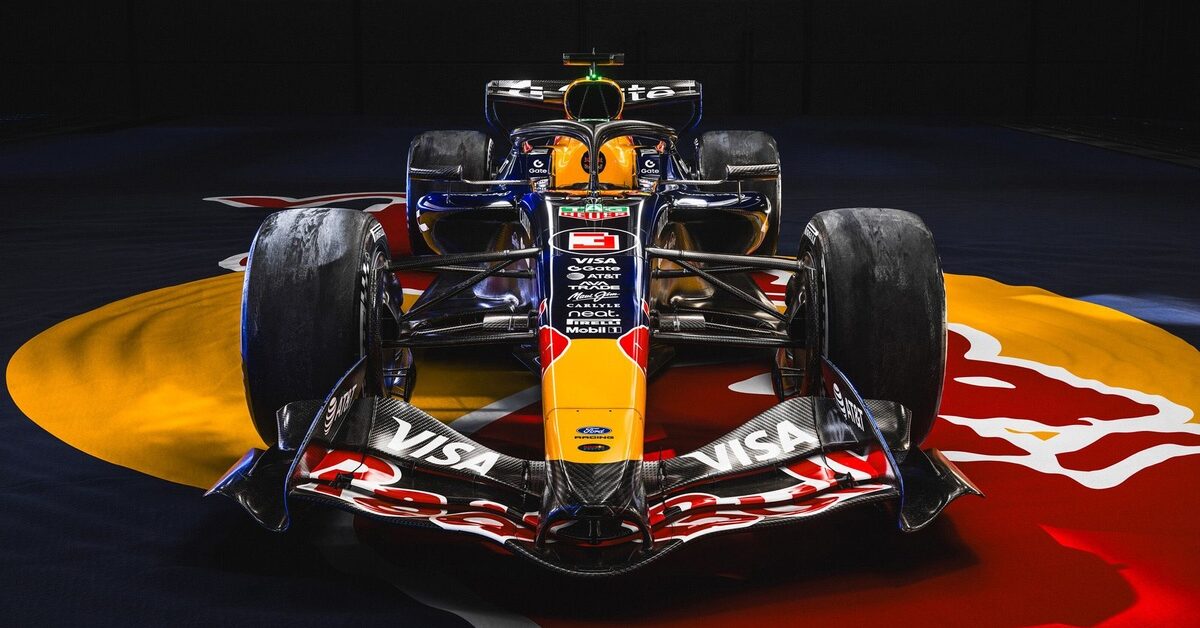
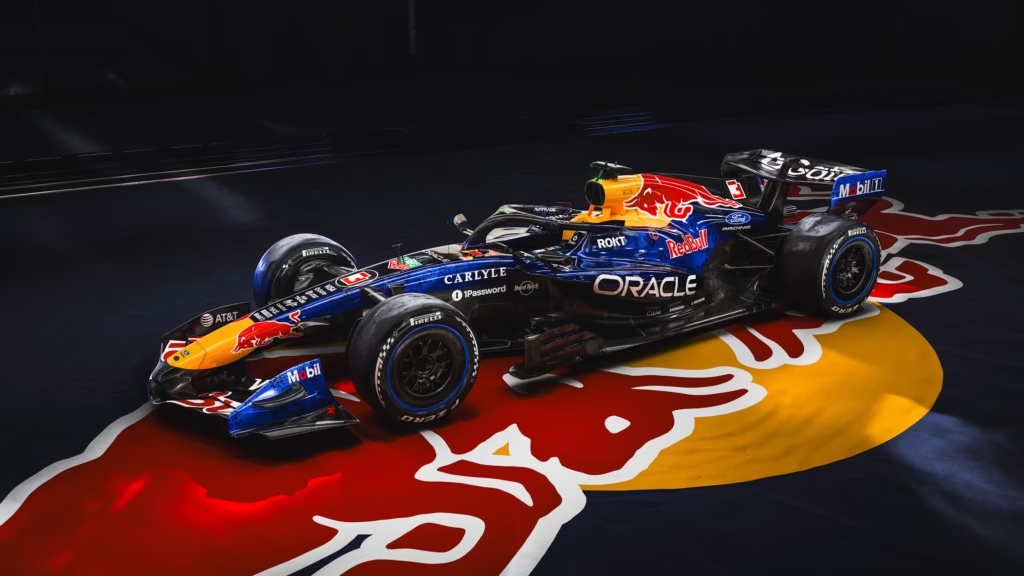
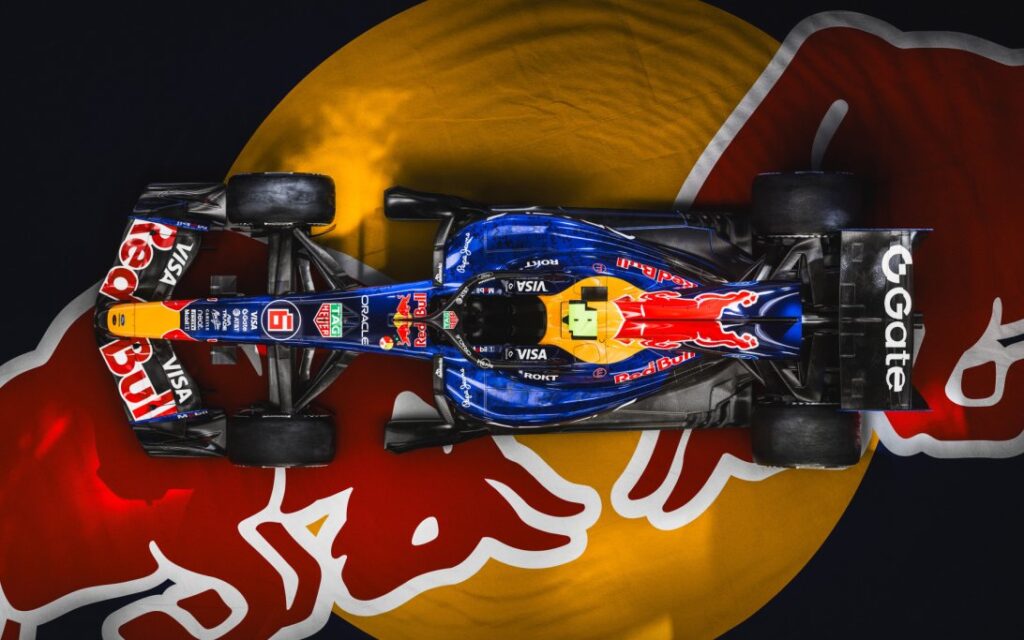
For Red Bull, this was also a nod to where it all began. The brand’s 2026 livery is described as, “A return to the gloss finish first seen when the team made its debut back in 2005.” The glossy blue-and-black look now carries a jacquard pattern, giving the RB22 a modern texture that pops under lights.
RB22 livery: a modern throwback with purpose
The refreshed RB22 livery stands out: deep blue, black gloss, and that woven jacquard motif in the bodywork. Behind the design is a clear line of storytelling. Team principal Laurent Mekies framed it this way: “2026 marks the start of a new and significant era for Formula 1 and for Red Bull. We wanted our livery to reflect this, while also giving a nod to Red Bull Racing’s beginnings. We are in F1 because of the dream of one man, Dietrich Mateschitz, and several years later, he had another dream, to create an engine.”
On track, that story will be carried by Max Verstappen and Isack Hadjar. Verstappen brings title-winning heft; Hadjar’s step up adds fresh energy to a car that looks both familiar and new.
“This isn’t just paint — it’s Red Bull planting a flag in Ford’s backyard.”
Racing Bulls go clean and bold
The sister team’s look is a contrast: all-white with crisp blue accents. It’s clean, disruptive, and instantly identifiable. CEO Peter Bayer said, “This launch captures the evolution of Visa Cash App Racing Bulls as a brand and as a racing team.” Team principal Alan Permane added context: “2026 represents one of the biggest technical changes Formula 1 has seen.”
On the driving side, Liam Lawson returns for a second season, joined by Arvid Lindblad, just 18, the youngest and only rookie on the 2026 grid. Lawson’s take captured the mood: “Launching the 2026 livery here in Detroit makes the moment feel even more special.”
Red Bull Ford Powertrains: a new era under the skin
This launch wasn’t only about colors. It was the public start of Red Bull’s in-house engine project with Ford. The Honda partnership is now closed for Red Bull, with Honda moving its factory support to Aston Martin. That leaves Red Bull Ford Powertrains to write the next chapter from Milton Keynes and Detroit.
The stakes are high. Building your own power unit means control, speed of development, and long-term stability. It also means scrutiny. And that’s already arrived.
“If Red Bull lives on the limit, who bets they won’t own the limits in 2026?”
The compression ratio row, explained
The 2026 power unit rules cap compression ratio at 16:1, down from 18:1. There are two key checks in play that matter for how teams design their engines:
- Per Article C5.4.3, the FIA does static compliance checks at ambient temperature.
- Per Article C1.5, the car must be compliant at all times during competition.
Rivals — including Audi, Ferrari, and Honda, with Mercedes also implicated — have raised a question: could a team set an engine to pass the static checks at ambient temperature but then, thanks to thermal expansion at running temps, effectively operate at a higher compression ratio on track? The FIA has called a technical meeting for January 22 to discuss it further.
Red Bull Powertrains director Ben Hodgkinson was firm: “I know what we’re doing, and I’m confident that what we’re doing is legal. Of course, we’ve taken it right to the very limit of what the regulations allow… My honest feeling is that it’s a lot of noise about nothing.”
Read that again: “to the very limit.” It’s classic F1. The job is to find the edges without stepping over them. The meeting on January 22 will help set the guardrails before preseason running. For now, the rules are the rules — and the checks are clear.
“Detroit gave us theatre; January 22 will give us answers.”
Drivers, youth, and tone-setting for 2026
Red Bull’s Verstappen-Hadjar pairing blends a benchmark champion with a hungry newcomer. Racing Bulls’ Lawson-Lindblad duo brings continuity plus youth: Lindblad is just 18, the only rookie on the grid. That’s a big bet on speed and learning in a year when everyone is adapting to new hardware and rules.
The human stories matter. Mekies’ reflection on Dietrich Mateschitz’s “dream to create an engine” lands differently now that Red Bull is in full control of its power unit destiny. Detroit was not chosen by accident. It ties Red Bull’s energy with Ford’s legacy, and it signals where the team believes the battle will be won: under the bodywork as much as on the paint.
So what’s next?
Three things to watch from here:
- Regulatory clarity: The FIA’s January 22 meeting on compression ratio interpretation could shut the door on any grey area, or leave room for innovation.
- Power unit progress: Early season reliability and deployment from Red Bull Ford Powertrains will tell us how steep the learning curve really is.
- Racing Bulls’ steps: With Lawson’s experience and Lindblad’s raw pace, that clean white livery could become a regular in Q3 if the package lands right.
On the surface, Red Bull’s 2026 look is smart and familiar. Underneath, it represents a major leap: the first in-house Red Bull power unit and a bold reading of the regulations. Whether this becomes an era-defining move or a season of growing pains will depend on what happens in the engine room, and what the FIA stamps in the rulebook in the coming days.
For now, Detroit delivered what Red Bull wanted: a fresh identity, a partner spotlight, and a loud promise that 2026 belongs to the brave.