
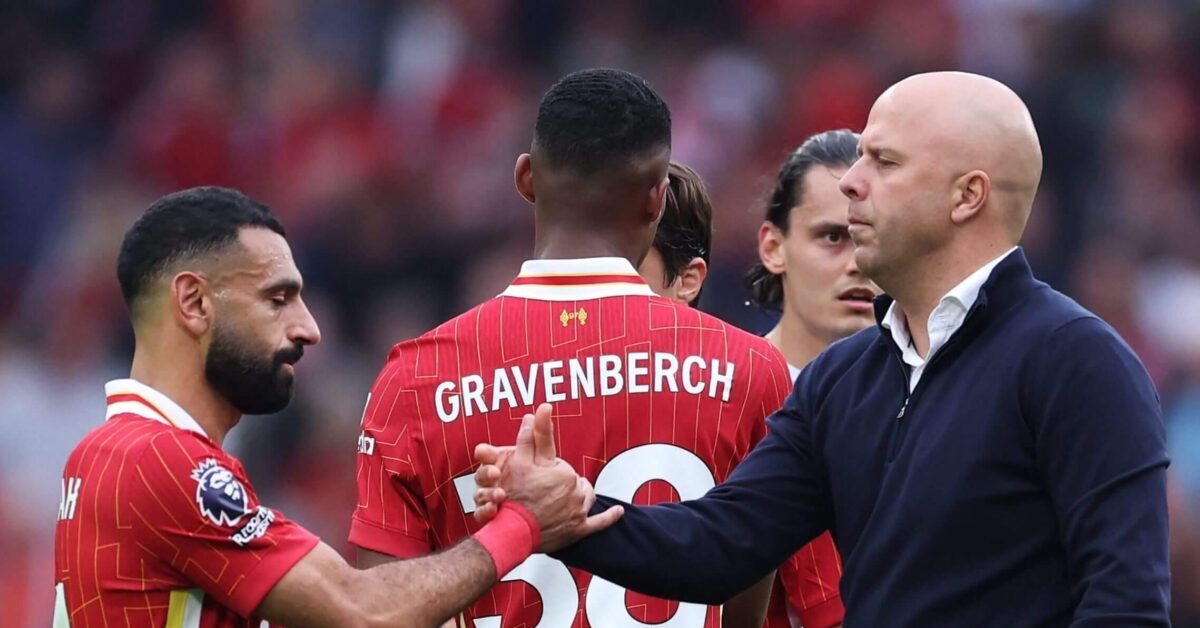
Key Takeaways(TL;DR):
- Steven Gerrard says Mohamed Salah went too far with his Elland Road comments about Arne Slot and must apologise.
- Gerrard believes it is on Salah to repair his relationship with Slot if he wants to return to the Liverpool squad.
- He compares the row to the 2013 Luis Suarez–Brendan Rodgers clash, which was solved and led to a title push.
- Despite January transfer rumours, Gerrard insists Liverpool need Salah and should not let him go.
- Gerrard calls on captain Virgil van Dijk to step in as a leader and help calm the situation between Salah and Slot.
- The story is still fresh, with details mainly coming from social media rather than major news outlets.
Steven Gerrard has stepped into the middle of Liverpool’s biggest talking point of the week – and he has not held back. The Reds legend believes Mohamed Salah has “crossed the line” with his comments about Arne Slot and now has only one way back: an apology.
This is not just another headline about a dressing-room disagreement. It is a clash between a club icon on the pitch, a new manager trying to build his authority, and another club legend speaking from the outside with the weight of history behind him.
When Gerrard talks about Liverpool, people listen. This time, his message to Salah is simple and sharp: fix it, or risk losing your place and your legacy.
What Happened Between Salah and Arne Slot?
The current storm started outside Elland Road. After a match there, Mohamed Salah gave a high-profile interview that did not just go over the line in Gerrard’s eyes – it stepped past it.
In that interview, Salah was outspoken about Arne Slot, the Feyenoord manager whose name has been tied into Liverpool conversations and ideas about style, standards and direction. While full details of every word are still not widely reported, the key point is clear: Salah said things about Slot that Gerrard feels should never have been said in public.
Gerrard summed it up bluntly: Salah “crossed the line with a couple of wrong comments.”
For a player of Salah’s status – a star, a leader, and one of the most important forwards in the world – this kind of public criticism can shake the whole club. It puts pressure on the manager, questions the unity of the dressing room, and creates headlines that go far beyond what happens on the pitch.
“You don’t call out your manager in public and expect nothing to change in the dressing room.”
Gerrard: It’s On Salah to Make the First Move
Gerrard’s main point is not just that Salah was wrong. It’s that Salah must now be the one to put it right.
“It’s on him to fix that relationship if he wants back in,” Gerrard said, making it very clear where the responsibility lies.
That choice of words matters. Gerrard is not putting this on Arne Slot. He is not saying the club or the captain needs to fix it first. He is saying that Salah, the player who spoke out, has to take ownership and walk the first step toward peace.
Why now? Because Salah is already feeling the impact. He did not feature in Liverpool’s recent Champions League win away at Inter Milan. For a player who is usually one of the first names on the team sheet, that absence naturally fuels talk: is this tactical, or is this punishment? Is this rest, or is this the start of something deeper?
Gerrard’s message hints strongly at the second option. If Salah wants to be back in that squad, back starting big games, then the first thing he needs to do is repair his bond with Slot.
Lessons From 2013: Suarez, Rodgers and a Near Title Win
Gerrard did not just speak from the outside. He spoke from experience. To explain the current drama, he reached back to one of the biggest internal rows of Liverpool’s modern history: Luis Suarez vs. Brendan Rodgers in 2013.
Back then, Suarez was angry about his future, about promises he felt were broken, and about his role at the club. The relationship between the star forward and the manager went very close to breaking point.
Gerrard stepped in.
He has now reminded everyone of that story, saying: “We’ve seen this kind of situation before—like Suarez and Rodgers in 2013—and it ended with Suarez firing Liverpool toward the title.”
That is not a casual comparison. In 2013–14, after things were patched up, Suarez produced one of the greatest individual seasons in Premier League history. Liverpool did not quite win the title, but they came close, and Suarez was at the heart of that charge.
By bringing up that moment, Gerrard is doing two things at once:
- He is showing that big rows can be fixed.
- He is warning that they must be fixed quickly if the team is to compete at the highest level.
The clear hint is that Salah, like Suarez, can turn a messy moment into a powerful comeback – but only if he is willing to swallow his pride and say sorry.
“If Suarez could come back from that, why can’t Salah? The question is: does he want to?”
Why Liverpool Still “Need” Mohamed Salah
Gerrard is not joining the voices calling for Salah to be dropped or sold. In fact, he is saying the opposite. For all the noise around the interview, he wants people to remember what Salah brings when he is focused and fully involved.
“Liverpool need Salah. They can’t forget what he did last season, no matter what’s said about a January exit,” Gerrard insisted.
That is a crucial line. It underlines two things:
- Salah is still seen as vital to Liverpool’s success.
- There is real concern that a January transfer could be on the table.
The speculation around a possible move in the next window will only grow if Salah stays out of the line-up or if the tension with Slot remains unsolved. For Liverpool, losing their star forward in the middle of the season could be a major blow on and off the pitch.
Gerrard is pushing for the opposite outcome. He wants Liverpool to hold on to Salah, not push him out. But his argument is also clear: keeping Salah only makes sense if everyone is pulling in the same direction, starting with the relationship between player and manager.
Arne Slot and the Battle for Authority
Arne Slot is not just another name in this story. As Feyenoord manager and a coach linked strongly with progressive ideas and a clear football identity, his relationship with star players like Salah will shape how people judge his leadership.
When a big player challenges a manager in public, it tests that manager’s power. If Slot lets it slide, he risks being seen as weak. If he responds too harshly, he may split the dressing room.
Right now, most of what we know about their relationship and this fallout comes from social media reports, clips, and reactions. Major outlets like BBC Sport, Sky Sports, ESPN and The Guardian have not yet produced full deep-dive pieces on Gerrard’s comments, which shows just how fresh and fast-moving this story is.
That also means one thing: how Salah and Slot act in the next few days will shape the full narrative once the bigger platforms catch up.
Gerrard’s Call to Virgil van Dijk: Leaders Must Lead
Steven Gerrard did not only call on Salah to act. He also put a spotlight on Liverpool’s current captain, Virgil van Dijk.
“Virgil van Dijk should step up and help sort this out,” Gerrard said, sending a clear message about what he thinks real leadership looks like.
As captain, Van Dijk sits right between the manager and the players. He understands the mood in the dressing room, but he also has a duty to protect the manager’s authority and the club’s long-term interests.
Gerrard is basically asking Van Dijk to play the same kind of role he himself once played with Suarez and Rodgers: the middle man, the voice of reason, the person who can sit Salah and Slot down and say, “This has to stop. We need each other.”
“This is where we see if Van Dijk is just wearing the armband or really carrying it.”
What Happens Next for Salah, Slot and Liverpool?
Right now, this story sits at a crossroads.
On one road, Salah digs in, the situation with Arne Slot stays cold, and the January transfer talk grows louder every day. That path leads to more headlines, more social media noise, and a team trying to chase trophies while one of its biggest stars stands on the outside.
On the other road, Salah listens to Gerrard’s advice. He takes responsibility for the “wrong comments,” speaks privately with Slot, and finds a way back into the fold. The team settles, the manager keeps his authority, and Liverpool can focus on football rather than drama.
Gerrard has made clear which road he wants to see: apology, unity and performance.
His words are not just criticism. They are also a reminder of what can happen when a club gets its house in order. The Suarez example is proof. What starts as a crisis can end as a catalyst for greatness.
For now, the ball is at Salah’s feet – but this time, it is not about a penalty or a chance in the box. It is about whether he is willing to say sorry, rebuild trust with Arne Slot, and give Liverpool the version of Mohamed Salah they still desperately need.
If he does, this episode may soon be remembered as the spark that pushed Liverpool closer together. If he does not, Gerrard’s warning may be looked back on as the moment everyone realised just how serious this rift really was.